




When importing steel tubes into Mexico, receiving products that meet the required technical specifications is only part of the purchasing process. Material origin, certificate authenticity, and documentation compliance are equally important.
Even when an overseas supplier provides a Material Test Certificate (MTC), Mexican importers may still need additional documentation from the original steel producer.
The certificate required depends on the applicable Mexican tariff classification, manufacturing process, and import requirements. Understanding the difference between a mill certificate and a quality certificate can help buyers avoid documentation problems and unexpected shipment delays.
What Are Mexico's Steel Tube Import Requirements?
Mexico regulates certain steel imports through the Automatic Import Notice for Steel Products, known as AAIPS (Aviso Automático de Importación de Productos Siderúrgicos).
The requirements are administered by Mexico's Ministry of Economy under Rules 2.2.19 and 2.2.26 and the corresponding regulatory annexes.
Under the regulatory update published on February 12, 2026, importers can apply through VUCEM on an individual-operation basis or, if eligible, use the annual Steel Products Importers Registry (RIPS). Both routes require appropriate material documentation and traceability.
Mill Certificate vs Quality Certificate: What Is the Difference
What Is a Mill Certificate?
A Mill Certificate (Certificado de Molino) is typically issued by the steel mill that actually produced the raw steel, serving to verify its origin. It generally includes information such as the steel grade, heat number, and chemical composition; its primary purpose is to enable the traceability of the original steel producer. In the context of Mexican import requirements-specifically for tariff codes (HS codes) that mandate a Mill Certificate-the focus is on whether the document was issued by the actual steel mill and whether it can be linked to the specific raw material used in the imported goods.
What Is a Quality Certificate?
A Quality Certificate (Certificado de Calidad) is typically issued by the manufacturer that processed the steel and produced the final product; it serves to verify the specifications, quality, and production details of the finished steel pipe. It may include data on mechanical properties, dimensions, heat treatment, and test results. For products such as welded pipes, the Quality Certificate is often the primary document; however, this does not mean that the origin of the raw material or the traceability of the heat number can be disregarded.
Key Differences Between Mill and Quality Certificates
| Property | Mill Certificate | Quality Certificate |
|
Spanish Name |
Certificado de Molino |
Certificado de Calidad |
|
Issued By |
Steel-producing mill |
Finished product manufacturer |
|
Main Purpose |
Steel origin and traceability |
Product manufacturing and quality verification |
|
Typical Information |
Heat number, chemical composition, steel grade |
Dimensions, mechanical properties, inspection results |
|
Production Stage |
Steel production |
Material transformation and tube manufacturing |
Note: An EN 10204 3.1 MTC is not automatically equivalent to Mexico's requirements for mill test certificates. Whether a document is accepted depends not only on the standard number, but also on the identity of the issuing party, the content of the certificate, and the traceability from raw materials to the finished product.
Which Certificate Is Required for Seamless and Welded Steel Tubes?
The type of certificate required for importing steel tubes into Mexico is closely related to the product's tariff classification.
Seamless Steel Tubes – HS Heading 7304
For tariff classifications falling under HS heading 7304 that are covered by the AAIPS (Automatic Import Licensing and Monitoring System), a mill certificate is required. Such products may include seamless stainless steel tubes, carbon steel tubes, alloy steel tubes, and cold-drawn seamless tubes.
If the seamless steel tubes have undergone further processing and meet specific regulatory criteria, a quality certificate for the finished product-along with documentation tracing the intermediate processing stages-may also be required. In other words, a quality certificate for the finished tubes cannot serve as a substitute for the original mill certificate; each document attests to a different aspect of the product.
Welded Steel Tubes – HS Headings 7305 and 7306
Welded steel pipes covered by the regulated list are generally subject to quality certificate requirements. Such products include welded stainless steel pipes, ERW steel pipes, welded precision steel pipes, and welded heat-exchanger tubes.
| Steel Tube Type | General HS Heading | Primary Certificate |
|
Seamless stainless steel tubes |
7304 |
Mill Certificate |
|
Seamless carbon steel tubes |
7304 |
Mill Certificate |
|
Seamless alloy steel tubes |
7304 |
Mill Certificate |
|
Large-diameter welded steel pipes |
7305 |
Quality Certificate |
|
Welded stainless steel tubes |
7306 |
Quality Certificate |
|
ERW carbon steel tubes |
7306 |
Quality Certificate |
These requirements apply to tariff lines included in the relevant Mexican regulatory annex. Importers must confirm the complete Mexican tariff code and NICO before purchasing.
Does Steel Have to Come from a Government-Approved Mill
What Is Mexico's Steel Mill Catalog?
Mexico's SNICE provides a directory of steel mills (Catálogo de Molinos) used to verify whether the steel mill that produced the raw material is duly registered. For products requiring a steel mill certificate, importers must confirm that the producing mill is included in this directory and that the certificate was indeed issued by that specific mill.
If a mill is not listed, the importer should follow official procedures to inquire about registration or any additional requirements. As of the latest update to this text, the steel mill directory available on the official SNICE website bears an update date of November 19, 2026; users should verify the most current version before making any purchases.
Can You Purchase from a Manufacturer That Is Not Listed?
Yes. A steel tube manufacturer does not necessarily have to be the original steel-producing mill.
According to SNICE, a supplier that processes steel rather than producing it can obtain the required mill certificate from the actual registered steel producer. The important consideration is whether the material's origin can be properly documented.
What Information Should Steel Import Certificates Include?
Before approving shipment documents, Mexican importers should review the following information.
| Certificate Information | Verification Purpose |
|
Certificate Number |
Document identification |
|
Date of Issue |
Document verification |
|
Mill or Manufacturer Details |
Producer identification |
|
Heat Number |
Material traceability |
|
Steel Grade |
Material identification |
|
Chemical Composition |
Material conformity |
|
Product Dimensions |
Product identification |
|
Quantity and Weight |
Shipment consistency |
|
Country of Origin |
Origin verification |
|
Signature, Stamp or Verifiable QR Code |
Certificate authenticity |
Buyers must also distinguish between the country where the steel was melted and cast, the country where the finished product was manufactured, and the exporting country.
For applicable AAIPS submissions, certificates issued in languages other than Spanish require a Spanish translation. The application also requires a signed declaration of responsibility (Carta Responsiva).
What Should Mexican Buyers Confirm Before Ordering Steel Tubes?
Documentation requirements should be established during supplier evaluation rather than after production or shipment.
A practical purchasing checklist includes:
- Confirm the Mexican tariff classification and NICO.
- Identify the required certificate type.
- Verify the original steel mill's registration where applicable.
- Request representative certificate samples.
- Confirm material and heat number traceability.
- Check certificate details against the purchase order.
- Review documentation with a Mexican customs broker before shipment.
A competitive tube price becomes less valuable if incomplete documentation causes additional costs, shipment delays, or production interruptions.
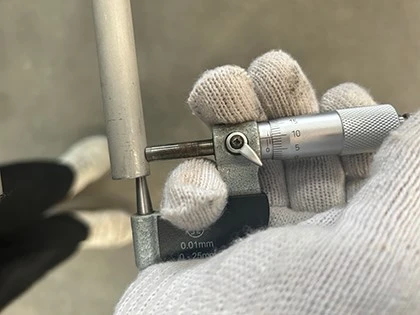
TORICH supplies seamless and welded stainless steel, carbon steel, and alloy steel tubes for industrial applications, with material traceability, quality inspection, and EN 10204 3.1 documentation support.
For orders destined for Mexico, raw material certificate availability and project-specific documentation requirements can be reviewed before production.
Planning to import steel tubes into Mexico? Contact TORICH with your tube specifications, material grade, tariff classification, and certificate requirements for specification review and quotation support.