

Automotive Stainless steel tube solutions

In the automotive industry, stainless steel tubing is extensively applied in exhaust systems, fuel and brake lines, EGR systems, turbocharger piping, hydraulic circuits, and various structural components.
TORICH supplies a wide range of stainless steel solutions, including seamless pipe, welded pipe, capillary tubes, precision seamless tubing, and coiled tubing, to meet the diverse performance and engineering requirements of automotive manufacturers.
Whether you are looking for exhaust pipes, rigid brake lines, fuel lines, or hydraulic system piping, TORICH offers a one-stop solution.
TORICH supplies high-performance stainless steel tubing for the automotive sector, with outside diameters ranging from 4 to 127 mm and wall thicknesses from 0.5 to 3.0 mm. Products can be custom-manufactured based on drawings, samples, or technical specifications to meet the requirements of various OEMs and Tier 1 suppliers.
We supply automotive stainless steel tubing in grades 304/304L/316L/321, duplex (2205/2507), and selected nickel alloys, based on application requirements such as brake, fuel, cooling, and EV systems.
Manufactured in compliance with ASTM A269/A213/A249, EN 10216/10305, DIN 2391, and JIS G3446 standards, with full OEM drawing and IATF 16949 requirements.
All materials are fully traceable and validated for pressure, corrosion resistance, and dimensional accuracy in automotive applications.
Automotive Stainless Steel Tube Applications

Exhaust System
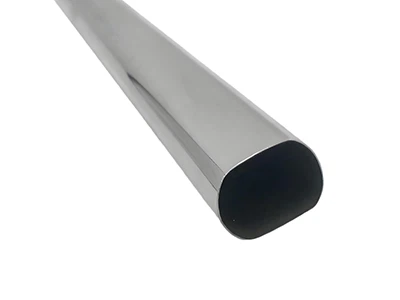
Tube Solution: Welded stainless tube, oval tube, bent tube, formed tube for exhaust routing systems.
Typical Grades: 409L / 439 / 441 / 304 / 321
Size Range: 25–127 mm (OD); 0.8–3.0 mm (WT)
Standards: ASTM A554, ASTM A268, EN 10312
Achievable Quality: Thermal cycling resistance ≥800°C; weld integrity stable under vibration fatigue; forming repeatability ±0.3–0.5 mm

EGR System
Tube Solution: High-temp EGR tube / precision bent tube
Typical Grades: 304 / 316L / 321
Size Range: 12–50 mm (OD); 0.8–2.5 mm (WT)
Standards: ASTM A269, ASTM A213, EN 10217-7
Achievable Quality: Leak rate ≤ 0.5 cc/min; bending tolerance ±0.2–0.4 mm; thermal shock resistance up to 700°C cycles

Turbocharger Pipe
Tube Solution: Turbo boost pipe / precision bent airflow tube
Typical Grades: 304 / 321 / 316L
Size Range: 25–90 mm (OD); 0.8–2.5 mm (WT)
Standards: ASTM A554, ASTM A269
Achievable Quality: Dimensional accuracy ±0.3 mm; surface roughness Ra ≤ 1.6 μm; stable sealing under boost pressure ≥2–3 bar

Fuel & Fluid Line
Tube Solution: Precision small-diameter fuel / hydraulic tubing
Typical Grades: 304 / 316L
Size Range: 4–25 mm (OD); 0.5–2.0 mm (WT)
Standards: ASTM A269, ASTM A632, EN 10305-1
Achievable Quality: Cleanliness ISO Class 7–8 equivalent; pressure resistance ≥200–400 bar; dimensional tolerance ±0.05–0.15 mm

EV Cooling / Thermal Management
Tube Solution: Clean cooling tube / EV thermal loop bent tube
Typical Grades: 304 / 316L
Size Range: 6–25 mm (OD); 0.5–1.5 mm (WT)
Standards: ASTM A269, ASTM A554
Achievable Quality: Leak tightness ≤ 10⁻⁶ mbar·L/s; bending tolerance ±0.2–0.3 mm; coolant compatibility long-term stability ≥10 years

Precision Stainless Tube Components
Tube Solution: Cut-to-length / bent / end-formed OEM tubing components
Typical Grades: 304 / 316L / 321
Size Range: 4–80 mm (OD); 0.5–3.0 mm (WT)
Standards: ASTM A269, ASTM A554, Customer Drawings
Achievable Quality: Batch consistency Cpk ≥ 1.33; dimensional tolerance ±0.1–0.3 mm; 100% dimensional inspection for critical features
Custom Stainless Steel Tubing for Automotive Applications
1. Precision Cutting
- Strict length tolerance control: Length precision reaches ±0.05mm with end-face perpendicularity ≤0.03mm, fully meeting assembly clearance requirements for automotive pipeline connectors.
- Burr-free end-face finishing: Achieved through deburring processes and end-face inspection, allowing for immediate use in assembly.
- Batch consistency: Ensured by a rigorous quality inspection system, with length deviation within the same batch of ≤0.02mm.
2. Tube End Forming
- Flaring: SAE/DIN single & double flares (45° / 90°); ensures reliable sealing for high-pressure brake and fuel systems.
- Beading: End and anti-slip beads for secure retention with clips and quick-connect fittings.
- Swaging / Reducing: Stepped or tapered reduction for hose insertion and transition fittings.
- Expanding: Uniform or stepped expansion for butt joints and valve block integration; supports custom end geometries.
3. Tube Bending
- Single-radius bending: Constant-radius bending (min. R ≥ 1.0D); wrinkle-free and crack-free forming with ovality ≤ 5% for stable flow performance.
- Multi-radius bending: Multiple-radius bends in one continuous process for complex routing; no welding required, improving integrity and reliability.
- 3D CNC bending: 7-axis CNC precision bending matching 3D vehicle routing models.
4. Surface Treatment
- Brake & Fuel systems: Zn-Ni alloy plating (8–15 μm, ~12–15% Ni) with trivalent passivation and optional E-coating (15–25 μm), delivering up to 720–1000h salt spray resistance for high-pressure fluid lines.
- Suspension systems: Zn-Ni base layer combined with hard chrome (5–20 μm) or PVD coatings, improving surface hardness, wear resistance, and vibration fatigue performance.
- Cooling & EV systems: stainless steel passivation + phosphate coating (1–3 g/m²) + E-coating (20–30 μm) for chemical stability, coolant compatibility, and high cleanliness control.
- Customized systems: coating type, thickness, and multi-layer combinations tailored to OEM requirements, validated by salt spray, thermal cycling, and adhesion testing standards.
Our Certificate


IATF 16949:2016

ISO 9001:2015
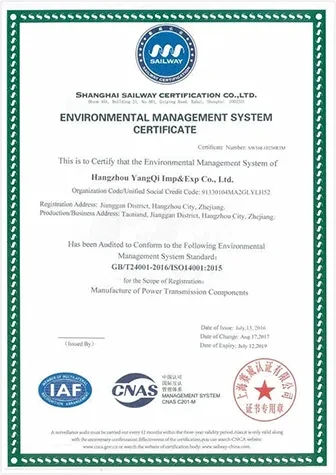
Environmental Management System Certificate
Related products


FAQ

01. What standards do your automotive tubes comply with?
02. Can you produce tubes according to OEM drawings?
03. What information is needed for quotation?
04. What is your capability for bending and forming?
We offer the following services: Multi-radius CNC tube bending; Tight-radius forming for engine packaging; Tube end forming (flaring, reducing, and bead forming).
Dimensional stability is strictly controlled to prevent deformation during assembly.
05. What is your dimensional tolerance capability?
Typical achievable tolerances:
Outer/Inner Diameter: ±0.05–0.3 mm (depending on the process)
Straightness: ≤0.5 mm/m
Bending Accuracy: ±0.2–0.5 mm
06. What stainless steel grades are available for automotive applications?