

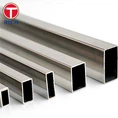


Products Description
Product Specifications
| Standards | ASTM A632 |
| Steel Grades | TP 304 TP 304L TP 310 TP 316 TP 316L TP 317 TP 321 TP 347 TP 348 |
| Equivalent Standards | EN 10216-5, EN 10305-1, ASTM A269, ASTM A213, JIS G3459 |
| Outer Diameter (OD) | 1.27 mm - 25.4 mm, customized |
| Wall Thickness (WT) | 0.13 mm - 2.5 mm, customized |
| Length | 6/12 m, customized |
| Surface Treatment | Bright annealed, pickled/passivated or customized |
| Production Process | Cold Drawn, Cold Rolled |
| Condition | Bright-annealed |
TORICH ASTM A632 precision stainless steel tubing undergoes bright annealing, leaving a surface free of heavy oxide scale; the inner surface roughness typically reaches Ra 0.2–0.4 μm-far superior to standard pickled tubing-making it ideal for high-cleanliness applications such as automotive fuel injection and sensor protection.
Compared to welded stainless steel tubing, seamless tubing lacks weld seams, thereby eliminating issues such as microstructural non-uniformity, residual stresses, and potential corrosion-prone weak points. In systems such as automotive braking and high-pressure common-rail fuel injection, seamless BA (bright annealed) tubing offers a superior safety margin regarding burst pressure and enhanced fatigue resistance.
Customized Services
- TORICH offers customization for non-standard outside diameters (4mm–127mm) and special wall thicknesses (0.5mm–3mm), with cutting to any specified length between 100mm and 6000mm.
- Services include deburring, chamfering, flaring, swaging, flattening, grooving, flanging, and weld-end preparation.
- 3D tube bending is available based on customer drawings, with precise control over bending radius, ovality, and wall thinning rates.
- Surface treatment options include bright annealing, pickling and passivation, electropolishing, internal cleaning and degreasing, and ultrasonic cleaning.
Chemical Composition
| Grade | C (max) | Mn (max) | P (max) | S (max) | Si (max) | Cr (%) | Ni (%) | Mo (%) | Nb/Ti (%) | N (%) |
| TP 304 | 0.08 | 2.00 | 0.045 | 0.030 | 1.00 | 18.0–20.0 | 8.0–11.0 | – | – | – |
| TP 316L | 0.035 | 2.00 | 0.045 | 0.030 | 1.00 | 16.0–18.0 | 10.0–14.0 | 2.0–3.0 | – | – |
| TP 348 | 0.08 | 2.00 | 0.045 | 0.030 | 1.00 | 17.0–19.0 | 9.0–13.0 | – | Nb+Ta ≥10×C% | – |
Mechanical Properties
| Grade | Tensile Strength (MPa) | Yield Strength (MPa, 0.2% offset) | Elongation (%) | Hardness (HRB,max) |
| TP 304 | ≥515 | ≥205 | ≥35–40 | 92 |
| TP 316L | ≥485 | ≥170 | ≥40 | 95 |
| TP 348 | ≥515 | ≥205 | ≥35 | 95 |
Possible Alternative Grades
- EN 10216-5 – Seamless stainless steel tubes for pressure applications in Europe.
- EN 10305-1 / EN 10305-5 – Precision tubes for mechanical and automotive applications (covers precision dimensional tolerances).
- ISO 1127 – Stainless steel tubes with defined tolerances and surface finishes for industrial and sanitary applications.
- ASTM A554 – Welded stainless steel tubing, primarily for structural and mechanical applications where appearance and surface finish are important.
application aresa
- Automotive sensor and instrumentation systems: pressure sensor lines, temperature sensor lines, pressure measurement lines, sensor connecting tubes, etc.
- Electric vehicle battery thermal management: coolant sensor lines, auxiliary cooling system piping, battery thermal management monitoring equipment, etc.
- Fuel systems: fuel delivery lines, fuel return lines, high-pressure fuel supply lines, etc.
- Hydraulic and pneumatic controls: small-bore hydraulic control lines, pressure measurement lines, pneumatic sensing lines, etc.
- Automotive exhaust systems: low-temperature exhaust auxiliary lines, exhaust emission sensor lines.
Products Show


Testing Equipment


Factory Equipment

Pickling equipment

Polishing equipment

Cold drawing equipment
Products Package


FAQ
Q: What are the differences between BA, 2B, and EP surface finishes?
A: BA (Bright Annealed) involves bright annealing in a protective atmosphere, resulting in a shiny surface free of visible oxide scale, typically with a roughness (Ra) of 0.2–0.4 μm. 2B involves cold rolling followed by pickling and annealing, producing a matte finish. EP (Electropolished) offers a mirror-like, ultra-smooth finish with an Ra value potentially below 0.1 μm, though it comes at a higher cost.
Q: Which material is more suitable for automotive fuel lines: 304L or 316L?
A: For standard gasoline or diesel fuel lines, 304L offers the best cost-performance ratio. However, for vehicles using corrosive additives, ethanol-blended gasoline, or new energy hybrid fuels, 316L (which contains molybdenum) is recommended due to its superior corrosion resistance and longer service life.
Q: What level of dimensional tolerance can be achieved?
A: We adhere to precision automotive tolerance standards: an outer diameter tolerance of ±0.05 mm, a wall thickness tolerance of ±0.03 mm, and straightness within ≤0.5 mm/m-precision levels far exceeding those of standard industrial tubing.
Hot Tags: astm a632 precision stainless steel tubing, China, suppliers, manufacturers, factory, customized, wholesale, price, OEM, mill, producer, for sale, stainless steel tube for cable trays, stainless steel tube for partnerships, stainless steel tube for cranes, stainless steel tube for laboratory equipment, stainless steel tube for steam transportation, stainless steel tube for gardening tools


