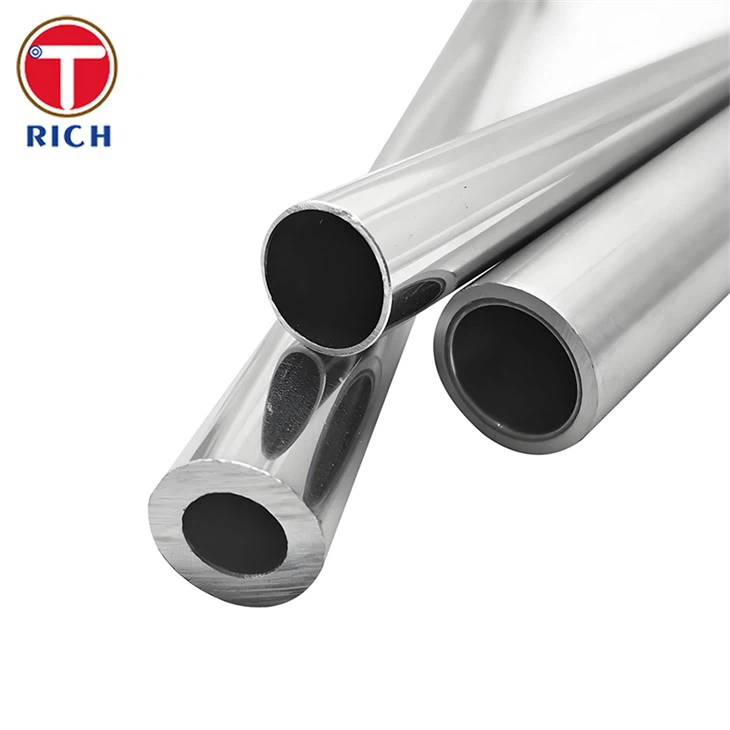
Stainless Steel Round Pipe

Stainless Steel Round Pipe

Stainless steel round pipes are made from austenitic grade stainless steel that is known for its superior corrosion and heat resistance properties. These pipes offer great flexibility, making them ideal for many commercial and residential applications such as plumbing, automotive fabrication, kitchen furniture, and more. It also makes a great choice for marine applications due to its excellent resistance to sea saltwater corrosion. Its strength in extreme temperatures makes it an extremely durable material that allows it to be used in high-pressure systems with longevity assurance.

Product Introduction
Your Professional Stainless Steel Round Pipes Supplier

Torich International Limited is a professional manufacturer and exporter of steel pipes materials.


It is an international marketing and sales company specialized in steel tubes, which holds the factories of Seamless Steel Tubes with Carbon and Alloy Steel Grade, Welded Precision Steel Tubes,DOM Steel Tubes, Seamless & Welded Stainless Steel Tubes with Nickel and Alloy Steel Grade.

Why Choose Us?

One-stop Solution

A professional steel pipes manufacturer and solution provider. Our aim is to provide ONE-STOP supply service for our customers with demand of: Steel Tubes/Pipes and Steel Tube/Pipe related products.


Complete Range Of Products

Torich International Limited is an international marketing and sales company specialized in steel tubes, which holds the factories of Seamless Steel Tubes with Carbon and Alloy Steel Grade, Welded Precision Steel Tubes,DOM Steel Tubes, Seamless & Welded Stainless Steel Tubes with Nickel and Alloy Steel Grade.

Quality Contoral

100% prompt delivery in the past 3 years. 100% dimensional check and 100% visual inspection on tube surfaces. 100% eddy current test and ultrasonic test for detecting longitudinal and transversal defects.

Corporate Culture

We focus on Quality First, Quality Traceability, and Quality Stability! We focus on Customer First, People First, and Quality-Oriented!


方钢管

Square Steel Tube

Square Steel Tube A312 Material The Square Steel Tube A312 is made from a specific type of steel that meets the A312 standard. This standard specifies the requirements for seamless, welded, and heavily cold worked austenitic stainless steel square tubes for general corrosive and high-temperature.

ASTM A513 钢管

ASTM A513 Steel Tube

ASTM A513 Steel Tube is a high-quality, versatile, and durable metal tubing solution that meets stringent industry standards.

圆钢不锈钢管

Round Steel Stainless Tube

The Round Steel Stainless Tube is manufactured using high-quality stainless steel. This ensures durability, corrosion resistance, and excellent performance in various applications.

碳素无缝钢管

Carbon Seamless Steel Pipe

ASTM A106 seamless carbon steel pipe is a high-quality pipe known for its durability and ability to withstand high temperatures and pressures in various industrial applications.

碳焊钢管

Carbon Welded Steel Pipe

The JIS G3472 STAM290GA and STAM340G carbon steel are commonly used for manufacturing welded tubes in the automobile industry. These materials are known for their excellent strength, durability, and weldability, making them suitable for various automotive applications.

无缝碳钢管

Seamless Carbon Steel Pipe

JIS GG3455 Seamless Carbon Steel Pipe is a high-quality, reliable piping solution known for its seamless construction and exceptional durability in various industrial applications.

ASTM A210 碳钢管

ASTM A210 Carbon Steel Pipes

ASTM A210 is a standard specification for seamless medium-carbon steel boiler and superheater tubes, commonly used in industrial and power generation applications.

ASTM A519 碳钢管

ASTM A519 Carbon Steel Tube

Carbon steel tube is a type of metal tubing made primarily from iron and carbon, with small amounts of other elements such as manganese, silicon, and copper, and is commonly used in various industrial and mechanical applications due to its strength, durability, and affordability.

ASTM A192 高压锅炉用无缝钢管碳钢管

ASTM A192 Seamless Steel Tube

ASTM A192 Seamless Steel Tube is a high-pressure carbon steel pipe that is widely used in various industrial applications due to its excellent mechanical properties and high durability.

What Are Stainless Steel Round Pipes


Stainless steel round pipes are made from austenitic grade stainless steel that is known for its superior corrosion and heat resistance properties. These pipes offer great flexibility, making them ideal for many commercial and residential applications such as plumbing, automotive fabrication, kitchen furniture, and more. It also makes a great choice for marine applications due to its excellent resistance to sea saltwater corrosion. Its strength in extreme temperatures makes it an extremely durable material that allows it to be used in high-pressure systems with longevity assurance.

Five Facts About Stainless Steel Round Pipe

A Durable, Long-lasting Option
Stainless tube is very strong and durable compared to other options such as carbon steel or cast-iron tubes. As stainless steel is a ductile material, thinner piping can be manufactured.


Non-corrosive
Stainless steel contains chromium, nickel, and molybdenum, which makes it highly resistant to the elements. Stainless steel is a rust-resistant material that is non-corrosive and doesn't erode. It isn't affected by oxidation and is heat resistant, making it perfect for use at high temperatures.
As it's non-corrosive, it can be used in seawater and is often used in shipbuilding and maritime industries.


Easy To Weld
Stainless steel piping can be welded into the correct length or shape. This is useful when piping needs to be modified.


Versatility
Stainless steel tubes are very versatile and are used extensively across many industries.


Cost-Effective
Many industries choose to use stainless steel tubes rather than other materials as they are more cost-effective. As stainless steel is so hardwearing, it requires little maintenance and will save you money in the long run as it has a long life span.

Application of Stainless Steel Round Pipe
1

Plumbing and Water Supply: Round stainless steel pipes are widely used for plumbing systems, delivering clean water in residential, commercial, and industrial buildings.

2

Structural and Construction: These pipes are employed in structural applications such as handrails, support structures, and framework, offering strength and durability.

3

Automotive Industry: Round stainless steel pipes are utilized in exhaust systems, fuel and brake lines, and other components in the automotive sector, benefiting from their corrosion resistance and high temperature capabilities.

4

Food Processing: Stainless steel pipes are essential for conveying food products and fluids, ensuring hygienic standards are maintained in food processing plants.

5

Petrochemical and Chemical Industries: The corrosion resistance and chemical stability of stainless steel make it suitable for handling and transporting various chemicals, making these pipes a reliable choice in such industries.

Features of Stainless Steel Round Pipes


01

Weldability Is Excellent

Weld-ability is an excellent characteristic of stainless steel. If welding thin parts, no post-weld annealing is necessary. Whether welding with filler metals or without, stainless steel may be welded with excellent results, but for maximum corrosion resistance, post-weld annealing may be necessary when welding big sections of stainless steel.

02

Heating Process

In an analyzing process, stainless steel can be cooled quickly with heat up to between 1010 and 1120 degrees Celsius. This grade of stainless steel cannot be hardened through thermal treatment. Heat treatment is a critical process in making stainless steel pipes. Heat treatment is essential to increasing the strength and durability of stainless steel tubes.

03

Machinability

In pipe products, the enhanced machinability version of Machining Grade, designated "Ugima," machines much more efficiently than normal, which results in higher machining rates and less tool wear.

Stainless Steel Round Pipe
Stainless Steel Round Pipe Grades
 

The most common grades used for stainless steel round pipe include 304 stainless steel and 316 stainless steel.

304 Stainless Steel

304 stainless steel is one of the most common SS grades due to its versatility, corrosion resistance, and non-magnetic properties. However, its toughness may present challenges for tube bending without the proper tooling and equipment. 304 stainless steel can be used to create machining equipment, food processing equipment, aerospace components, hospital and medical devices, and more.

316 Stainless Steel

316 stainless steel contains added molybdenum for enhanced corrosion resistance and superior strength at high temperatures. While 316 is also very tough, it is ideal for use in corrosive, harsh environments, such as marine applications, chemical processing, pharmaceutical and medical applications, and more.

Mechanical Properties of Stainless Steel Round Pipes

304 stainless steel is durable and is corrosion and oxidation resistant, meaning it can endure average exposures.


Its melting point ranges from 2,550° F to 2,650° F, allowing it to withstand very high temperatures.


304 is also valued for its high tensile strength of about 621 MPa (90 ksi).


304 stainless steel's chemical makeup of 18% chromium and 8% nickel makes it a good choice for many common applications.


The addition of molybdenum to 316's chemical makeup improves its resistance to harmful acids, alkalis, and chloride pitting. This increases its longevity and provides crucial protection for essential components.


Its high percentage of chromium and nickel, indicative of austenitic stainless steel alloys, provides increased strength and corrosion resistance in some of the most punishing environments.


316 stainless steel's material composition of 16% chromium, 10% nickel, and 2% molybdenum allows it to be used in applications that require superior corrosion resistance and stringent hygiene and cleanliness requirements.

How to Select the Right Stainless Steel Round Pipes for Your Project

When selecting stainless steel round pipes for your project, choosing the right ones is crucial to ensure optimal performance, safety, and durability. With so many available options, it can be overwhelming and confusing to make the right choice.  


Determine The Application Requirements
The first step to selecting the right stainless steel round pipes is determining your project's application requirements. Consider your application's temperature, pressure, and chemical resistance requirements and select a stainless steel grade that can withstand these conditions. If you're using pipes for high-temperature applications, choose a grade with high-temperature resistance. On the other hand, if you're using them for chemical processing, choose a grade with excellent resistance to chemicals.


Consider Your Project Requirements
When selecting the right stainless steel round tubes for your project, it is important to consider its requirements. It would help if you considered factors such as size, pressure rating, temperature rating, corrosion resistance, and cost. This will help you determine which type of stainless steel material is best suited for your project.


Consider The Pipe And Tube Size
The size of the stainless steel round pipes and tubes is an essential factor to consider. The size should match your project's requirements, so you don't have to compromise on the overall performance. The size determines the flow rate, pressure drop, and pipe weight. Consider the diameter, wall thickness, and length of the pipes, depending on your application needs. For instance, choose a large-diameter pipe if you need high-flow rates. On the other hand, if you need to transport gases or fluids with high-pressure requirements, use a thicker wall-thickness pipe.


Understand The Different Grades Of Stainless Steel
When selecting stainless steel pipe, it is important to understand the different grades available. There are several grades of stainless steel, including 304L, 316L. Each grade has properties and characteristics that make it suitable for certain applications. Selecting a grade that meets your project requirements in terms of strength, corrosion resistance, and temperature tolerance is important.


Choose The Right Finish
The finish of the stainless steel pipes & tubes plays a crucial role in their aesthetics and corrosion resistance properties. Various finishes are available, such as polished, matte, and brushed. Each finish has a unique purpose, so choose the right one depending on your application needs. If you use pipes in food processing or medical applications, select a polished finish that is easy to clean and maintain. On the other hand, if you need a corrosion-resistant finish, choose a brushed finish.


Verify The Tolerance And Quality Standards
The tolerance and quality standards of the stainless steel round tubes are vital to ensure optimal performance and safety. Check the tolerance requirements, such as wall thickness, straightness, roundness, and surface finish. Choosing pipes with the right tolerance and quality standards can reduce the risk of leaks, cracks, and failures.


Consider The Cost And Availability
The cost and availability are the final factors to consider when selecting stainless steel round pipes. Although you may want to invest in high-quality pipes, consider whether they fit within your budget. Also, check the availability of the pipes and tubes to ensure your project's completion is on time. Consider working with a trusted supplier who can provide quality pipes at a reasonable price and timely delivery.

 
The Art of Seamless Welding: Exploring the Manufacturing Process of Stainless Steel Round Pipe
 
01/

Raw Material Selection
The process begins with the selection of high-quality raw materials. In the case of pipe, the primary material is stainless steel, which contains a higher carbon content than standard stainless steel for improved high-temperature strength.

02/

Heating And Melting
The selected raw materials, typically in the form of billets or ingots, are heated in a furnace to a temperature suitable for melting. Once the desired temperature is reached, the materials are melted to form a molten metal.

03/

Pipe Formation
The molten metal is then poured into a continuous casting machine, where it is transformed into a solid cylindrical shape. The casting process helps achieve a consistent and defect-free structure.

04/

Piercing
The solid cylindrical shape, known as a billet, is then pierced by a piercing mill to create a hollow shell. The piercing process involves forcing a piercing plug through the center of the billet to create a round hole.

05/

Sizing And Reducing
The pierced shell is passed through a series of sizing and reducing mills to gradually reduce its diameter and achieve the desired wall thickness. This process involves multiple passes through different rolls to ensure precise dimensions and a uniform structure.

06/

Heat Treatment
After sizing and reducing, the pipe is subjected to heat treatment to enhance its mechanical properties and improve its resistance to corrosion and high-temperature environments. Heat treatment typically involves annealing, quenching, and tempering processes.

07/

Straightening And Cutting
The heat-treated pipe is straightened using straightening machines to achieve a straight and uniform shape. It is then cut into desired lengths using saws or other cutting tools.

08/

Non-destructive Testing
To ensure the quality and integrity of the stainless steel round pipe, various non-destructive testing methods are employed. These may include ultrasonic testing, eddy current testing, or visual inspection to detect any defects or imperfections.

 
Our Factory


null


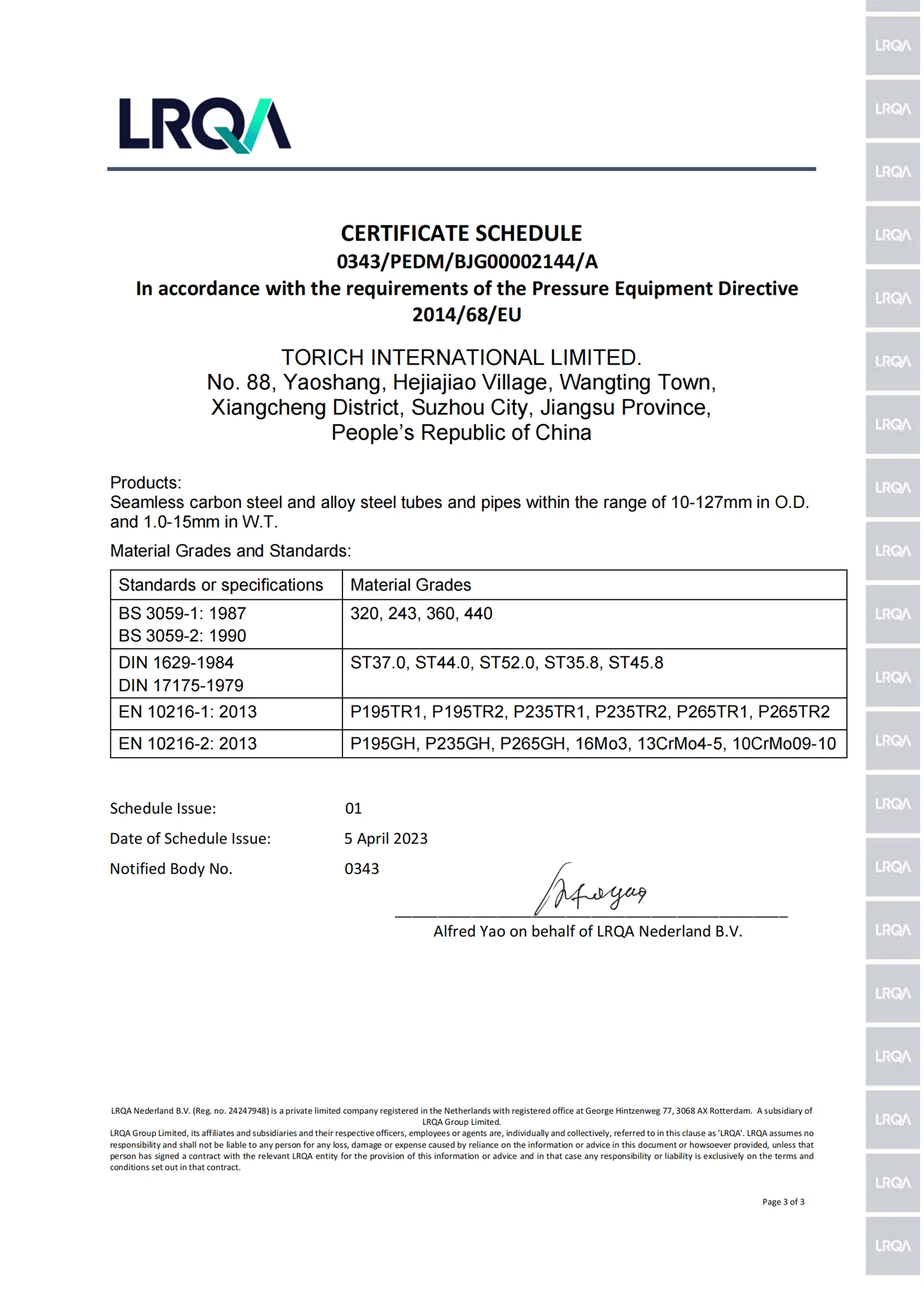
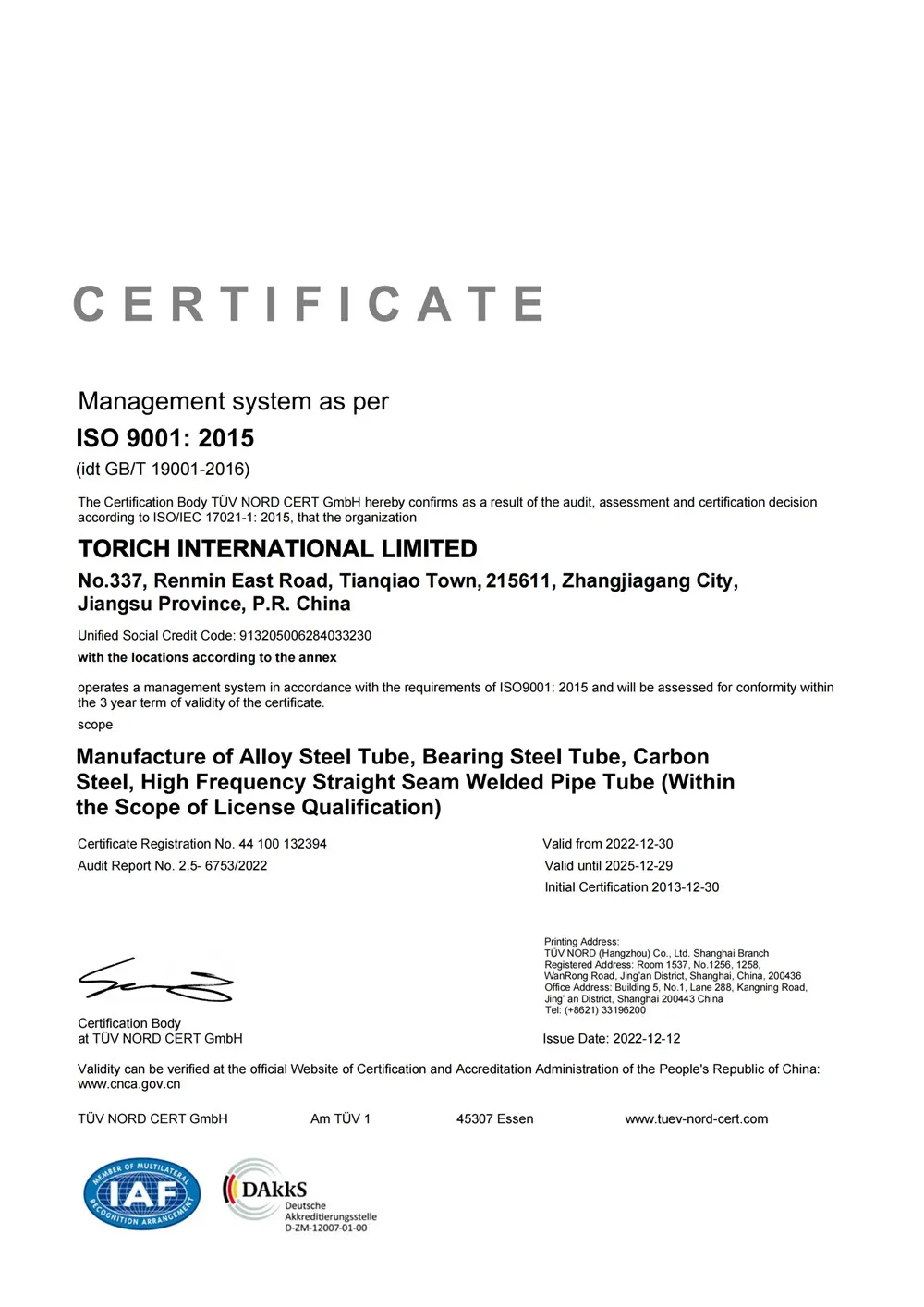
Our Certificate


product-1-1
product-1-1
product-1-1
product-1-1
product-1-1
product-1-1
 
 
Customer cooperation
product-1-1
product-1-1
product-1-1
 
FAQ


Q: What is stainless steel round tube?

A: 304 Stainless steel round tube is a good, general all-purpose material. It has good corrosion resistant properties, is easily machinable, weldable, and can be polished. It is also sought after because of its strength, ductility, minimum maintenance, and visual appeal.

Q: What is the most common type of steel pipe?

A: Carbon steel is the most common type of steel used in pipes. Its chemical makeup has relatively low amounts of alloying materials, which makes it easy to fabricate with a beam machine and helps keep costs down.

Q: What is 304 stainless steel round pipe used for?

A: Stainless steel 304 pipes are used in various fields, especially in food processing, as they are not prone to the acid corrosion found in common foods. This steel is suitable for products such as sinks, dishwashers, stainless steel footover bridges, commercial food processing equipment, and refrigerators.

Q: What is the difference between a stainless steel round pipe and stainless steel tubes?

A: However, there are significant differences between steel pipe and steel tube. A pipe is round. A tube can be round, square, rectangular, or oval in shape. Pipes are primarily designed to carry fluids and gases, regardless of the industry in which they are deployed.

Q: Can you tap stainless steel round pipe?

A: Although stainless steel is not as hard as high carbon steel, tapping stainless steel by hand or drilling stainless steel using a power drill can be challenging if you do not use the correct tools and techniques.

Q: Is stainless steel round pipe stronger than steel pipe?

A: Stainless steel round pipes have higher tensile strength compared to other pipes made of mild steel. This means that a stainless steel round pipe can withstand a higher level of stress before it reaches its breaking point.

Q: What is the difference between 304 and 316 stainless steel round pipe?

A: The key difference between 304 and 316 stainless steel that makes them different is the addition of molybdenum, an alloy that drastically enhances corrosion resistance, especially for more saline or chloride-exposed environments. 316 stainless steel contains molybdenum, but 304 does not.

Q: What is the difference between stainless steel and 304 stainless steel?

A: 304 Stainless steel contains 18% chromium and 8% nickel. In contrast, 316 stainless steel contains 16% chromium, 10% nickel, and 2% molybdenum. The chemical distinction between these two grades of stainless steel is of great importance when considering their intended uses.

Q: Can you bend 304 stainless steel round pipe?

A: The most common grades used for stainless steel tube bending include 304 stainless steel and 316 stainless steel. The material grade you choose determines the type of bending process used along with the radius that can be achieved without damaging the tube.

Q: What are the grades of round pipe?

A: Grade 1 steel pipes are bendable pipe.
Grade 2 steel pipes are mainly used for structural works (like welding works, shed works, etc.)

Q: Will a magnet stick to stainless steel round pipe?

A: Austenitic stainless steels are generally non-magnetic, while ferritic and martensitic stainless steels are magnetic. However, there may still be some magnetic attraction even with non-magnetic stainless steel due to impurities or surface contaminants.

Q: What is one advantage of stainless steel round pipe?

A: Using stainless steel round pipes gives you a durable product that will last for decades. Steel is a reliable material that is easy to maintain and install. Stainless steel is very low-maintenance, and because of its corrosion-resistant properties, it's unlikely it will need to be replaced for decades.

Q: How long do stainless steel round pipes last?

A: Stainless steel round pipes will give at least 100 years of service without cracking or bursting. Failure of stainless steel round pipe is extremely rare.

Q: How do you join stainless steel round pipe without welding?

A: A cold weld compound, or metal epoxy putty, can be used to repair pipes, radiators and car parts such as exhaust pipes or crankcases. This type of metal adhesive is heat-resistant and can be used to bond stainless steel, aluminium, cast iron, PVC and zinc.

Q: Which is better copper or stainless steel round pipe?

A: Stainless steel is corrosion-resistant and is protected by forming a self-repairing passive oxide film. On the other hand, copper is prone to oxidation, leading to corrosion over time.

Q: Which is more expensive 304 or 316 stainless steel?

A: Generally, 316 stainless steel is higher in price versus 304 stainless steel. This is due to the higher levels of nickel content contained within 316, as well as the presence of molybdenum.

Q: Is stainless steel round pipe good?

A: When you use stainless steel round pipes, you are buying a durable product that will last your business for decades. It is a reliable material that is easy to maintain and install. Stainless steel is low-maintenance, and due to its corrosion-resistant properties, it is unlikely they will need to be replaced for decades.

Q: Why use stainless steel round pipe?

A: Stainless steel round pipe resists oxidation, making it a low-maintenance solution that is suitable for high temperature and chemical applications. Because it is easily cleaned and sanitized, stainless steel round pipe is also desired for applications involving food, beverages, and pharmaceutical applications.

Q: What is the difference between 304 stainless steel and 316 stainless steel?

A: 300 Series grade stainless steel is a chromium-nickel alloy that is manufactured into a range of products including stainless steel tubes and steel pipes. Both 304 and 316 steel pipe is durable enough to maintain its strength at high temperatures, resist corrosion, and is easy to maintain. The choice between material is highly dependent upon how you will use the pipe and the environment in which the pipe will be installed.
Type 304 stainless steel is perhaps the most common type used because it is corrosion-resistant and easy to sanitize. This type of steel is often used for food and beverage applications or in building applications.
Type 316 stainless steel is also corrosion-resistant and easy to clean but is more resistant to corrosion resulting from chemicals and solvents. Because of this, 316 stainless steel is preferred for industrial and surgical applications, or outdoor or marine applications due to its resistance to chloride corrosion.

Q: Does stainless steel round pipe rust?

A: Stainless steel is naturally corrosion-resistant, but it is not immune to rust. While it is less prone to rusting than conventional steels, exposure to damaging chemicals, saline, grease, moisture, or heat for extended periods of time can cause corrosion.

Hot Tags: stainless steel round pipe, China, suppliers, manufacturers, factory, customized, wholesale, price, OEM, mill, producer, for sale, 1.5 x 25 dom tubing, , , 1.625 dom tubing

Send Inquiry

whatsapp

teams

E-mail

Inquiry

Bag