

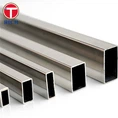


Your Professional ASTM A530 Alloy Steel Tubes Supplier
Torich International Limited is a professional manufacturer and exporter of steel pipes materials.
It is an international marketing and sales company specialized in steel tubes, which holds the factories of Seamless Steel Tubes with Carbon and Alloy Steel Grade, Welded Precision Steel Tubes,DOM Steel Tubes, Seamless & Welded Stainless Steel Tubes with Nickel and Alloy Steel Grade.
Why Choose Us?
One-stop Solution
A professional steel pipes manufacturer and solution provider. Our aim is to provide ONE-STOP supply service for our customers with demand of: Steel Tubes/Pipes and Steel Tube/Pipe related products.
Complete Range Of Products
Torich International Limited is an international marketing and sales company specialized in steel tubes, which holds the factories of Seamless Steel Tubes with Carbon and Alloy Steel Grade, Welded Precision Steel Tubes,DOM Steel Tubes, Seamless & Welded Stainless Steel Tubes with Nickel and Alloy Steel Grade.
Quality Contoral
100% prompt delivery in the past 3 years. 100% dimensional check and 100% visual inspection on tube surfaces. 100% eddy current test and ultrasonic test for detecting longitudinal and transversal defects.
Corporate Culture
We focus on Quality First, Quality Traceability, and Quality Stability! We focus on Customer First, People First, and Quality-Oriented!

ASTM B151 C70600 copper tube is a type of copper-nickel alloy tube that is commonly used in various industrial applications due to its excellent corrosion resistance, high strength, and good formability. In this article, we will provide an overview of this material, including its specification, chemical composition, mechanical properties, steel grade, and applications in a table format.

ASTM B161 Nickel Alloy Pipe 200 and 201 find a wide range of applications in various industries due to their excellent corrosion resistance and high thermal conductivity.

ASTM B167 covers the specification for seamless pipes made from Inconel 600 and Inconel 625 alloys. These nickel-chromium-based superalloys exhibit excellent corrosion resistance, high strength, and good weldability, making them suitable for various applications in extreme environments.

Incoloy 800h and 825 pipes are two popular high-performance alloys used in various industrial applications. In this article, we will explore the material, specification, chemical composition, mechanical properties, steel grade, and application of these alloys.

C68700 Aluminum Brass Tube is a type of brass alloy composed primarily of copper, aluminum, and small amounts of other elements.

ASTM B111 C71500 Copper Nickel Alloy Tubes
ASTM B111 C71500 is a type of copper-nickel alloy known for its excellent corrosion resistance and high strength. It is commonly used in marine environments and various industrial applications where resistance to seawater corrosion is essential.

1.125in 2in 2.5in 3inch Od Titanium Tubing
Titanium tubing is a critical component in various industries due to its exceptional properties such as high strength-to-weight ratio, corrosion resistance, and biocompatibility. Among the diverse range of titanium tubing options available, the 1.125in, 2in, 2.5in, and 3inch outer diameter (OD) variants stand out for their versatility and performance across different applications.

Small Diameter Seamless Titanium Tubing
Small diameter seamless titanium tubing is manufactured using high-quality titanium alloy materials, known for their exceptional strength, corrosion resistance, and lightweight properties. Titanium alloys commonly used for tubing production include Grade 2 (Ti-CP), Grade 5 (Ti-6Al-4V), and Grade 9 (Ti-3Al-2.5V).

ASTM B861 Gr2 1 1.5 Titanium Alloy Tubes
ASTM B861 Gr2 1 1.5 alloy titanium tubes are manufactured according to the ASTM B861 standard. This standard specifies the requirements for seamless and welded titanium and titanium alloy tubes for various industrial applications. The tubes produced under this specification are typically made from commercially pure titanium, grade 2.
What Are ASTM A530 Alloy Steel Tubes
Alloy steel pipes are made from alloyed steel, a form of steel that contains various elements in varying proportions to give it certain desired characteristics. It usually consists of carbon plus any other element like Nickel, Manganese, Silicon or Chromium. This addition can improve the mechanical properties of these pipes, such as strength and corrosion resistance, and provide enhanced physical properties they may require for specific applications. These alloyed steels are available in different grades, allowing them to be used for various purposes across multiple industries due to their versatility and unique composition.
Environment-friendly:
One of the biggest advantages of using alloy steel is that it is environment-friendly. With zero wastage, alloy steel pipes allow you 100 percent recovery, which makes alloy steel superior.
High Strength:
Alloy steel is created with the addition of specific elements that make the steel harder, more durable and resistant to wear and tear. ASTM A530 alloy steel tubes hence are ideal for usage in instances where you need high strength. For example, chrome-moly pipes that are made from combining molybdenum and chromium are extremely strong, highly resistant and offer high tensile strength. Hence, it is widely used in power plants and refineries for transporting fluids and gases at extremely high temperatures and pressures.
Corrosion Resistant:
Another major advantage that alloy steel offers is that it is corrosion resistant. Most metals, in their true form, undergo corrosion over time as a result of their reaction to environmental oxygen. However, alloy steel can withstand corrosion even in marine environments.
Low Expansion:
Some alloy steels display extremely low rate of thermal expansion or a consistent and predictable pattern of thermal expansion. This makes alloy steel seamless tubes a great choice in industries where pipes or containers with low coefficient of expansion are needed.
Shape Memory:
Metals that can revert to their original shape on the application of heat are said to have shape memory. You can find this property in nickel-titanium alloys.
Magnetic Permeability:
Alloy steels also show interesting properties such as magnetic permeability. As a result, they have become integral components of switch gears, direct current motors and generators.

How is ASTM A530 Alloy Steel Tube Made
ASTM A530 alloy steel tube is made by melting the base alloys in an electric furnace at over 1600 °C for 8-12 hours. It is then annealed at over 500 °C to alter the chemical and physical properties and remove impurities. The mill scale (produced through annealing) is removed from the surface using hydrofluoric acid. Annealing and descaling are repeated until the steel is melted. Melted steel is cast for rolling and shaping into the final form, depending on the required dimensions.
In general, ASTM A530 alloy steel tube is created using one of two processes: an electric arc furnace (EAF) or a blast furnace. The blast furnace is the initial process of turning iron oxides into steel. Pig iron is produced in the blast furnace using coke, iron ore, and limestone. The EAF differs from the blast furnace in that it creates molten steel by melting scrap steel, direct reduction iron, and/or pig iron using an electrical current.
Properties of ASTM A530 Alloy Steel Tube
ASTM A530 alloy steel tube can contain a wide variety of elements, each of which can enhance various properties of the material, such as mechanical thermal and corrosion resistance. Elements added in low quantities of less than around 5 wt.% tend to improve mechanical properties, for example increasing hardenability and strength, whereas larger additions of up to 20 wt.% increase corrosion resistance and stability at high or low temperatures.
The effects of adding various elements to steel, along with the typical amounts in weight fraction, is summarised in the table below.
|
Element |
Symbol |
wt. % |
Function |
|
Aluminium |
Al |
0.95–1.30 |
Alloying element in nitriding steels |
|
Bismuth |
Bi |
– |
Improves machinability |
|
Boron |
B |
0.001–0.003 |
Improves hardenability |
|
Chromium |
Cr |
0.5–2.0 |
Improves hardenability |
|
4–18 |
Corrosion resistance |
||
|
Copper |
Cu |
0.1–0.4 |
Corrosion resistance |
|
Lead |
Pb |
– |
Improves machinability |
|
Manganese |
Mn |
0.25–0.40 |
Prevents brittleness in combination with sulfur |
|
>1 |
Increases hardenability |
||
|
Molybdenum |
Mo |
0.2–0.5 |
Inhibits grain growth |
|
Nickel |
Ni |
2–5 12–20 |
Increases toughness Improves corrosion resistance |
|
Silicon |
Si |
0.2–0.7 |
Increases strength and hardenability |
|
2 |
Increases yield strength (spring steel) |
||
|
Higher % |
Increases magnetic properties |
||
|
Sulfur |
S |
0.08–0.15 |
Improves machinability (free-machining steel properties) |
|
Titanium |
Ti |
– |
Reduces martensitic hardness in Cr steels |
|
Tungsten |
W |
– |
Increases hardness at high temperatures |
|
Vanadium |
V |
0.15 |
Increases strength while maintaining ductility, promotes fine grain structure |
Key Features OF ASTM A530 Alloy Steel Tube
Alloy Steel Composition: ASTM A530 alloy steel tubes are manufactured from a variety of alloying elements, including chromium, molybdenum, nickel, and others. These alloying elements impart specific properties to the tubes, such as enhanced strength, hardness, toughness, and resistance to wear and corrosion.
Cold-Drawn Process: The cold-drawing process used to manufacture ASTM A530 tubes involves pulling the tubes through a die at room temperature. This process enhances the mechanical properties of the tubes, resulting in improved dimensional accuracy, increased strength, and a smooth surface finish.
Precision Dimensional Accuracy: ASTM A530 tubes are known for their precise dimensional accuracy. They offer tight tolerances on outer diameter, inner diameter, and wall thickness, ensuring compatibility and ease of installation in various mechanical applications.
High Strength and Toughness: These cold-drawn tubes exhibit high strength and toughness, making them suitable for demanding mechanical applications. They can withstand high-stress conditions, heavy loads, and harsh environments while maintaining their structural integrity.
Wide Range of Applications: The tubes find application in a diverse range of industries and sectors. They are commonly used in areas such as automotive, machinery, oil and gas, construction, and aerospace, where superior strength, durability, and precise dimensions are crucial.
Machinability: They are known for their excellent machinability. This allows for easy fabrication and machining processes such as cutting, drilling, turning, and milling, enabling efficient production of complex components and parts.
Heat Treatment: The cold-drawn tubes can be further treated through processes like annealing, normalising, quenching, and tempering to achieve specific properties or meet certain application requirements.
Application of ASTM A530 Alloy Steel Tube
Power Generation: ASTM A530 alloy steel tubes are used in the construction of power plants for the transportation of steam and hot water.
Oil And Gas: ASTM A530 alloy steel tubes are used in the transportation of oil and gas in refineries and pipelines.
Chemical Processing: ASTM A530 alloy steel tubes are used in chemical processing plants for the transportation of chemicals and other corrosive materials.
Paper and Pulp: ASTM A530 alloy steel tubes are used in paper and pulp industry for carrying of hot water and chemical used in the pulping process.
Pharmaceuticals: ASTM A530 alloy steel tubes are used in the pharmaceutical industry for the transportation of aggressive chemicals and high temperature steam.
Factors Affecting the Corrosion Resistance of ASTM A530 Alloy Steel Tube
Many factors can affect the corrosion resistance of ASTM A530 alloy steel tube. By understanding these factors, it is possible to control the rate of corrosion associated with a material. The factors include:
Presence of Coating and Treatment: The presence of coatings can protect the material, hence reducing its corrosion.
Heat Treatment: Subjecting the material to heat treatment processes such as annealing and quenching can alter its microstructure and reduce corrosion resistance.
Material Surface Condition: A damaged material surface are more susceptible to corrosion than smooth surfaces.
PH: This denotes the acidity and alkalinity of the medium in which the material is placed. At a pH of 1-7, the corrosion resistance of alloy steel reduces. At a higher pH, it becomes unaffected.
Electrochemical Potential: Every metal has an electrochemical potential on immersion in an electrolyte; measuring the potential denotes the ability of a metal to corrode fast.
Types of Ions: The presence of ions, such as chlorides, can reduce the corrosion resistance of a metal. Another problematic ion is the sulfate ion, known for its destructive effects.
Conductivity: For corrosion to occur, the medium in which the metal is must be conductive. As a result, corrosion can't occur in distilled water.
Temperature: Stainless steel and alloy steel have a reduction in corrosion resistance at a higher temperature. This is due to increased diffusion rates of the electrolytes or oxygen.
What are Some Common ASTM A530 Alloy Steel Tube Grades
4140/4150 are widely used alloy grades. They are considered to be the ultimate "general purpose" grades and are low in cost. The typical composition of these grades is roughly .95% chromium and .20% molybdenum.
A broad range of strength and toughness is attainable through variations in heat treatment. These grades also exhibit good hardenability, strength, wear resistance, toughness, and ductility.
In terms of fee-machining alloy bars, 41L40 is among the most common. This chrome-molybdenum alloy contains .40 carbon and .15/.35 lead. It can be quenched and tempered to a broad range of strength levels.
8620 is the most widely used of all case hardening alloys. Considered to be "general purpose" 8620 is low in cost and contains good properties. Its composition is well balanced, nominally .55% nickel, .50% chromium, .20% molybdenum.
4340 is a highly alloyed steel, nominally 1.80% nickel, .80% chromium, and .25% molybdenum, assuring deep hardness when quenched and tempered, with high strength characteristics attained throughout the section. This grade can be used for heavily stressed parts operating under heavy-duty conditions.
Our Factory

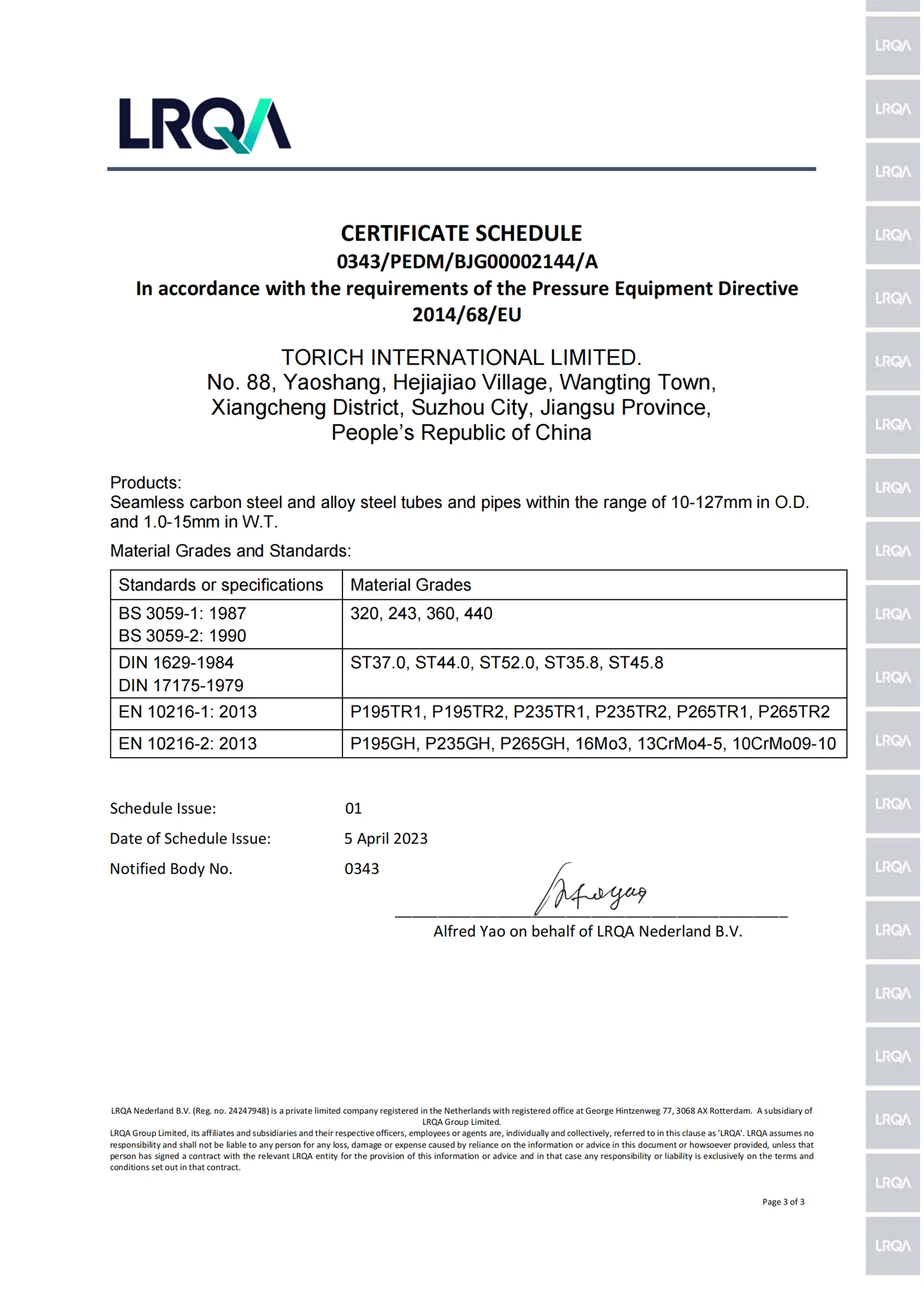
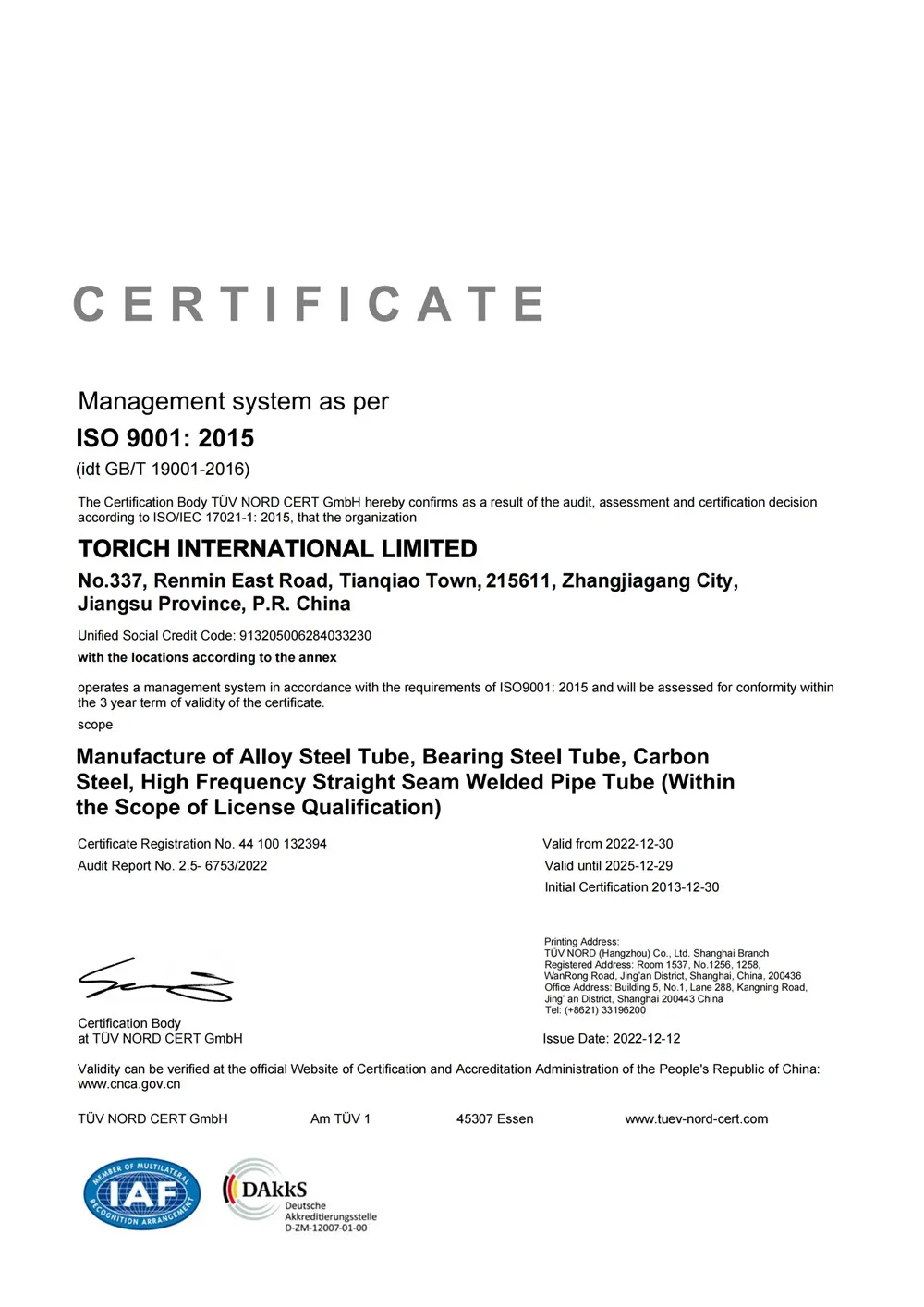
Our Certificate




Customer cooperation


FAQ
Q: What is ASTM A530 alloy steel tube?
Q: Is alloy steel tube better than steel?
Q: What are the alloying limits for ASTM A530 alloy steel tube?
Q: Is ASTM A530 alloy steel tube the same as stainless steel?
Q: What is the difference between carbon steel pipe and ASTM A530 alloy steel tube?
Q: What grade is ASTM A530 alloy steel tube?
Q: Is ASTM A530 alloy steel tube good?
Q: How do you cut alloy steel tube?
Q: Which is stronger stainless steel or alloy steel tube?
Q: Which is better carbon steel or ASTM A530 alloy steel tube?
Q: Is ASTM A530 alloy steel tube weak?
Q: Will ASTM A530 alloy steel tuberust outside?
Q: What is the most popular alloy steel tube?
Q: What is the best alloy steel tube?
Q: Is alloy steel tube stronger than zinc?
Q: What is ASTM A530?
Q: Where are alloy steel tube used?
Q: How to clean the alloy steel tube?
Q: Is alloy steel tubecorrosive?
Q: What is the process of ASTM A530 alloy steel tube?
Hot Tags: astm a530 alloy steel tube, China, suppliers, manufacturers, factory, customized, wholesale, price, OEM, mill, producer, for sale, welded tubing manufacturer in china, welded tubing for plumbing, welded tubing, welded steel tube for machinery, welded steel tube for oil and gas, steel tube supplier


