

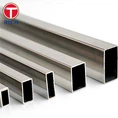


Everyone who makes steel knows about precision pipes. Precision pipes are a type of steel pipe with relatively large precision. It has a wide range of uses, especially the various properties and uses of precision pipes. Both are more important performances of precision tubes. When the precision tube is used, it is necessary to clarify the nature of the use of the precision tube and its various uses, so as to achieve the reasonable use of the precision tube. Precision pipe is a special case of steel pipe, and it is also a good steel. It can be said that the material of precision pipe is also relatively special, and its usage and market prospects are relatively large.
Precision tube is a high-precision steel tube material processed by cold drawing or hot rolling. Because the inner and outer walls of precision steel pipes have no oxide layer, high pressure without leakage, high precision, high smoothness, cold bending without deformation, flaring, flattening without cracks, etc., they are mainly used to produce pneumatic or hydraulic components, such as cylinders or The cylinder can be a seamless tube or a welded tube. The chemical composition of precision steel pipes includes carbon C, silicon Si, manganese Mn, sulfur S, phosphorus P, and chromium Cr.
Common materials:
The commonly used materials of precision tubes are 10#, 20#, 35#, 45#.
There are many materials that can be produced. As long as steel is not too hard, it can basically be produced according to needs. Such as: 10#, 35#, 16Mn, the production process of precision tube is relatively cumbersome, the production condition is also relatively good, the performance is relatively superior, and it is continuously used to play a good role. Therefore, Precision tube is a good type of steel in a sense