

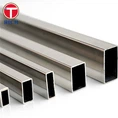


Products Description
Product Specifications
| Standards |
ASTM A270/A270M |
| Steel Grades | UNS S30400 S30403 S31254 S31600 S31603 N08926 N08367 S31803 S32205 S32705 S32003 |
| Equivalent Standards |
ISO 2859-1,EN 10216-5 |
| Outer Diameter (OD) | 0.2mm-101.6mm |
| Wall Thickness (WT) | 0.05mm-5mm |
| Length |
1m-12m |
| Surface Treatment | Bright Annealed |
| Production Process | Cold drawn |
| Condition | Bright Annealed,Cold drawn |
In the medical device industry, ASTM A270 Sanitary Stainless Tubing-primarily manufactured from 316L stainless steel-exhibits a corrosion current density of merely 1.78 μA/cm² when exposed to simulated body fluids and medical disinfectants (such as alcohol, iodophor, and hydrogen peroxide); it effectively resists chloride-induced pitting and crevice corrosion.
316L stainless steel is widely utilized in implants requiring long-term contact with the human body, including vascular stents, artificial joints, and pacemaker casings.
In contrast to welded tubing, ASTM A270 sanitary tubing is a seamless product manufactured via a cold-drawing process; its inner surface is smooth and free of protrusions, thereby inhibiting bacterial growth.
Customized Services
- Custom outer diameters can be produced to suit the structural design of the client's medical devices (covering any specification within the range of 0.5 mm to 101.6 mm).
- The tubing is supplied in a bright annealed condition and supports various surface treatments, including mechanical polishing (Ra 0.5–0.6 μm), high-precision electropolishing (Ra ≤ 0.2 μm), and 8K mirror polishing.
- We offer a comprehensive range of end-finishing services, such as 45°/90° chamfering, rounded transitions, sealing, tapping, and flaring.
- We provide one-stop OEM/ODM services based on client-supplied drawings, samples, or technical specifications, fully tailored to meet specific branding requirements.
Chemical Composition
| Element | C (%) | Mn (%) | P (%) | S (%) | Si (%) | Cr (%) | Ni (%) | Mo (%) | N (%) |
|---|---|---|---|---|---|---|---|---|---|
| TP304L | ≤0.035 | ≤2.0 | ≤0.045 | ≤0.03 | ≤1.0 | 18.0–20.0 | 8.0–13.0 | - | - |
| TP316L | ≤0.035 | ≤2.0 | ≤0.045 | ≤0.03 | ≤1.0 | 16.0–18.0 | 10.0–14.0 | 2.0–3.0 | - |
| 2205 | ≤0.03 | ≤2.0 | ≤0.03 | ≤0.02 | ≤1.0 | 22.0–23.0 | 4.5–6.5 | 3.0–3.5 | 0.14–0.20 |
Mechanical Properties
| Property | Tensile Strength (min) | Yield Strength (0.2% offset) | Elongation | Hardness (HRB) |
| TP304L | 515 MPa | 205 MPa | ≥ 35% | ≤ 201 |
| TP316L | 515 MPa |
205 MPa |
≥ 35% | ≤ 201 |
| 2205 | 620 MPa | 450 MPa | ≥ 25% | ≤ 290 |
Possible Alternative Grades
- For medical devices requiring high-temperature sterilization or operating continuously in high-temperature environments, 316Ti stainless steel is a suitable choice; it can withstand temperatures exceeding 600°C and offers excellent resistance to intergranular corrosion.
- For seamless tubing in high-end dental instruments and fluid delivery lines in insulin pumps, 2304 duplex stainless steel is recommended; its corrosion resistance is comparable to that of 2205, yet it offers a lower cost.
- For implantable medical devices, Grade 2 titanium is an ideal option; it exhibits superior biocompatibility compared to 2205 and is suitable for applications such as implantable sensor catheters and seamless tubing for artificial organ support systems.
application areas
- Medical Infusion Devices: Infusion tubing, hypodermic needles, seamless tubing for infusion pumps, seamless catheters for IV indwelling needles, etc.
- Minimally Invasive Interventional Devices: Laparoscopes, hysteroscopes, seamless interventional catheters, guidewire sheaths, etc.
- Diagnostic Equipment: Seamless fluid tubing systems for devices such as blood analyzers, biochemical analyzers, ventilators, patient monitors, etc.
- Surgical Instruments: Surgical scissors, hemostatic forceps, and similar instruments.
- Dental Instruments: Dental syringes, root canal treatment instruments, etc.
Products Show


Testing Equipment


Factory Equipment

Pickling equipment


Products Package


FAQ
Q: How should one choose between 304L and 316L seamless materials?
A: If the application environment does not involve high-chloride media, corrosion conditions are mild, and cost-sensitivity is a factor, 304L is the recommended choice. Conversely, if the application environment involves chloride ions (such as human bodily fluids or medical disinfectants), requires high corrosion resistance, or involves devices intended for prolonged contact with the human body, 316L seamless material should be given priority.
Q: What dimensional tolerances can be achieved with ASTM A270 Sanitary Stainless Tubing?
A: Standard tolerances can be controlled within ±0.01 mm; for custom-specified dimensions, tolerances can be refined to a precision of ±0.005 mm.
Q: Can the surface finish precision of the tubing meet the sanitary requirements for medical devices?
A: Yes. Following standard electropolishing, the inner surface roughness (Ra) is ≤0.2 μm; following mechanical polishing, it is ≤0.6 μm. These specifications comply with the relevant regulatory requirements for medical devices, including GMP and ISO 13485. We can provide material certificates, third-party inspection reports, and compliance documentation upon request.
Hot Tags: astm a270 sanitary stainless tubing, China, suppliers, manufacturers, factory, customized, wholesale, price, OEM, mill, producer, for sale


