

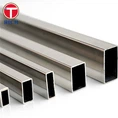


Profile Steel Tubes
In the realm of structural engineering, profile steel tubes serve as crucial components due to their exceptional strength and versatility. These tubes, widely used in a variety of applications, exhibit unique features that make them suitable for various construction projects. This article explores the material and specification of profile steel tubes, highlights their key features, provides a comprehensive chemical composition table, and presents a mechanical properties table. Additionally, it discusses specific steel grades, application areas, and possible alternative grades for these essential elements of modern construction.
Material and Specification
Profile steel tubes are typically made from high-quality carbon steel or alloy steel. The choice of material depends on the specific requirements of the application and the necessary properties such as strength, durability, and corrosion resistance. These tubes are available in a wide range of shapes and sizes, including square, rectangular, circular, and elliptical cross-sections.
The specification of profile steel tubes often varies depending on the manufacturing standards and the intended use. Common specifications include the outer diameter (OD), thickness, length, and tolerances. These parameters ensure that the tubes are produced with precision and meet the desired dimensional accuracy.
Key Features
Profile steel tubes possess a set of key features that contribute to their popularity in the construction industry:
Strength: These tubes are known for their excellent strength-to-weight ratio, providing structural integrity in various applications.
Flexibility: Profile steel tubes can be easily bent and shaped without compromising their structural integrity, allowing for tailor-made designs.
Corrosion Resistance: When specific alloy steels are used, profile steel tubes exhibit exceptional corrosion resistance, making them suitable for outdoor and corrosive environments.
Ease of Connection: Due to their standardized dimensions, these tubes are easily connected using various joining techniques such as welding, bolting, or clamping.
Chemical Composition
The chemical composition of profile steel tubes can vary depending on the desired properties and the material chosen. The following table presents a typical chemical composition for carbon steel profile tubes:
| Element | Composition (%) |
| Carbon (C) | 0.20% |
| Silicon (Si) | 0.30% |
| Manganese (Mn) | 1.50% |
| Phosphorus (P) | 0.040% |
| Sulphur (S) | 0.050% |
Mechanical Properties
Profile steel tubes exhibit exceptional mechanical properties, contributing to their suitability for diverse applications. The following table presents some typical mechanical properties of profile steel tubes:
| Property | Value |
| Ultimate Tensile Strength (MPa) | 500 - 700 |
| Yield Strength (MPa) | 300 - 400 |
| Elongation (%) | 20 - 30 |
| Hardness (HB) | 150 - 180 |
Steel Grade and Application
Profile steel tubes are available in various steel grades, each offering unique properties and usage possibilities. Some common steel grades used for profile steel tubes include:
Grade A: Suitable for general-purpose applications such as construction frames, fences, and handrails.
Grade B: Designed for structural applications requiring increased strength and load-bearing capabilities such as bridge construction, light poles, and towers.
Grade C: Offers enhanced corrosion resistance, making it ideal for outdoor applications like agricultural equipment, scaffolding, and structural supports in coastal areas.


Hot Tags: profile steel tubes, China, suppliers, manufacturers, factory, customized, wholesale, price, OEM, mill, producer, for sale, fluid conveyance carbon steel tube, plumbing carbon steel tube, erw carbon steel tube, industrial carbon steel tube, square carbon steel tube, construction carbon steel tube


