

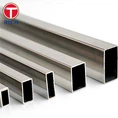


Duplex stainless steel is widely used in applications where conventional austenitic stainless steels may not provide enough strength or resistance to chloride-induced corrosion. However, when sourcing duplex stainless steel products, buyers often encounter two similar specifications: ASTM A789 and ASTM A790 Duplex Stainless Steel.
Both standards cover ferritic/austenitic stainless steels and may include common duplex grades such as 2205 and super duplex 2507. However, they are designed for different product forms and dimensional systems.
The core distinction boils down to one term: "tubing" versus "pipe." Selecting the wrong standard can lead to a mismatch between the design intent and the specifications-such as dimensions, tolerances, compatible fittings, and inspection requirements-listed on a purchase order.
This article explains the scope of each standard, highlights their fundamental differences, and provides guidance on how to make the correct selection.
What Is ASTM A789 Duplex Stainless Steel Tubing?
ASTM A789 covers seamless and welded ferritic/austenitic stainless steel tubing intended for general corrosive service, with particular emphasis on resistance to stress corrosion cracking.
The key word is tubing. ASTM A789 products are normally specified according to outside diameter and wall thickness rather than traditional pipe sizes. For example, a project drawing may specify a duplex stainless steel tube as:OD 25.4 mm × WT 1.65 mm
This sizing method makes ASTM A789 suitable for equipment and systems where tube dimensions, wall thickness, and dimensional control are important.
Common applications include heat exchangers, condensers, chemical processing equipment, seawater equipment and other corrosion-resistant tubing systems.
What Is ASTM A790 Duplex Stainless Steel Pipe?
ASTM A790 Duplex Stainless Steel covers seamless and straight-seam welded ferritic/austenitic stainless steel pipe intended for general corrosive service.Unlike ASTM A789 tubing, ASTM A790 products are normally treated as pipe.
Pipe dimensions are commonly specified by Nominal Pipe Size and Schedule, such as:
NPS 2 SCH 10S
NPS 4 SCH 40S
NPS 6 SCH 80S
This dimensional system makes ASTM A790 particularly suitable for process piping systems where the pipe must connect with standard fittings, flanges, valves and other piping components.
Typical applications include chemical processing, oil and gas systems, offshore equipment, desalination plants, seawater piping and other industrial fluid-handling systems.
ASTM A789 vs ASTM A790: Key Differences
The most important difference between these two standards is not the duplex stainless steel itself, but the product form and dimensional system.
| Comparison | ASTM A789 | ASTM A790 |
|---|---|---|
| Product Type | Precision Tubing | Industrial Pipe |
| Size Description | OD × Wall Thickness | NPS × Schedule |
| Manufacturing Method | Seamless or Welded | Seamless or Straight-Seam Welded |
| Main Service | Corrosion-Resistant Tubing Applications | Corrosion-Resistant Process Piping |
| Common Duplex Grades | 2205 / 2507, etc. | 2205 / 2507, etc. |
| Typical Applications | Heat Exchangers, Condensers, Equipment Tubing | Process Piping, Fluid Transport, Piping Systems |
| Key Purchasing Considerations | OD, Wall Thickness, Length, Dimensional Tolerance | NPS, Schedule, B36.19 Pipe Dimensions |
The most critical point is the first line. ASTM A790 is not simply a "more advanced version" of A789. The correct standard depends on whether the component is classified as "tubing" (specified by OD × WT) or "pipe" (specified by NPS × Schedule), as well as the project's adopted connection system. While commercial suppliers may sometimes use the terms "tube" and "pipe" interchangeably, technical procurement orders must be precise and unambiguous.
ASTM A789 Tube vs ASTM A790 Pipe Dimensions
For ASTM A789 tubing, buyers normally specify the outside diameter, wall thickness, length, dimensional tolerance, and whether seamless or welded construction is required. Because the dimensions are usually defined by OD and wall thickness, the tube size can be selected more flexibly according to the equipment design and specific application requirements.
For ASTM A790 Duplex Stainless Steel pipe, buyers commonly specify the nominal pipe size, Schedule, length, material grade, and whether seamless or welded construction is required. The NPS and Schedule system is especially important when the pipe needs to match standard fittings, flanges, valves, or other piping components. For this reason, an OD × WT tube specification should not be directly converted into an NPS pipe specification without first checking the project drawing and design requirements.
Common Duplex Stainless Steel Grades
The grade lists in A789 and A790 overlap significantly and include a variety of ferritic/austenitic (duplex) stainless steel grades. Both standards typically cover 2205 (UNS S31803/S32205) and the super duplex grade 2507 (UNS S32750).
I. Duplex 2205
UNS S31803 and UNS S32205 are widely used duplex stainless steel grades.
Compared with common 300-series austenitic stainless steels, duplex 2205 combines relatively high mechanical strength with good resistance to chloride-containing environments, pitting, and stress corrosion cracking.
It is commonly considered for chemical processing, marine equipment, heat exchangers, and industrial piping systems.
II. Super Duplex 2507
UNS S32750 is a common super duplex stainless steel grade designed for more aggressive environments.
It is often selected for applications involving seawater, high chloride concentrations, offshore equipment, desalination systems, and demanding chemical processing conditions.
There are many common misconceptions in procurement: for instance, assuming that any "2205" material is automatically "A790," or believing that "A789" corresponds to only one specific grade.
For example, specifying only "S32205" is not enough. The complete requirement may be:
ASTM A789 UNS S32205 tubing or ASTM A790 UNS S32205 pipe. The correct specification depends on the actual product and application.
How to Choose Between ASTM A789 and ASTM A790
Select ASTM A789 when the tubing is specified in drawings or data sheets, with dimensions defined by Outside Diameter (OD) and Wall Thickness (WT). This standard applies to components such as heat exchangers, condensers, instrumentation lines, or equipment connections, where dimensional precision and fit-up with equipment are critical.
Select ASTM A790 when the project requires process or transmission piping. Dimensions are specified according to Nominal Pipe Size (NPS) and Schedule (wall thickness). The piping must be compatible with standard flanges and butt-weld fittings, as its primary function is the transport of fluids through a piping system.
It is entirely appropriate to use both standards within a single project-for instance, combining ASTM A789 heat exchanger tube bundles with ASTM A790 process piping. In such cases, however, the welding consumables and heat treatment procedures must be compatible with both product forms.

FAQ About ASTM A789 and ASTM A790
What are the main differences between ASTM A789 and ASTM A790?
ASTM A789 covers duplex stainless steel tubing, while ASTM A790 covers pipe. A789 is usually specified by OD × WT, while A790 is typically specified by NPS × Schedule.
Can ASTM A789 and ASTM A790 use the same duplex grade?
Yes. Some duplex and super duplex grades can be supplied under both standards. The correct standard depends on the required product form and project specification.
Is ASTM A789 better for heat exchangers?
ASTM A789 is commonly used when duplex stainless steel tubing is required for heat exchanger applications. Final selection should follow the equipment design and project requirements.
What information is needed for a duplex stainless steel quote?
Specify the ASTM standard, UNS grade, seamless or welded construction, dimensions, length, quantity, testing requirements, surface finish, and certification level. Avoid specifying only "2205" without the applicable standard.