

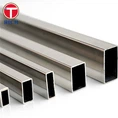


Austenitic stainless steels typically possess a microstructure consisting of pure austenite at room temperature; however, some variants contain a small amount of ferrite, which helps prevent hot cracking. Due to their excellent weldability, austenitic stainless steels are widely utilized in industries such as chemical processing and the manufacture of pressure vessels for the petroleum sector. Nevertheless, if welding operations are performed improperly, austenitic stainless steels are susceptible to various issues, including intergranular corrosion, hot cracking, stress corrosion cracking, and poor weld bead formation.
What are the welding issues associated with austenitic stainless steel?
I. Intergranular corrosion
a. Causes of Intergranular Corrosion
Intergranular corrosion occurs at the grain boundaries; hence, it is referred to as intergranular corrosion. It represents one of the most dangerous forms of degradation for austenitic stainless steels. It is characterized by corrosion that penetrates deeply into the metal along the grain boundaries, resulting in a decline in both the mechanical properties and corrosion resistance of the metal.
When austenitic stainless steel is held within the temperature range of 450°C to 850°C for a certain period, chromium carbides (Cr23C6) precipitate at the grain boundaries. The chromium required for this precipitation is drawn primarily from the surface layers of the grains; if the chromium from the grain interiors cannot diffuse outward quickly enough to replenish these surface layers, the chromium content at the grain boundaries-specifically in the surface layers of the grains-will drop, creating a "chromium-depleted zone." Under the influence of aggressive corrosive media, these chromium-depleted zones at the grain boundaries become susceptible to attack, resulting in intergranular corrosion. Stainless steel affected by intergranular corrosion may exhibit no visible changes on its surface; however, when subjected to stress, it will fracture along the grain boundaries, resulting in an almost complete loss of structural strength.
b. Measures to Prevent Intergranular Corrosion
Select stainless steel welding electrodes with ultra-low carbon content (C ≤ 0.03%) or those containing stabilizing elements such as titanium or niobium.
Employ "low-heat-input" welding parameters. The objective is to minimize the dwell time within the critical temperature range (450°C–850°C). This is achieved by utilizing low welding currents, high travel speeds, short arc lengths, and avoiding transverse weaving motions. Forced cooling methods (e.g., using copper backing plates or water cooling) may be applied to the weld seam to accelerate the cooling rate of the welded joint and reduce the size of the heat-affected zone (HAZ).
In multi-pass welding, the inter-pass temperature must be strictly controlled; the preceding weld bead should be allowed to cool to below 60°C before the next pass is deposited. The weld seam on the side of the component that will be in contact with the corrosive medium should be welded last. A post-weld solution treatment should be performed: the workpiece is heated to a temperature between 1050°C and 1150°C, followed by quenching. This process causes the Cr23C6 precipitates at the grain boundaries to redissolve into the grain interiors, thereby restoring a uniform austenitic microstructure.
II. Hot Cracking

Causes of Hot Cracking
A large temperature interval between the liquidus and solidus lines-meaning a wide temperature range during the solidification process-leads to severe segregation of low-melting-point impurities, which tend to concentrate at the grain boundaries. Furthermore, a high coefficient of thermal expansion results in significant stresses during cooling and shrinkage.
Measures to Control Hot Cracking
Control the microstructure of the weld metal; ideally, the weld metal should exhibit a duplex structure, with the ferrite content maintained at or below 3%–5%. This is because ferrite has the capacity to dissolve significant quantities of harmful impurities such as sulfur (S) and phosphorus (P). Control the chemical composition; reducing the content of nickel, carbon, sulfur, and phosphorus in the weld metal-while increasing the levels of elements such as chromium, molybdenum, silicon, and manganese-can effectively minimize the occurrence of hot cracking.
Select an appropriate type of electrode coating. The use of low-hydrogen-type coated electrodes promotes grain refinement in the weld metal, reduces impurity segregation, and enhances crack resistance. Conversely, acidic-type coated electrodes possess strong oxidizing properties, leading to significant burn-off of alloying elements and a consequent reduction in crack resistance; moreover, they result in coarse-grain structures, making the weld highly susceptible to hot cracking. Employ appropriate welding parameters and cooling rates. Utilize "cold" welding parameters-specifically, low current and high travel speed-to prevent overheating of the weld pool and to facilitate rapid cooling; this minimizes segregation and improves crack resistance. In multi-pass welding, strictly control the interpass temperature; ensure that the preceding weld bead has cooled to 60°C before depositing the next bead.
III. Stress Corrosion Cracking

Causes of Stress Corrosion Cracking
Stress corrosion cracking (SCC) is a phenomenon of delayed cracking that occurs in welded joints when subjected to tensile stress within a specific corrosive environment. In austenitic stainless steel welded joints, SCC represents a particularly severe mode of failure, manifesting as brittle fracture unaccompanied by any macroscopic plastic deformation.

Measures to Against Stress Corrosion Cracking
Establish appropriate forming, processing, and assembly procedures to minimize cooling-induced deformation as much as possible; avoid forced assembly; and prevent the introduction of various surface defects during the assembly process (since various assembly-related scratches and arc strikes can serve as crack initiation sites for SCC and are prone to developing into corrosion pits). Select welding consumables judiciously. The weld metal and the base metal should be well-matched to prevent the formation of undesirable microstructures-such as grain coarsening or hard, brittle martensite. Employ appropriate welding processes. Ensure that the weld bead exhibits good morphology, free from defects that could induce stress concentrations or pitting (e.g., undercut); furthermore, adopt a rational welding sequence to minimize residual welding stresses. Implement stress-relief treatments. This typically involves post-weld heat treatments, such as full annealing or annealing; in cases where heat treatment is difficult to execute, alternative methods-such as post-weld peening or shot blasting-may be employed.
IV. Poor Weld Bead Formation
a. Causes of Poor Weld Bead Formation
When welding austenitic stainless steel, the high content of alloying elements within the weld metal results in poor fluidity of the weld pool, which frequently leads to poor formation of the weld bead surface. This is primarily manifested as deteriorated formation on the back side of the root pass and a rough surface finish on the cap pass. While the impact of poor surface formation on weld performance is not particularly evident under ambient or high-temperature operating conditions, under low-temperature conditions, the stress concentrations induced by such defects can affect the weld's low-temperature performance just as significantly as internal weld defects.
b. Measures to Poor Weld Bead Formation
Issues regarding poor weld bead formation-as well as the problem of intergranular corrosion within the heat-affected zone (HAZ)-can be effectively resolved through the optimization of welding processes. Specifically, employing Gas Tungsten Arc Welding (GTAW) for the root pass, combined with the use of low welding heat input, allows for effective control over the extent to which the HAZ is exposed to the sensitization temperature range.
conclusion
Austenitic stainless steel is a widely used material in the chemical and petrochemical industries; however, its welding is prone to four primary types of defects-such as intergranular corrosion and hot cracking-the root causes of which are largely linked to temperature control, elemental segregation, and residual stress. At best, these issues merely compromise weld morphology; at worst, they drastically degrade material performance or even precipitate brittle fracture. Consequently, effective prevention and control strategies require comprehensive management across multiple stages-including electrode selection, welding parameter optimization, and post-weld treatment-with the precise control of heat input serving as the critical focal point.