

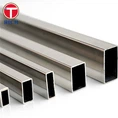


Nickel alloys and stainless steel are both widely used corrosion-resistant, high-strength metallic materials in industrial applications. When selecting industrial materials, engineers and procurement teams often face a crucial question: should we choose nickel alloys or stainless steel? However, the two differ significantly in composition, core properties, and applicable scenarios. This article will detail the differences between nickel alloys and stainless steel from five aspects: operating temperature, chemical composition, corrosion resistance, applications, and price.
Differences in chemical composition


First, from a chemical composition perspective, stainless steel is primarily a ferroalloy; Monel, ferrochromium-nickel, and Hastelloy are nickel alloys.
The main component of stainless steel is iron, with an iron content exceeding 65%, and some ferritic and martensitic stainless steels even reaching over 80%. In contrast, nickel alloys typically have an iron content below 50%. Some nickel alloys, such as Hastelloy C-2000, have an iron content even below 3%.
Regarding nickel content, nickel alloys often have a nickel content greater than 30%, some even exceeding 70%. Stainless steel, on the other hand, has a nickel content of less than 30%, and some ferritic and martensitic stainless steels contain no nickel at all.
Both stainless steel and nickel alloys contain approximately 20% chromium. Chromium is a very effective corrosion inhibitor and is the primary source of the corrosion resistance of stainless steel and nickel alloys.
Difference in Operating Temperature
Operating temperature is the biggest difference between stainless steel and nickel alloys. Generally, stainless steel is typically used in room temperature applications, while nickel alloys are primarily used in high-temperature environments. One of the most important factors determining this characteristic is the nickel content. Because iron cannot maintain a stable structure at high temperatures, it is difficult to guarantee the high-temperature performance of stainless steel, which is primarily composed of iron.
Nickel, on the other hand, perfectly maintains the austenitic structure of the alloy at high temperatures; only nickel-based alloys perform well at high temperatures. Although nickel is also present in some austenitic stainless steels, their nickel content remains very low.
Furthermore, Monel alloys are often used at room temperature because the corrosion resistance of copper decreases at high temperatures.
Difference in corrosion resistance
Nickel, chromium, and molybdenum are the main elements determining the corrosion resistance of stainless steel and nickel alloys.
Nickel and molybdenum are the real differences between nickel alloys and stainless steel. Nickel itself is an excellent corrosion-resistant element; unlike iron, which corrodes easily in air, nickel alloys naturally have a better foundation for corrosion resistance than stainless steel.
Chromium forms an oxide film on the metal surface when it comes into contact with oxygen. This oxide film effectively prevents further oxidation of the alloy. The difference in chromium content between nickel alloys and stainless steel is not significant; both exhibit excellent oxidation resistance.
Molybdenum is a metallic element with good resistance to reducing corrosion. Compared to stainless steel, nickel alloys often have a higher molybdenum content. A typical alloy with a high molybdenum content is Hastelloy B-3, which has a molybdenum content as high as 30%. In summary, nickel alloys are superior to stainless steel in terms of overall corrosion resistance.


Differences in application areas
Nickel alloys and stainless steel have many overlapping applications because they are both corrosion-resistant alloys. However, there are three main differences in their applications:
1. Stainless steel is not suitable for high-temperature applications, while most high-temperature applications require nickel alloys, such as engines, nuclear power plant reactors, and deep oil wells.
2. Stainless steel has wide applications in civilian fields, such as tableware, medical supplies, and construction. Nickel alloys are primarily used in industrial and military applications.
3. The corrosion resistance of stainless steel is limited to oxidizing environments. If the corrosive environment becomes specialized and complex, most stainless steels cannot resist such corrosion.
Difference in cost
First, nickel alloys are significantly more expensive than stainless steel due to the substantial price difference between nickel and iron.
Second, nickel alloys typically have a higher molybdenum content, and molybdenum is several times more expensive than nickel. Under normal conditions, nickel alloys are stronger than stainless steel, which increases the difficulty of machining them. This increased machining difficulty is another significant factor contributing to their higher price.
Finally, the more complex composition of nickel alloys, the stricter control over trace elements, and the higher requirements for raw materials indirectly increase their price.
conclusion
Both stainless steel and nickel alloys are corrosion-resistant materials. In most cases, nickel alloys outperform stainless steel. A key difference lies in their operating environment: stainless steel is typically used at room temperature, while nickel alloys are often used at high temperatures. Naturally, the superior performance of nickel alloys comes at a higher price. Customers can choose the most suitable material based on their budget and needs.