



Chemical Composition Differences
Based on the chemical composition table, the key difference between 304 and 316 stainless steel tubing is that 316 contains approximately 2-3% molybdenum, while 304 contains none.
| Element | Chromium | Nickel | Molybdenum | Carbon | Manganese | Silicon |
| 304 | 18.0 – 20.0 | 8.0 – 10.5 | 0 | ≤ 0.08 | ≤ 2.0 | ≤ 1.0 |
| 316 | 16.0 – 18.0 | 10.0 – 14.0 | 2.0 – 3.0 | ≤ 0.08 | ≤ 2.0 | ≤ 1.0 |
Key Performance Comparison
Corrosion Resistance
- 304: Has excellent resistance to atmospheric air, freshwater, and general corrosive environments. It resists most organic and inorganic acids (such as dilute sulfuric acid). However, it is susceptible to rust in high-salt, high-chloride environments (such as at the seaside or in swimming pools).
- 316: Due to its molybdenum content, it offers significantly better corrosion resistance than 304, especially against pitting and crevice corrosion caused by chloride ions (Cl⁻). It is suitable for highly corrosive environments such as seawater and chemical industries.
High Temperature Resistance
- 304: The maximum continuous operating temperature is approximately 800°C (1470°F). Above this temperature, the oxide film becomes less stable, and flaking may occur with long-term use. Creep resistance is moderate.
- 316: Because molybdenum enhances oxidation and creep resistance at high temperatures, the maximum continuous operating temperature is approximately 870°C (1600°F). It performs especially well in high-temperature atmospheres containing sulfur and chlorine.
Mechanical Properties
- 304 and 316 have very similar tensile strength and yield strength in the annealed state.
- 316 is slightly harder than 304, but both are still considered soft and formable in the annealed state.
Application field comparison
| Application Types | 304 | 316 |
| Daily Use | Kitchenware (sinks, tableware), indoor plumbing, decorative components, etc. | High-end outdoor products (such as coastal railings), marine aquaculture equipment |
| Industrial | General chemical pipelines, freshwater treatment equipment, food processing machinery | Highly corrosive chemical pipelines, seawater desalination equipment, pharmaceutical equipment |
| Medical/Food | General food contact components (such as storage tanks) | High-precision medical instruments, implantable devices, and harsh food processing environments |
Conclusion
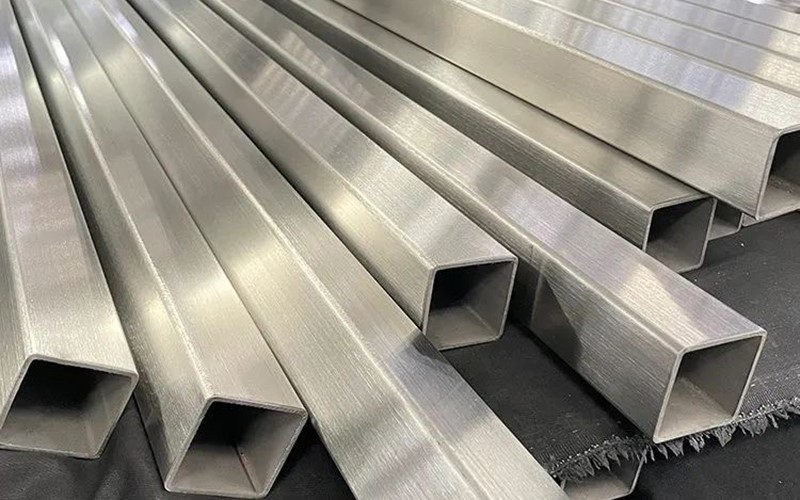
Due to its molybdenum and higher nickel content, 316 is more expensive than 304. The selection should be based on the specific operating conditions (corrosion intensity, temperature, and budget). If the operating environment is normal air, fresh water, or low-corrosion scenarios, 304 is more cost-effective. If the environment involves seawater, high salt content, chemical corrosion, or high-temperature environments, 316 is a more reliable choice.