

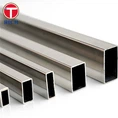


To choose the right stainless coil tube, the most effective starting point is to clearly define your project's requirements and match them with the tube's material grade, size, wall thickness, and surface finish. In practical engineering applications, a stainless coil tube is widely used in hydraulic systems, instrumentation lines, automotive assemblies, and heat exchange equipment due to its flexibility, corrosion resistance, and consistent mechanical performance. However, selecting the wrong specification can lead to pressure loss, premature corrosion, or even system failure.
When evaluating a stainless coil tube, engineers must focus on three critical dimensions: application environment, operating conditions, and required compliance standards. Whether the system operates under high pressure, extreme temperature, or corrosive media, each condition directly influences the optimal tube specification.
Define Project Needs for Stainless Coil Tube
Before selecting materials, a clear understanding of project requirements is essential. Every stainless coil tube application behaves differently depending on system design and operating stress.
Application and Usage
Different application scenarios impose vastly different requirements for pressure resistance, heat transfer, and hygiene standards; these are the primary factors to consider when selecting. Currently, the mainstream applications for stainless steel coiled tubing fall into four categories:
- First, HVAC and refrigeration heat exchange, used in chillers and heat pump systems, where thermal conductivity is the priority;
- Second, chemical fluid transport, involving the conveyance of corrosive media such as acids, alkalis, and salts, where corrosion resistance is the key requirement;
- Third, food, pharmaceutical, and sanitary applications, such as pure water transport and pharmaceutical fluid circulation, require sanitary-grade tubing that is free of impurities and easy to clean;
- Fourth, marine heat tracing is used for pipeline heating in coastal equipment, which requires exceptional resistance to chloride-ion corrosion.
Clearly defining the intended use allows you to directly identify the core performance specifications required for the tubing.
Environmental Factors
Environmental exposure significantly affects material performance:
- Marine or coastal environments require strong chloride corrosion resistance
- Chemical processing systems need resistance to acids and oxidizing agents
- High-temperature applications require stability against scaling and oxidation
- Outdoor installations demand weather and humidity resistance
Understanding the environment helps determine the correct alloy and protective finish for the stainless coil tube.
Key Factors for Stainless Steel Coil Tube Selection

Grade and Corrosion Resistance
Material composition is the key factor determining the corrosion resistance and application suitability of stainless steel coils.
Type 304 stainless coil tube offers a cost-effective balance of strength and corrosion resistance, suitable for general atmospheric and freshwater environments such as HVAC and light industrial systems.
304L, with lower carbon content, provides improved resistance to intergranular corrosion, making it ideal for welded structures without post-weld heat treatment.
Type 316L delivers superior resistance to chlorides, acids, and alkalis, making it the preferred choice for chemical processing, marine environments, and pharmaceutical applications.
Size, Internal Diameter, and Wall Thickness
Outer diameter, inner diameter, and wall thickness directly affect flow capacity, pressure resistance, and bending performance, making them key design parameters for heat exchange and fluid transport systems.
Typical outer diameters range from 6 to 25 mm for most small to medium heat exchangers. Inner diameter controls flow efficiency: smaller IDs increase velocity and heat transfer but also raise flow resistance. Wall thickness determines pressure rating-thin walls (0.5–1.0 mm) suit low-pressure systems, while thicker walls (1.5–2.5 mm) are used for high-pressure chemical applications.


Ensuring Quality Reliability
High-quality stainless steel coiled tubing features uniform welds and surfaces free from cracks, folds, or dents, ensuring that every coil withstands non-destructive testing and pressure testing. Furthermore, it is important to distinguish the quality differences between seamless and welded types:
Seamless coils are formed as a single, integral unit, offering superior sealing and pressure resistance suitable for demanding operating conditions, whereas precision-welded coils-provided the manufacturing process is mature, and quality standards are met-are suitable for standard low-pressure applications.
Finish Options and Optimal Performance
Surface condition significantly affects the performance and service life of stainless steel coiled tubing.
Common options include: pickling for basic corrosion resistance in general industrial use; bright annealing for a smooth, scale-free inner wall with low flow resistance, ideal for heat exchangers and sanitary systems; and internal/external polishing, which provides a high-quality sanitary surface without dead zones, essential for pharmaceutical applications.
Selection should be based on media purity and anti-scaling requirements to ensure optimal performance.

Of course, equipment selection should not be based solely on the initial purchase price; the total life-cycle cost must be comprehensively evaluated.
It is recommended that the project team consider the intended service life: standard 304-grade models are suitable for short-term or temporary operating conditions, whereas 316L material is preferred for long-term, continuous operation, thereby balancing upfront investment with long-term operational benefits.
Conclusion
In summary, the comprehensive selection process for stainless coil tube consists of four key steps:
- First, assess the application scenario, operating environment, and industry compliance standards to define basic requirements;
- Second, match the appropriate material grade and finalize a corrosion-resistance strategy based on the corrosive nature of the environment;
- Third, determine dimensional parameters-such as outer diameter, inner diameter, and wall thickness-to meet equipment pressure and flow rate requirements;
- Fourth, select a suitable surface finish while balancing procurement costs against the tubing's service life.