

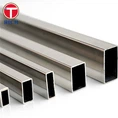


Titanium alloys are alloys made from titanium (chemical symbol Ti) as a matrix, blended with other metallic elements such as aluminum, vanadium, zirconium, and molybdenum. Stainless steel is an alloy made from iron (chemical symbol Fe) as a matrix, blended with elements such as chromium (Cr) (at least 10.5%), nickel (Ni), and molybdenum (Mo). The key to "stainlessness" lies in chromium. Each material has its advantages and disadvantages, and whether titanium alloy is "better" than stainless steel depends on the application requirements.

Comparing Corrosion Resistance:
Titanium Alloys
- Features: Titanium alloys offer a significant strength-to-weight ratio. Its density, approximately 4.5 g/cm³, is nearly half that of stainless steel (approximately 8 g/cm³), yet its strength rivals or even exceeds that of many stainless steels. This is crucial for applications requiring weight reduction.
- Applications: Aircraft frames, engine components, and spacecraft.
Stainless Steel
- Features: Strong and durable, but its weight is a disadvantage. It is a reliable choice when weight is not a critical factor.
- Applications: Building structures, automotive frames, and more.
Comparing Corrosion Resistance
Titanium Alloys
- Features: Titanium alloys form an extremely stable, dense oxide film on their surface, offering excellent resistance to seawater, chlorides, and most acids; they are virtually unaffected by stress corrosion cracking.
- Applications: Desalination plants, ship components, reactors in the chemical industry, heat exchangers, etc.
Stainless Steel
- Features: The chromium oxide film formed by the addition of chromium provides rust resistance, making it an excellent performer in everyday life. However, in environments with high chloride concentrations (such as coastal areas or chemical plants), lower-grade stainless steels (such as 304) may experience pitting corrosion or stress corrosion cracking. High-grade stainless steels (such as 316) improve this by adding molybdenum, but are still inferior to titanium alloys.


Biocompatibility Comparison
Titanium Alloy
- Features: Non-toxic, non-allergenic (nickel-free), and able to directly integrate with human bone tissue, making it ideal for implants.
- Applications: Artificial joints, bone screws, bone plates, dental implants, etc.
Stainless Steel
- Features: 316L low-carbon stainless steel also has excellent biocompatibility and is often used in temporary orthopedic implants. However, due to the potential presence of nickel, it is not suitable for individuals with nickel allergies.
- Applications: Fracture fixation plates, screws, etc.
Conclusion: How to Choose?
- Choose titanium alloy in the following situations:
You have extreme requirements for lightweighting (e.g., aerospace, racing).
Your operating environment is extremely corrosive (e.g., seawater, strong chemicals).
Your product needs to be implanted in the human body and used for a long time (e.g., medical implants).
You have a sufficient budget, and performance takes precedence over cost.
- Choose stainless steel in the following situations:
Cost is the primary consideration (e.g., everyday items, large-scale construction).
You require high hardness and wear resistance (e.g., cutting tools, bearings, valves).
Your application involves high-temperature environments (e.g., automotive exhaust pipes, industrial furnace components).
Ease of processing and manufacturing is important.