

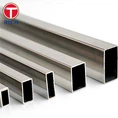


Tube forming and welding
- Tube forming: The process begins by cold rolling the stainless steel coil into a flat steel strip. The steel strip is then gradually bent into a cylindrical shape by a roll forming machine.
- Welding (ERW): The edges of the flat steel strip are welded together using high-frequency electric resistance welding (ERW). The tube is continuously welded to form a seamless structure. Seamless tubes are usually extruded into hollow tubes, but welded tubes are also a common choice for coil products.
Heat treatment

- Bright annealing: After welding, the tube is bright annealed. The tube is heated to 1050-1150°C in an inert or reducing atmosphere (hydrogen or ammonia). This step helps restore the corrosion resistance of the stainless steel and eliminates stress caused by welding.
- Pickling: After annealing, the steel pipe is pickled in a nitric acid/hydrofluoric acid solution to remove the oxide scale or temper color left by welding.
- Passivation: The steel pipe is passivated by washing it with nitric acid to restore the chromium oxide layer that gives it corrosion resistance.
Coating surface treatment
- Cleaning: The steel pipe is thoroughly cleaned and degreased to remove oil, contaminants, and grease that may affect the adhesion of the PVC coating. Alkaline cleaners or water-based cleaners are usually used.
- Surface roughness treatment: The steel pipe is shot peened or sand blasted to slightly roughen the surface, thereby enhancing the mechanical adhesion between the steel pipe and the plastic coating.
PVC coating application (extrusion method)
- Extrusion coating: The cleaned and prepared steel pipe is then pulled through a crosshead die connected to an extruder. The PVC compound is melted and forced through the die, and the coating is applied to the steel pipe as it moves.
- Extruder: The extruder melts the PVC at a temperature of 180-200°C (depending on the PVC type) and applies a continuous and uniform coating around the steel pipe.
- Cooling and sizing: After coating with PVC, the steel pipe passes through a cooling section where it is subjected to water sprays or cooling troughs. This process solidifies the PVC coating.
- Sizing: After cooling, the PVC-coated steel pipe passes through a sizing section where vacuum sizing or mechanical rollers ensure uniform coating thickness and maintain the required diameter of the steel pipe.
- Coiling: The finished PVC-coated pipe is then wound onto a reel or spool for easy handling and transportation. It can also be cut to a predetermined length as required.
Bonding of PVC to Stainless Steel
The bonding of PVC to stainless steel is mainly carried out by mechanical bonding (due to the rough surface) and chemical bonding (if a primer is used). During the extrusion process, the pipe is slightly heated to allow the molten PVC to fuse tightly to the steel surface. Thermal bonding may also occur.
Post-coating treatment and inspection
Ensure uniform coating through coating thickness inspection; visual and dimensional inspection for defects and standard measurement dimensions; adhesion strength test of PVC coating; impact and bending test; salt spray test, etc., to test the pipe.
Final inspection and packaging
PVC-coated 316 stainless steel pipes are subject to final quality control inspection to ensure that all parameters meet the required standards, including dimensions, coating quality, and mechanical properties.
