

Quenching And Tempering
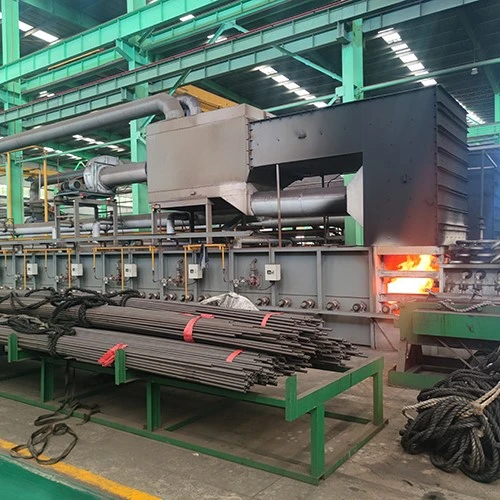
- Quenching: Heating the steel to above the critical temperature, keeping it warm and then cooling it quickly (such as with water or oil) can make the steel form a martensitic structure, greatly improving the hardness and strength, but at this time the steel is brittle and has high internal stress, which is easy to crack and cannot be used directly.
- High temperature tempering: Reheating the quenched steel to a certain temperature (usually 500-650℃), keeping it warm and then cooling it slowly, can eliminate internal stress, reduce brittleness, while retaining a certain strength and hardness, and finally obtain a relatively balanced performance of strength, hardness, toughness, and plasticity.
Application
- Automobile manufacturing industry: crankshafts, connecting rods, steering knuckles, half shafts, etc.
- Machine tools and heavy machinery: spindles, transmission shafts, gears, high-strength bolts, etc.
- General machinery parts: connecting rods, bolts, hydraulic rods, etc.
Conclusion
In summary, quenching and tempering are essential process steps in heat treatment, which are intended to improve the strength, hardness, and toughness of materials. They are also key methods for producing strong, durable, and fatigue-resistant steel parts, which are essential for heavy machinery and structural applications.