

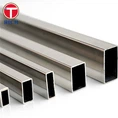


Welding tubes are an essential component in various industries, including construction, manufacturing, and automotive. They are widely used for joining metal parts together, creating strong and durable connections. In this article, we will explore the concept of welding tubes, their applications, and the process involved in their creation.
1. How are welding tubes made?
Welding tubes are typically made through a process called tube welding. This process involves joining two edges of a metal strip or plate to form a tube shape. There are several methods used for tube welding, including:
Electric Resistance Welding (ERW): This method uses an electric current to heat the edges of the metal strip and then applies pressure to fuse them together.
High-Frequency Induction Welding (HFIW): In this method, high-frequency electrical currents are used to heat the edges of the metal strip, which are then pressed together to form a welded tube.
Seamless Tube Manufacturing: Seamless tubes are created by piercing a solid cylindrical billet and then rolling it to form a tube without any welded seams.
2. What are the advantages of using welding tubes?
Welding tubes offer several advantages over other joining methods, making them a popular choice in various industries. Some key advantages include:
Strength and Durability: Welding tubes provide strong and durable connections, ensuring the integrity of the joined parts.
Versatility: Welding tubes can be made from a wide range of metals, including steel, stainless steel, aluminum, and copper, making them suitable for diverse applications.
Cost-Effectiveness: Welding tubes are often more cost-effective than other joining methods, especially for large-scale production.
Customizability: Welding tubes can be easily customized in terms of size, shape, and thickness to meet specific project requirements.
3. What are the applications of welding tubes?
Welding tubes find applications in various industries due to their versatility and strength. Some common applications include:
Construction: Welding tubes are extensively used in the construction industry for structural purposes, such as building frameworks, support columns, and scaffolding.
Manufacturing: Welding tubes are used in the manufacturing of machinery, equipment, and vehicles, providing structural support and stability.
Piping Systems: Welding tubes are widely employed in the oil and gas industry, as well as in plumbing and HVAC systems, for the transportation of fluids and gases.
Automotive: Welding tubes are used in the manufacturing of automobile frames, exhaust systems, and suspension components, ensuring strength and safety.
Conclusion
Welding tubes play a crucial role in various industries, providing strong and durable connections between metal parts. They are created through processes like electric resistance welding and high-frequency induction welding, or by manufacturing seamless tubes. The advantages of welding tubes include their strength, versatility, cost-effectiveness, and customizability. With applications ranging from construction to automotive, welding tubes continue to be an integral part of modern manufacturing and infrastructure development.
What is a welding tube?
Jul 03, 2024 Leave a message
Send Inquiry