

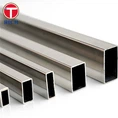


In the industrial materials sector, stainless steel and Hastelloy alloy play a key role due to their exceptional corrosion resistance. The former, known as "stainless acid-resistant steel," is widely used in construction, food processing, and other fields, while the latter, with its exceptional chemical resistance, holds a core position in chemical engineering and marine engineering. While both are corrosion-resistant materials, they differ significantly in their composition, performance, and application scenarios. This article will analyze the differences between 316L stainless steel and Hastelloy C276 alloy from five perspectives: chemical composition, physical properties, and application areas.
1
Chemical Composition Differences
- 316L Stainless Steel: Stainless steel is an iron-based alloy whose core element is chromium (≥10.5%). Chromium forms a dense oxide film (Cr₂O₃) on the metal surface, providing corrosion resistance. 316L stainless steel (16Cr-12Ni-2.5Mo) belongs to the chromium-nickel-molybdenum steel (Cr-Ni-Mo system). The addition of molybdenum significantly improves pitting corrosion resistance and is widely used in seawater environments.
- Hastelloy C276: Hastelloy C276 is a nickel-based superalloy, typically containing over 50% nickel. The synergistic effects of molybdenum, chromium, tungsten, and other elements provide corrosion resistance in extreme environments.
| Grade | Fe | Cr | Ni | Mo | Mn | Si | C | P | S | W | Co | V |
| 316L | Balance | 16.0–18.0 | 10.0–14.0 | 2.0–3.0 | ≤2.0 | ≤0.75 | ≤0.030 | ≤0.045 | ≤0.030 | - | - | - |
| Hastelloy C276 | 4.0–7.0 | 14.5–16.5 | Balance | 15.0–17.0 | ≤1.0 | ≤0.08 | ≤0.010 | ≤0.04 | ≤0.03 | 3.0–4.5 | ≤2.5 | ≤0.35 |
2
Physical Property Differences
1. Corrosion Resistance
- 316L stainless steel: Molybdenum enhances chloride ion resistance, but it still corrodes severely in strong oxidizing acids such as 65% nitric acid.
- Hastelloy C276: The corrosion rate in boiling 65% nitric acid is only 0.01 mm/year, 1/50 that of 316L. The corrosion rate in 10% hydrochloric acid is 0.02 mm/year, while 316L completely dissolves under the same conditions.
2. Mechanical Properties
- 316L stainless steel: Tensile strength of 520-620 MPa, elongation of 40%-60%, making it suitable for deep drawing.
- C-276 alloy: Room temperature tensile strength of 730 MPa, elongation of 40%. It maintains a tensile strength of 520 MPa at 650°C, while 316L's strength drops to 310 MPa at the same temperature.
3
Application Areas Differences
1. 316 stainless steel applications
- Marine engineering: 316 is used in ships, desalination equipment, and coastal facilities to resist corrosion from high chloride ion concentrations in seawater.
- Chemical equipment: 316 effectively extends the service life of chemical containers, reactors, and piping systems operating in acidic or chlorine-containing media.
- Medical equipment: 316 is also frequently used in certain medical devices and surgical equipment requiring high corrosion resistance.
- Food and beverage industry: 316 stainless steel outperforms 304 in some food processing equipment and brewing equipment operating in humid and corrosive environments.
2. Hastelloy C276 applications
- Chemical reactors and piping systems: C276 effectively prevents corrosion in piping and equipment in acidic, alkaline, and chlorine-containing environments.
- Marine engineering: C276 is often used in ships, offshore platforms, and desalination equipment to combat corrosion from high salinity in seawater.
- Oil and gas industry: C276 ensures long-term, stable operation of equipment in high-temperature, high-pressure, and corrosive environments.

316L

Hastelloy C276