

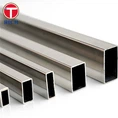


Inconel 600 and Inconel 625 are both solid-solution-strengthened nickel-chromium-molybdenum-niobium alloys, but they differ in their alloying elements, performance characteristics, and typical applications. The following is a detailed analysis:
Differences in chemical composition
Manganese in high-temperature alloys will reduce creep properties. Inconel 625 has stricter control over manganese content than Inconel 600, resulting in better creep strength compared to Inconel 600.
| Grade | Ni | Cr | Fe | Mo | Nb+Ta | Co | Mn | Si | C | S | Al+Ti |
| Inconel 600 | ≥72.0 | 14.0–17.0 | 6.0–10.0 | – | – | – | ≤1.0 | ≤0.50 | ≤0.15 | ≤0.015 | – |
| Inconel 625 | Balance (~58.0 min) | 20.0–23.0 | ≤5.0 | 8.0–10.0 | 3.15–4.15 | ≤1.0 | ≤0.50 | ≤0.50 | ≤0.10 | ≤0.015 | ≤0.40 |
Differences in corrosion resistance
- Nickel inherently offers excellent corrosion resistance among nickel-based alloys, making both Inconel 600 and Inconel 625 excellent corrosion-resistant alloys.
- Inconel 625 has a higher chromium content than alloy 600. Chromium is a key element in an alloy's oxidation resistance. Therefore, Inconel 625 exhibits superior oxidation resistance compared to Inconel 600.
- Inconel 600 contains no molybdenum, while Inconel 625 contains over 8% molybdenum, imparting a certain degree of reducing properties to Inconel 625, which is not present in alloy 600. Therefore, Inconel 625 clearly possesses superior overall corrosion resistance.
Differences in mechanical properties
Inconel 625 is stronger than Inconel 600 for several reasons:
- The molybdenum content in Inconel 625 imparts resistance to reduction. After solutionization, the molybdenum content also significantly increases the alloy's strength.
- When the chromium content is between 20% and 25%, short-range order strengthening occurs. The chromium content of Inconel 625 is designed to fall within this range, thereby increasing its strength.
- In nickel-based superalloys, cobalt reduces the alloy's stacking fault energy, which also increases its strength.
| Grade | Tensile Strength (MPa) | Yield Strength 0.2% (MPa) | Elongation (%) | Hardness (HB) |
| Inconel 600 | ≥550 | ≥240 | ≥30 | ≤150 |
| Inconel 625 | ≥827 | ≥414 | ≥30 | ≤220 |
Differences in application areas
Inconel 600 is more suitable for applications that require heat and oxidation resistance, while Inconel 625 is suitable for applications that require high corrosion resistance and high strength.
| Industry | Mattress Size/cm | Box Size/cm |
| Chemical Industry | Alkali treatment equipment | Flue gas desulfurization system components |
| Aerospace | Combustion liners, gas turbine components | Jet engine exhaust systems, turbine covers |
| Marine & Offshore | Chains and ropes on ships | Subsea pipelines, seawater-cooled heat exchangers |
| Oil & Gas | Some downhole tools and sour gas services | Sour services, flexible risers, flowlines, manifolds |
| Energy Industry | Nuclear steam generator piping and general boiler applications | For high pressure, corrosive steam conditions |
Conclusion
Due to the higher chromium and molybdenum contents, the overall corrosion resistance of Inconel 625 alloy is better than that of Inconel 600. Due to the combined effects of various strengthening elements, the mechanical properties of Alloy 625 are superior to those of Alloy 600. The better performance and more complex composition result in a higher price, so if possible, the lower-priced Alloy 600 is preferred.
TORICH International Group offers high-quality nickel alloy 600 and 625 steel pipes. Please feel free to contact us if you require any.