

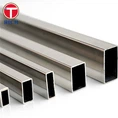


When selecting stainless steel pipes for industrial or commercial projects, buyers often face a crucial question: welded or seamless stainless steel pipes-which is better? Seamless stainless steel pipes are made from solid steel billets that are perforated and then hot or cold worked into hollow tubes, without any welds. Welded stainless steel pipes are formed from stainless steel strips or plates that are shaped into tubes and then welded along the longitudinal or spiral direction. Understanding the differences in manufacturing processes, performance, cost, and applications will help you make the right choice and avoid over-designing or under-specifying your project.
Welded vs Seamless: Main Differences
Stainless steel welded pipes and stainless steel seamless pipes differ in processing methods, surface characteristics, and performance.
1. Differences in Manufacturing Process
Stainless steel welded pipes are made from steel plates or strips, which are rolled and formed using machinery and molds before being welded. The inner wall of the pipe generally has a visible weld seam. High-quality welded pipes undergo annealing, grinding, and nitrogen internal protection treatment to make the weld seam properties close to the base material.
Stainless steel seamless pipes use round pipe billets as raw materials for perforation, and are manufactured through cold rolling, cold drawing, or hot extrusion processes. There are no welding points on the pipe. However, the complex manufacturing process often leads to uneven wall thickness and lower surface finish compared to high-quality welded pipes.
2. Differences in Steel Pipe Appearance
Stainless steel welded pipes have advantages in terms of wall thickness uniformity, with tolerances controlled within ±8%-10% (even smaller after post-weld cold rolling). The wall thickness is very uniform around the entire circumference; the steel pipes have high precision, high brightness on both inner and outer surfaces, and can be customized to any size; they can also be made into thin-walled pipes.
Seamless pipes, on the other hand, have lower precision, uneven wall thickness, lower brightness on both inner and outer surfaces, and a higher cost for custom sizing. Due to the hot forming process, the surface may have pitting, black spots, and other defects that are difficult to remove. Therefore, seamless pipes are usually produced with thicker walls.
3. Differences in Performance and Price
Seamless pipes have significantly higher corrosion resistance, pressure resistance, and high-temperature resistance than welded pipes. With the improvement of welded pipe manufacturing technology, their mechanical properties are gradually approaching those of seamless pipes. Seamless pipes have a more complex manufacturing process, and their price is relatively higher than that of welded pipes.
However, if welded pipes require additional treatments such as surface polishing (Ra≤0.4μm) or special heat treatment, the cost may increase, thus narrowing the price gap with small-diameter seamless pipes.
Welded vs Seamless: advantages & disadvantages
1. Advantages and Limitations of Seamless Pipes
Advantages:
Fast forming speed and high yield; can be made into a variety of cross-sectional shapes to meet the needs of different applications; cold rolling can cause significant plastic deformation in the steel, thereby increasing the yield point of the steel. Hot rolling can destroy the casting structure of the steel ingot, refine the grain size of the steel, and eliminate microstructural defects, thus making the steel structure denser and improving its mechanical properties.
Disadvantages:

Metal delamination – During cold rolling, non-metallic inclusions (mainly sulfides and oxides, as well as silicates) inside the steel are pressed into thin sheets, resulting in delamination (interlayer) phenomena. Delamination significantly deteriorates the mechanical properties of the steel in the thickness direction and may cause interlayer tearing during weld expansion.
Uneven wall thickness – As we know, metals expand when heated and contract when cooled. Even if the cold-rolled steel pipes meet the length and thickness standards at the end of the rolling process, a certain negative tolerance will still appear after cooling. The larger this negative tolerance, the worse the uniformity of the wall thickness.
Residual stress – Due to uneven cooling, steel pipes of various cross-sections have residual stress. The larger the cross-sectional size of the steel, the greater the residual stress, which has a certain impact on performance under external forces. For example, it may have adverse effects on deformation, stability, and fatigue resistance.
Poor surface finish – The inner surface of the steel pipe has longitudinal scratches, showing symmetrical or single straight-line folds, some of which are continuous, while others are localized.

2. Advantages and Limitations of Welded Pipes
Advantages:
- Uniform wall thickness – The base material is formed from strip steel, resulting in excellent wall thickness consistency and a high surface finish, reaching industrial-grade 2B surface quality.
- Low residual stress – After forming, the stainless steel tubes undergo bright annealing at temperatures above 1040 degrees Celsius to relieve stress.
- High weld strength – The welding uses fusion welding, maintaining the material composition. After high-temperature heat treatment, the weld seam and base material have the same intergranular structure. Destructive tests such as flattening, reverse bending, and flaring do not cause cracking, splitting, or burring at the weld seam. In addition, eddy current testing and hydrostatic or pneumatic testing are performed to ensure pipe quality.
- Excellent consistency – The pipes exhibit excellent consistency in outer diameter, wall thickness, length, and straightness, with high processing precision.
Disadvantages:
- Potential welding risks – Welds are the core weak points of welded pipes. Improper welding techniques (e.g., incomplete fusion, porosity, or cracks) can lead to leaks, corrosion, or reduced pressure resistance.
- Limited adaptability to extreme environments – In high-pressure (above 6 MPa) and high-temperature environments, welded pipes are less reliable than seamless pipes. Welds may degrade under prolonged extreme conditions, making them unsuitable for transporting toxic, flammable, or high-temperature fluids in critical industrial systems (such as nuclear power plant piping and high-pressure boilers).
- Dependence on manufacturing quality – The performance of welded pipes is closely related to manufacturing standards. Poorly manufactured welded pipes may have welds that are not polished or passivated, leading to localized corrosion and a shortened service life.
- Limitations for small-diameter applications – The minimum diameter of welded pipes is typically ≥6mm, which cannot meet the precision requirements of small-diameter (less than 0.5mm) applications such as medical devices and semiconductor manufacturing. In these fields, seamless pipes are indispensable.
Welded vs Seamless: Application
Decorative Applications: For decorative pipes, product pipes, and prop pipes, where high surface quality is required, stainless steel welded pipes are typically used. This is because welded pipes have smaller wall thickness tolerances, uniform wall thickness around the circumference, and high brightness on both the inner and outer surfaces. They can be manufactured to any size and can be made with thin walls, resulting in a more aesthetically pleasing appearance.
Fluid Transportation Applications: Low-pressure transportation: For low-pressure systems transporting water, oil, gas, air, and heating hot water or steam, stainless steel welded pipes are generally used. Stainless steel welded pipes are typically used for liquid transportation below 0.8 MPa, meeting the needs of low-pressure fluid transportation at a relatively low cost.
High-pressure transportation: For pipelines transporting fluids in industrial engineering and large equipment, as well as pipelines in power plants and nuclear power plant boilers requiring high temperature, high pressure, and high strength, stainless steel seamless pipes should be used. Seamless pipes can be used to withstand liquid transportation above 0.8 MPa, and their corrosion resistance, pressure resistance, and high-temperature resistance are superior to welded pipes.
Mechanical Structure Applications: For mechanical structural materials requiring high strength and high precision, such as equipment components requiring extremely high strength and stability, seamless pipes are a better choice. Because seamless pipes have no welding points, the overall structure is more uniform, stronger, and can better withstand various stresses.
conclusion
In extreme conditions where safety and durability are paramount, seamless pipes remain dominant; while in conventional applications, welded pipes stand out due to their unparalleled cost-effectiveness and flexibility. The best choice depends on balancing performance requirements, budget, and size specifications-selecting based on the specific application rather than blind preference ensures optimal results and cost savings.