

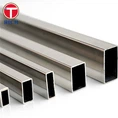


In high-end applications of stainless steel tubing, especially in industries such as hydrogen energy, electronics, pharmaceuticals, and semiconductors, which have stringent requirements for pipe surface quality, cleanliness, and corrosion resistance, BA (Bright Annealed) and EP (Electropolished) stainless steel tubes are the two most commonly used types of high-precision polished tubing. Although both offer excellent surface finishes, they differ significantly in their polishing principles, surface characteristics, performance advantages, and applicable scenarios. This article will detail the core differences between BA and EP stainless steel tubes and, combined with practical application scenarios, provide clear guidance for selection, helping industry professionals and international customers accurately match their needs.
BA vs. EP Stainless Steel Tubes: Process Differences
1. BA stainless steel Tubes
The core process of BA stainless steel tubes is "cold rolling + bright annealing." This involves bright annealing in a vacuum or protective atmosphere (such as hydrogen or nitrogen) to eliminate cold working stress and create a bright surface. This is a relatively environmentally friendly and efficient high-precision polishing method. The principle is: the cold-rolled stainless steel tube is heated to 1050-1100℃ in a protective atmosphere and slowly cooled to prevent oxidation. The surface is free of oxide scale, has good gloss, and the surface roughness is Ra≤0.4um.
2. EP Stainless Steel Tubes
The core process of EP stainless steel tubes is "cold rolling + bright annealing + electropolishing." Using BA-grade stainless steel tubes as the base material, the tubes are immersed in a specific electrolyte (such as a phosphoric acid-sulfuric acid mixture) as the anode, and a direct current is applied. Under the action of the current, the microscopic protrusions on the surface of the tube dissolve preferentially, leveling the metal surface and simultaneously forming a dense, chromium-rich passivation film. The principle is similar to "reverse electroplating," and the surface roughness is Ra≤0.2um.
The EP process causes slight material loss on the tube surface (usually ≤0.1mm), therefore requiring extremely high precision in the manufacturing process.
BA vs. EP Stainless Steel Tubes: key Differences
| products |
 |
 |
| name |
BA |
EP |
| Polishing principle | Physical process, bright annealing | Chemical process,Electrochemical dissolution |
| Surface roughness (Ra) | Standard: ≤0.4μm, up to 0.2μm | Standard: ≤0.2μm, up to 0.02μm |
| Surface condition | resulting in a uniform, bright metallic finish | resulting in a mirror-like, flawless surface finish |
| Corrosion resistance | Excellent, resistant to common corrosive media (such as hydrogen and neutral solutions) | more superior, suitable for complex corrosive conditions involving chloride ions, hydrogen sulfide, etc. |
| Hydrogen permeation rate | Low: rate < 10⁻⁸ cm³/cm²·s, suitable for conventional hydrogen conditions | Extremely low:rate < 10⁻⁹ cm³/cm²·s, for high-purity hydrogen and high-pressure hydrogen conditions |
| Cleanliness | High cleanliness, free of oxide impurities, enabling oil-free processing (oil content ≤ 5 ppm), suitable for conventional high-purity applications. | Ultra-high cleanliness, free of any residual impurities, achieving electronic-grade cleanliness (particulate matter ≤ 100 μm), suitable for ultra-high-purity applications. |
| Process and Costs | Simple process, no electrolyte required, short production cycle, relatively low cost (30%~50% lower than EP) | Complex process, requires precise control of electrolyte concentration and current, long production cycle, high cost, considered a high-end finishing process |
| Mechanical properties | Excellent, no substrate loss, residual stress eliminated after annealing, good toughness and plasticity (elongation ≥40%) | Good, slight substrate loss does not affect overall mechanical properties, but the amount of dissolution needs to be strictly controlled to avoid wall thickness deviations. |
BA vs. EP Stainless Steel Tubes: application Differences
The main difference in application scenarios between BA and EP stainless steel tubes lies in the requirements for surface finish, cleanliness, and corrosion resistance.
BA tubes are the performance option: offering high cleanliness, good surface finish, and corrosion resistance at a moderate cost. They are widely used in demanding but not extreme applications such as semiconductors, food and pharmaceuticals, and high-purity gases. They are the mainstream choice for many critical applications.
EP tubes are the premium option: offering unparalleled surface finish, cleanliness, corrosion resistance, and biocompatibility, at the highest cost. They are specifically used in applications with extremely stringent requirements for purity and reliability, such as core semiconductor manufacturing processes, sterile biopharmaceutical processes, implantable medical devices, and ultra-pure media.
1. BA Stainless Steel Tubes
Semiconductor Industry: Conveying pipelines for high-purity gases (N2, Ar, H2, etc.) and ultrapure water (UPW) (front-end or areas with moderate requirements), chemical distribution (medium purity).
Photovoltaic Industry: Special gas and chemical transportation.
Food, Beverage, and Pharmaceutical Industries: Main process pipelines in direct contact with products (e.g., milk, beverages, pharmaceutical liquids), requiring no contamination and easy cleaning. Aseptic filling lines.
High-Purity Gas Transportation: Laboratory gas pipelines, carrier gas pipelines for analytical instruments.
Biotechnology: Fermentation tanks, culture medium pipelines, etc. (requiring cleanliness but not the highest level of sterility).
Medical Devices (Non-Implantable): Equipment housings, supports, fluid lines (not in direct contact with blood or implanted).
2. EP Stainless Steel Tubes
- Semiconductor Industry (Critical Areas): Ultra-high purity gases (etching gases, doping gases), ultrapure water (UPW), polishing circuits, and CMP slurry delivery. Requires extremely strict control of metal ions and particulate contamination.
- Biopharmaceuticals and Life Sciences: Sterile manufacturing process piping (WFI water for injection, pure steam), bioreactors, culture media and buffer delivery, cell therapy, and blood product piping. Requires extremely low extractables, extremely low biofilm formation risk, easy sterilization and disinfection, and ultra-high cleanliness.
- Implantable Medical Devices: Cardiac stents, orthopedic implants, surgical instruments (directly contacting human tissue or blood, requiring optimal biocompatibility and corrosion resistance).
- Ultra-high Purity Chemicals: Photolithography resists, high-purity solvents, and electronic-grade chemical delivery and distribution systems.
- Harsh Corrosive Environments: Strong acids, strong bases, and halide environments (such as coastal areas and chemical plants), requiring superior resistance to pitting and crevice corrosion.
how to choose between BA and EP Stainless Steel Tubes
The choice of tubing depends on project requirements.
Situations where BA tubing is preferred:
- Requires good overall mechanical properties (such as subsequent forming processes like bending and flaring).
- Application scenarios require a bright surface, but there are no strict requirements for ultra-high cleanliness or mirror finish.
- Cost is an important consideration, and the environment is not extremely corrosive.
Situations where EP tubing is preferred:
- Used in ultra-high purity, sterile, or highly corrosive environments, such as semiconductors, pharmaceuticals, and high-end chemicals.
- Requires maximum prevention of product contamination, bacterial growth, or material adhesion, such as in food and dairy pipelines.
- Requires an ultimate optical mirror finish, or needs to optimize fluid flow (reduce wall friction).
- In the transportation of special media such as hydrogen, there are extremely high requirements for the absolute smoothness and passivation layer quality of the inner wall of the pipeline.
For the most demanding applications (such as semiconductor gas delivery), a "BA + EP" combination process is often used. This involves first using BA (bright annealing) to obtain good base tube performance and surface finish, and then using EP (electropolishing) to achieve the ultimate cleanliness and passivation effect.