

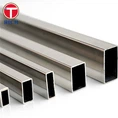


EV thermal management is becoming more demanding as battery packs become larger, charging speeds increase, and vehicle platforms integrate more components into shared cooling circuits.
Battery packs, electric motors, inverters, power electronics, and charging modules may all depend on stable coolant circulation. This makes the stainless steel tube for EV cooling system more than a simple fluid-transfer component. It must maintain leak tightness while resisting vibration, thermal cycling, coolant exposure, road contaminants, and corrosion over the vehicle's service life.
For many EV cooling tube projects, two common material options are 304 stainless steel tube and 316L stainless steel tube.
So which one should buyers specify?
304 vs 316L Stainless Steel: What Is the Real Difference?
Both 304 and 316L are industrial-grade austenitic stainless steels, possessing characteristics such as non-magnetism, good toughness, easy processing and forming, and basic corrosion resistance. They are perfectly suited to the processing requirements of bending, welding, and precision forming in electric vehicle piping, making them the mainstream base material for stainless steel pipes in EV cooling systems.
The main difference is that 316L contains molybdenum, which improves resistance to localized corrosion, particularly pitting and crevice corrosion in chloride-containing environments.
| Evaluation Factor | 304 Stainless Steel | 316L Stainless Steel |
|---|---|---|
| General corrosion resistance | Very good | Excellent |
| Chloride resistance | Moderate | Higher |
| Formability | Excellent | Excellent |
| Weldability | Excellent | Excellent |
| Post-weld corrosion resistance | Good | Better, especially with low-carbon 316L |
| Material cost | Lower | Higher |
| Typical EV selection | Controlled cooling environments | More aggressive or chloride-exposed environments |
When Is 304 Stainless Steel Tube Enough?
In many EV cooling systems, the choice of 304 stainless steel is not a compromise, but a reflection of engineering rationality.
First, closed-loop ethylene glycol-water cooling systems represent the ideal application for 304 stainless steel. These circuits typically feature a fully sealed design where the coolant circulates internally with minimal exposure to the external environment. The coolant itself is specially formulated with corrosion inhibitors, resulting in negligible corrosivity toward stainless steel. Under these conditions, the corrosion resistance of 304 is more than sufficient.
Second, when piping is routed primarily within the vehicle body or battery pack, the risk of chloride exposure is very low. The internal environment is relatively dry and temperature-controlled, meaning the piping does not come into direct contact with road salt spray or de-icing brine. In this context, opting for 316L would entail paying extra for protection against a corrosion risk that does not actually exist.
Third, cost considerations and the realities of mass production cannot be overlooked. The market price of 304 stainless steel is typically 20–30% lower than that of 316L; for vehicle platforms with annual production volumes in the hundreds of thousands, this price gap translates into a significant difference in the Bill of Materials (BOM) cost. If the operating conditions do not actually require the superior corrosion resistance of 316L, selecting 304 represents a more efficient allocation of resources.
For automotive cooling and fluid-line applications, our Automotive Stainless Steel Tube is available in both TP304 and TP316L, allowing the material grade to be selected according to the actual vehicle environment rather than using a one-grade-fits-all approach.
When Does 316L Become the Better Choice?
316L becomes more attractive when chloride exposure or long-term corrosion risk increases.
Typical situations include EV cooling lines located close to:
- the vehicle underbody;
- wheel arches;
- road splash zones;
- areas exposed to deicing salt;
- coastal environments;
- joints or crevices where moisture can remain trapped.
The molybdenum content in 316L improves resistance to chloride-induced localized corrosion. The low-carbon composition also helps reduce sensitization risks associated with welding.
This can be particularly valuable for an EV thermal management tube that requires welding, brazing, bending, or end forming before final assembly.
In these applications, paying more for 316L should not be viewed simply as purchasing a "higher grade." It is better understood as reducing a specific long-term corrosion risk.
Tube Manufacturing Quality Can Matter as Much as the Grade
Choosing between 304 and 316L is only one part of the specification.
An EV cooling tube also depends on:
Dimensional tolerances (OD/WT)
The cooling tube's outer diameter and wall thickness tolerances directly affect joint sealing quality and the consistency of the piping assembly. High-precision cold-drawn tubes (outer diameter tolerance within ±0.05mm) have significant advantages in automated assembly and robotic welding scenarios.
Inner surface cleanliness
Excessive inner-surface roughness in the coolant flow channel, or the presence of oxide scale or drawing residue, can cause particulate contamination in the cooling system, clogging radiator microchannels or damaging the electric water pump sealing surface. The inner surface cleanliness level is one of the core quality indicators of the cooling tube.
Bending consistency
EV cooling pipes typically require multiple bends to avoid battery modules, structural components, and electrical harnesses. The ellipticity and wall thickness reduction rate at the bends need to be strictly controlled; otherwise, they may become initiation points for stress corrosion or fatigue cracks.
For applications requiring tight dimensional control, Precision Seamless Stainless Steel Tube can be supplied in TP304, TP304L, TP316, and TP316L under ASTM A269, with cold-drawn and solution-annealed conditions available.
Where the cooling circuit requires complex routing around battery packs or vehicle structures, Stainless Steel Bend Tube can also be produced in 304/304L and 316/316L according to required bend radii and dimensions.
Leak integrity is another critical consideration. A premium alloy cannot compensate for poor weld quality, unstable bending, damaged surfaces, or inadequate leak testing.
How Should EV Cooling System Buyers Choose?
A useful purchasing approach is to start with the actual failure risks rather than simply comparing material prices.
| Application Condition | Suggested Direction |
| Controlled coolant + protected installation | 304 is often sufficient |
| Low chloride exposure | 304 can be cost-effective |
| Underbody or road-salt exposure | Consider 316L |
| Coastal operating environment | 316L is preferred |
| High corrosion-risk joints or crevices | Consider 316L |
| Extensive welding or formed assemblies | 316L may provide additional protection |
| High-volume cost-sensitive platform | Evaluate 304 first if environment allows |
| Long service-life requirement in harsh environments | Evaluate 316L |
Before finalizing the material, buyers should therefore evaluate coolant chemistry, external chloride exposure, tube routing, welding process, surface condition, expected vehicle life, and total system cost together.
304 or 316L: Which Is Better for EV Cooling?
There is no universal winner.
304 stainless steel tube is often the more economical solution for controlled EV cooling circuits with limited chloride exposure.
316L stainless steel tube provides an additional corrosion-resistance margin where road salt, moisture, coastal conditions, complex joints, or other chloride-related risks are present.
For EV thermal management systems, the best material is therefore not necessarily the most expensive grade. It is the grade that provides sufficient corrosion resistance for the actual operating environment without adding unnecessary cost.
That distinction becomes increasingly important as EV manufacturers move from simply designing cooling circuits to designing thermal management systems expected to remain reliable throughout the entire vehicle lifetime.