

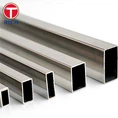


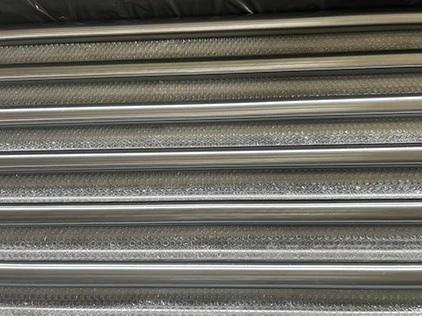
In chemical, oil and gas, and industrial heat exchange equipment, corrosion is one of the core factors affecting pipeline lifespan and operational safety. Ordinary stainless steel often fails to meet long-term service requirements under certain strong acid, chlorine-containing media, and high-temperature conditions; however, Alloy 825, a nickel-iron-chromium alloy, significantly improves its resistance to various corrosive media through the addition of elements such as molybdenum, copper, and titanium. This material's UNS designation is N08825.
Also known as INCOLOY 825 or UNS N08825, this alloy is available under several ASTM specifications depending on the manufacturing process and intended application. Understanding its chemical composition, mechanical properties, corrosion resistance, and applicable standards helps engineers select the right tubing for demanding industrial environments.
What Is Alloy 825 Tubing?
I. Alloy 825 Material Overview
Alloy 825 is not an ordinary stainless steel; rather, it is a corrosion-resistant nickel-iron-chromium alloy-with nickel as one of its primary alloying elements-frequently used for piping, heat exchanger tubes, and process lines in corrosive environments. Its key identification details are as follows:
|
Item |
Description |
|---|---|
|
Material Designation / UNS Number |
UNS N08825 |
|
Material Number (Werkstoff Number) |
2.4858 |
|
Common Trade Name |
INCOLOY 825 |
|
Material Type |
Nickel-Iron-Chromium (Ni-Fe-Cr) Corrosion-Resistant Alloy |
|
Main Alloying Elements |
Nickel (Ni), Chromium (Cr), Molybdenum (Mo), Copper (Cu), Titanium (Ti) |
Unlike conventional stainless steels such as 304 and 316L, Alloy 825 contains a much higher nickel content and additional molybdenum and copper. These elements improve its resistance to reducing acids, chloride-induced stress corrosion cracking, and localized corrosion.
II. Chemical Composition of Alloy 825
The table below presents the typical chemical composition range for Alloy 825 (UNS N08825), based on technical data from sources such as Special Metals. For the actual supplied material, please refer to the relevant ASTM standard and the material test certificate.
| Grade |
Nickel (%) |
Chromium (%) |
Iron (%) |
Molybdenum (%) |
Copper (%) |
Titanium (%) |
Carbon (%) |
Manganese (%) |
|---|---|---|---|---|---|---|---|---|
|
Alloy 825 |
38.0–46.0 |
19.5–23.5 |
22.0 min. |
2.5–3.5 |
1.5–3.0 |
0.6–1.2 |
0.05 max. |
1.0 max. |
The combination of nickel and molybdenum primarily improves resistance to cracking, pitting, and crevice corrosion in chloride-containing environments; copper enhances resistance to reducing acids; chromium facilitates passivation in oxidizing media; and titanium, by stabilizing carbides, reduces the susceptibility to intergranular corrosion in weldments and heat-affected zones.
Alloy 825 Tubing: Mechanical and Physical Properties
I. Mechanical Properties
In the annealed (solution-annealed) condition, Alloy 825 offers a good balance of ductility and moderate strength, with potential for further strength gains through cold working. The table below provides typical reference values for the material in the annealed condition at room temperature. Please note that these values may vary by product form, delivery condition, and the specific requirements of applicable ASTM standards; for procurement and design, always refer to the relevant standards and quality assurance documentation.
| Material Condition |
Tensile Strength (MPa) |
Yield Strength (0.2%) (MPa) |
Elongation (%) |
|---|---|---|---|
|
Annealed Tubing |
772 |
441 |
36 |
|
Cold-Drawn Tubing |
1,000 |
889 |
15 |
II. Physical Properties
| Material Grade |
Density (g/cm³) |
Thermal Conductivity (W/m·K) |
Elastic Modulus (GPa) |
Melting Range (°C) |
|---|---|---|---|---|
|
Alloy 825 |
8.14 |
11.1 |
196 |
1,370–1,400 |
Alloy 825 is not normally selected for applications where high-temperature creep-rupture strength is the primary design requirement. Exposure above approximately 540°C can cause microstructural changes that reduce ductility and impact strength.
Corrosion Resistance of Alloy 825 Tubing
Corrosion resistance is one of the primary reasons engineers specify Alloy 825 tubing over conventional stainless steel.
Resistance to Sulfuric and Phosphoric Acids
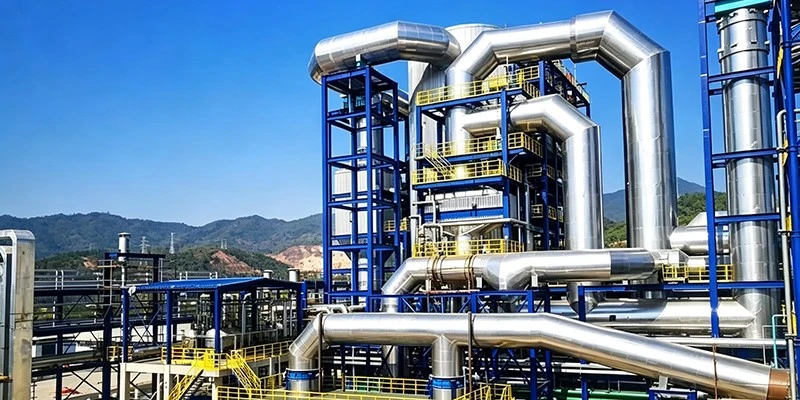
The combination of nickel, molybdenum, and copper provides excellent resistance to reducing acids, particularly sulfuric and phosphoric acids. This makes Alloy 825 well-suited for specific acid-production equipment, chemical processing systems, and industrial transfer lines.
Resistance to Chloride Corrosion
The alloy offers resistance to chloride-induced stress corrosion cracking, pitting, and crevice corrosion. These properties are highly valuable for equipment exposed to process fluids containing chlorides, as well as in certain marine environments.
Resistance to Oxidizing Environments
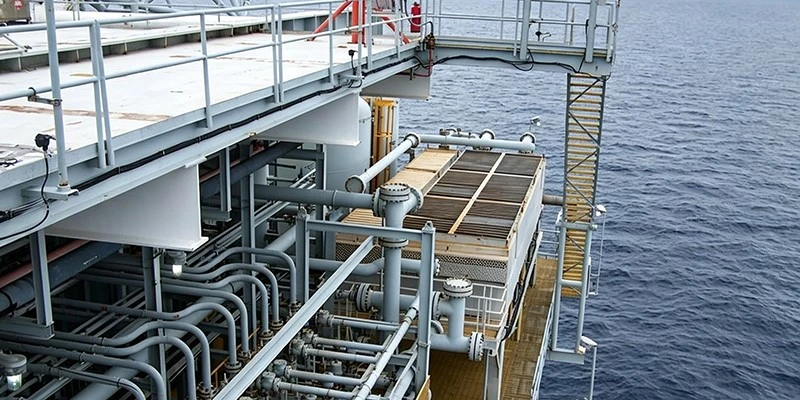
Chromium enhances resistance to oxidizing substances, including nitric acid and oxidizing salts. When combined with copper, the material achieves a balanced performance across both oxidizing and reducing media-a key reason why it is widely used in chemical processing environments involving mixed conditions.
ASTM Specifications for Alloy 825 Tubing
Selecting the correct ASTM standard is essential when purchasing Alloy 825 tubing. When searching for Alloy 825 tubing, customers typically verify the applicable ASTM product standard. UNS N08825 tubing is covered by different standards depending on its product form (seamless or welded) and intended application (general corrosive environments or heat exchangers/condensers). The table below provides an overview of the primary product standards.
| ASTM Standard |
Product Form |
Main Applications and Scope |
|---|---|---|
|
ASTM B423 |
Seamless Pipe and Tube |
For general corrosive service. General requirements are covered by ASTM B829. |
|
ASTM B163 |
Seamless Tubes |
For condenser and heat exchanger applications. |
|
ASTM B704 |
Welded Tubes |
For boilers, heat exchangers, condensers, and general corrosive or low-temperature service. |
|
ASTM B705 |
Welded Pipe |
Welded pipes of UNS N08825 and other nickel alloys for general corrosive service. |
ASTM B423 covers UNS N08825 seamless pipe and tube for general corrosive service. ASTM B163 covers seamless nickel-alloy condenser and heat-exchanger tubes, while B704 and B705 address welded tube and welded pipe products, respectively.
For seamless products, ASTM B829 provides general requirements. For welded tubes and welded pipes, ASTM B751 and B775 provide the corresponding general requirements. These supplementary standards should be considered together with the applicable product specification.
Applications of Alloy 825 Tubing
Alloy 825 tubing is used in industries where equipment must handle corrosive fluids and demanding operating conditions.
I. Chemical Processing and Acid Production
Common applications include sulfuric acid processing equipment, phosphoric acid production systems, chemical reactors, and acid transfer lines. Its resistance to reducing acids helps extend equipment service life.
II. Oil and Gas Industry
Alloy 825 is used in selected oil and gas production equipment, downhole components, chemical injection systems, and sour gas environments. Its resistance to chloride stress corrosion cracking makes it valuable in certain corrosive production conditions. For sour service, material suitability must also be checked against NACE MR0175/ISO 15156 requirements.
III. Heat Exchangers and Condensers
Alloy 825 tubes are used in industrial heat exchangers, condensers, and chemical process cooling systems where conventional stainless steel may be unsuitable because of the process fluid's corrosiveness.
VI. Pollution Control and Waste Treatment
Applications include industrial gas scrubbers, pollution control equipment, waste treatment systems, and nuclear fuel reprocessing facilities, particularly where corrosive gases or liquids are present.
How to Select the Right Alloy 825 Tubing?
Before ordering Alloy 825 tubing, engineers and procurement teams should evaluate four key factors:
I. Operating Environment
Consider the type of medium, acid concentration, chloride ion content, and the presence of H₂S or other corrosive components. Simply labeling an environment as "corrosive" is insufficient to determine the suitability limits of the material.
II. Temperature and Pressure
Alloy 825 can withstand service conditions up to approximately 550°C while maintaining ductility; for pressure vessels, the upper limit for wall temperature is generally around 538°C. Any operation beyond these limits, or conditions involving temperature fluctuations and thermal cycling, requires further evaluation.
III. Tube Dimensions
Specify the outer diameter, wall thickness, and length. Requirements for dimensional tolerances differ between heat exchanger tubing and general-purpose piping; furthermore, standards such as ASTM B163 and B423 emphasize different dimensional parameters.
VI. Manufacturing and Inspection Requirements
Determine whether the tubing should be seamless or welded, and define the required dimensional tolerance class, mechanical property acceptance criteria, non-destructive testing (NDT) methods, and the specific standards and product forms to be referenced in the Material Test Certificate (MTC). Specifying "supplied per ASTM B423" versus "supplied per ASTM B423 in an annealed condition with additional NDT requirements" represents two distinct procurement specifications-the latter is necessary to effectively manage risks during final inspection and acceptance.