

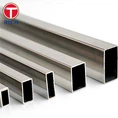


4130 and 4140 are two widely used chromium-molybdenum alloy steels in mechanical engineering and industrial manufacturing. Both offer good strength, toughness, and heat-treatment capabilities. However, choosing between them can affect component performance, welding requirements, machining costs, and service life.
The main difference between 4130 chromoly tubing and 4140 tube lies in their carbon and manganese content, which influences hardenability, achievable strength, and weldability. Understanding these differences helps engineers select the right material for structural components, machinery, and high-load applications.
What Are 4130 and 4140 Chromoly Tubes?
I. 4130 Chromoly Tubing
4130 is a low-alloy chromium-molybdenum steel containing approximately 0.28–0.33% carbon. Its relatively low carbon content provides a useful balance of strength, toughness, and weldability.
4130 chromoly tubing is widely used in applications requiring lightweight structures and welded fabrication. Typical examples include aircraft structures, racing car frames, roll cages, and mechanical components.
II. 4140 Alloy Steel Tube
4140 is a medium-carbon chromium-molybdenum steel containing approximately 0.38–0.43% carbon. Its higher carbon and manganese content gives it greater hardenability and the potential to achieve higher strength and hardness through appropriate heat treatment.
4140 tube is commonly selected for demanding mechanical applications, including shafts, gears, axles, and heavy machinery components where strength and wear resistance are important.
4130 vs 4140: Chemical Composition and Mechanical Properties
I. Comparison of Chemical Composition
The main chemical difference between 4130 and 4140 is their carbon and manganese content, while their chromium and molybdenum ranges are generally similar. Higher carbon content increases hardenability and can lead to higher strength and hardness.
| Steel Grade |
Carbon (C) (%) |
Manganese (Mn) (%) |
Silicon (Si) (%) |
Chromium (Cr) (%) |
Molybdenum (Mo) (%) |
|---|---|---|---|---|---|
|
4130 |
0.28–0.33 |
0.40–0.60 |
0.15–0.35 |
0.80–1.10 |
0.15–0.25 |
|
4140 |
0.38–0.43 |
0.75–1.00 |
0.15–0.35 |
0.80–1.10 |
0.15–0.25 |
II. Strength and Hardness Comparison
The higher carbon content of 4140 gives it greater hardenability and the potential to achieve higher strength and hardness after quenching and tempering. 4130 offers a good combination of strength, toughness, and ductility, making it suitable for components that require structural integrity and fabrication flexibility.
However, neither grade has one fixed tensile strength or hardness value. Actual mechanical properties depend on heat treatment, tube dimensions, manufacturing process, and delivery condition. Therefore, engineers should compare the specified mechanical properties rather than relying on the grade designation alone.
4130 vs 4140: Weldability and Fabrication
I. Weldability of 4130 Chromoly Tubing
4130 generally offers better weldability than 4140 due to its lower carbon content. It is commonly welded using TIG (GTAW) or other appropriate welding processes. For thick-walled 4130, preheating to 150–200°C is typically required, followed by post-weld stress relief; for thin-walled joints, preheating may sometimes be omitted.
II. Welding Challenges of 4140 Tubing
4140 has a higher carbon content and greater hardenability, making it more challenging to weld. Rapid cooling can lead to the formation of hard microstructures within the heat-affected zone (HAZ), increasing the risk of hydrogen-induced cracking.
Welding 4140 generally requires preheating to 200–315°C, careful control of interpass temperatures, and post-weld heat treatment. While 4140 can certainly be welded, the welding procedure must be specifically tailored to the material's condition, wall thickness, and joint design. When welding 4140 to a different material, the more stringent requirements applicable to 4140 must be followed.
Applications of 4130 and 4140 Steel Tubes
Although both grades are used in demanding engineering applications, their distinct properties make them suitable for different manufacturing requirements. 4130 chromoly tubing is primarily used in welded and lightweight structures, whereas 4140 tubing is better suited for high-load, wear-resistant, and machined components.

4130 Chromoly Tubing Applications
- Aerospace and Aircraft Structures: Used in aircraft tubular structures and lightweight components where strength and weight considerations are important.
- Automotive and Motorsport: Commonly used for racing car frames, roll cages, chassis structures, and welded tubular components.
- Bicycle Frames and Sports Equipment: Suitable for lightweight frames and structural components requiring a balance of strength and fabrication flexibility.
4140 Tube Applications
- Heavy Machinery: Used in mechanical components exposed to high loads and demanding operating conditions.
- Drive Shafts and Transmission Components: Suitable for shafts, gears, axles, and other components requiring high strength and fatigue resistance.
- Hydraulic and Industrial Equipment: Used in selected mechanical components where strength, hardness, and wear resistance are important.

How to Choose Between 4130 and 4140 Tubing?
The right material depends on the component's design, manufacturing process, and operating conditions.
I. Strength Requirements
If higher strength and hardness are required, particularly after quenching and tempering, 4140 is worth considering.
II. Welding Requirements
For welded tubular structures and components involving extensive fabrication, 4130 generally offers better weldability and easier process control.
III. Machining and Heat Treatment
For components requiring high hardness or improved through-hardening capability, 4140 may be more suitable. The required hardness and section size should be considered when selecting the heat-treatment condition.
IV. Weight and Application Requirements
For lightweight welded structures, 4130 is a common choice. However, the final material selection should also consider wall thickness, loading conditions, and structural design.
Conclusion
4130 offers advantages in terms of weldability, ductility, and strength-to-weight ratio, making it well-suited for welded tubular structures. 4140, by contrast, provides higher strength, hardness, and hardenability, making it ideal for high-load machined components and wear-resistant parts. Final performance characteristics depend on the heat-treatment condition and product design.
If you are evaluating 4130 or 4140 alloy steel tubing, please provide TORICH with the steel grade, outer diameter, wall thickness, length, and delivery condition to receive technical support and a price quote.
Frequently Asked Questions
Q: Is 4140 stronger than 4130?
A: Generally, yes. 4140 has higher carbon content and hardenability, allowing it to achieve higher strength and hardness through suitable heat treatment. Actual performance depends on the delivery condition.
Q: Is 4130 easier to weld than 4140?
A: Yes. 4130 generally has better weldability due to its lower carbon content. Both grades require appropriate welding procedures.
Q: Can 4140 steel tubing be welded?
A: Yes. However, preheating, low-hydrogen consumables, controlled cooling, and potentially post-weld heat treatment may be necessary.
Q: Can 4130 and 4140 be used interchangeably?
A: Not automatically. Their differences in carbon content, hardenability, strength, and weldability must be evaluated against the component's design and manufacturing requirements.