

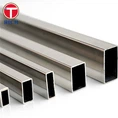


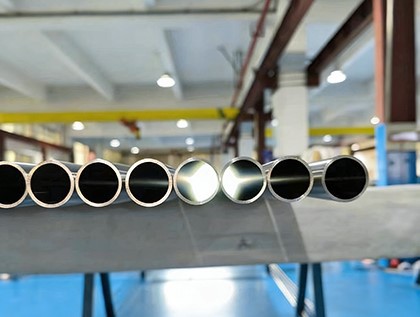
Incoloy 800 (UNS N08800), Incoloy 800H (N08810), and Incoloy 800HT (UNS N08811) are three alloys belonging to the Incoloy family. These three alloys are highly similar, differing only slightly in their carbon, aluminum, and titanium content. This article will analyze them based on their properties, differences in heat treatment processes, and applicable scenarios.
What are the differences between Incoloy 800, 800H, and 800HT?
I. The chromium content in Incoloy 800 alloy typically ranges from 15% to 25%, while the nickel content ranges from 30% to 45%, with the addition of small amounts of aluminum and titanium. Upon rapid cooling from high temperatures, Alloy 800 remains within the single-phase austenitic region; consequently, its microstructure in the service state consists of a single austenitic phase. Due to its high chromium content and sufficient nickel content, the alloy exhibits superior resistance to high-temperature corrosion and is widely utilized in various industrial applications.
II. Compared to Alloy 800, Incoloy 800H offers enhanced oxidation resistance, high-temperature strength, and creep resistance. It is extensively employed in the metallurgical, petrochemical, and nuclear industries-particularly in the fabrication of steam generators-and stands as one of the primary candidate materials for heat transfer tubes in nuclear power plant steam generators.
III. Incoloy 800HT represents an advanced iteration developed from the foundations of Alloys 800 and 800H, distinguished by its superior creep resistance and exceptional durability at ultra-high temperatures.Incoloy 800HT is a fully austenitic, low-carbon nickel-iron-chromium alloy belonging to the same alloy series as Incoloy 800; notably, the cobalt content within this alloy can be strictly controlled to remain below 0.01%.
Differences in Heat Treatment Processes
Incoloy 800, 800H, and 800HT all require solution treatment to ensure the stability of their austenitic microstructure; however, due to differences in chemical composition, their specific heat treatment temperatures, cooling methods, and additional requirements vary, as detailed below:
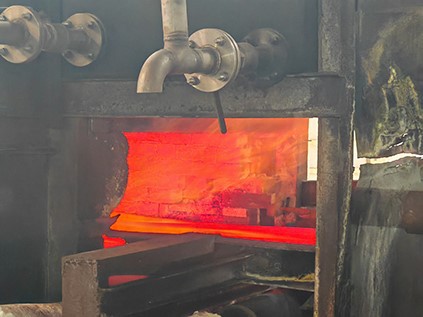
I. Incoloy 800: The solution annealing temperature is 1150–1180°C, followed by water quenching after a suitable holding time. The objective is to achieve a uniform austenitic structure and to enhance both ductility and corrosion resistance. Depending on specific needs, a stress-relieving treatment at 850–900°C (followed by air cooling) may be performed, making it suitable for workpieces that have undergone cold working or welding.
II. Incoloy 800H: The solution treatment temperature is approximately 1150°C (equivalent to 2100°F). Cooling is achieved via water quenching or rapid air cooling, specifically to avoid the embrittlement zone around 475°C. A core requirement is to achieve an average grain size of ASTM Grade 5 or coarser through heat treatment, thereby enhancing high-temperature creep performance. Annealing (to a hardness of ≤HB 180) is recommended before deep-hole machining operations.
III. Incoloy 800HT: Solution treatment requires strict temperature control (within ±10°C). While the temperature range is similar to that of Incoloy 800H, an additional stabilization treatment is required to ensure the uniform precipitation of aluminum-titanium carbides. This grade also mandates a coarse-grained structure (≥90 μm / ASTM Grade 4); through precise heat treatment, its creep-rupture strength is further optimized, making it the grade with the most stringent heat treatment process requirements among the three.
Differences in Operating Temperature
I. Incoloy 800: Possesses excellent corrosion resistance and heat resistance, exhibiting good mechanical properties at high temperatures up to 800°C; it demonstrates good resistance to oxidation, reduction, and nitridation, as well as good machinability.
II. Incoloy 800H: An austenitic, heat-resistant iron-nickel-chromium alloy featuring controlled carbon content and an increased (Al+Ti) content compared to Incoloy 800. A specialized solution annealing treatment results in an average grain size of ≥ 90 µm, significantly enhancing creep-rupture strength at temperatures above 600°C.
Exhibits excellent creep-rupture strength at high temperatures exceeding 600°C, along with good resistance to oxidation, nitridation, and corrosion under carburizing conditions.
III. Incoloy 800HT: An austenitic nickel-iron-chromium alloy featuring an increased (Al+Ti) content compared to Incoloy 800H. A specialized solution annealing treatment results in an average grain size of ≥ 90 µm and superior creep-rupture strength-particularly above 700°C-due to the precipitation of titanium-rich phases. Below 700°C, the precipitation of γ′ phases is accompanied by a corresponding reduction in ductility.
Demonstrates outstanding creep-rupture strength at temperatures above 700°C; when exposed to alternating reducing and oxidizing environments, it exhibits excellent resistance to reduction, oxidation, nitridation, and atmospheric corrosion.
Differences in Application Areas
I. Incoloy 800: A foundational, general-purpose grade suitable for medium-to-low temperature environments (≤650°C) where creep resistance requirements are not stringent. It also offers excellent low-temperature performance-retaining good toughness even at cryogenic temperatures as low as -270°C. Its primary applications include seawater processing equipment, pickling systems, cryogenic engineering components, standard chemical reactors, and cooling pipelines within nuclear reactors (specifically in the medium-to-low temperature sections).
II. Incoloy 800H: A high-temperature load-bearing grade designed for sustained, long-term service in the temperature range of 650°C to 815°C. It is predominantly utilized in load-bearing components within the petrochemical sector-such as ethylene cracking furnace tubes and ammonia synthesis converters-as well as in the power generation industry for supercritical boiler superheater and reheater tubes, and in industrial heat-treating furnaces for radiant tubes.
III. Incoloy 800HT: An ultra-high-temperature grade engineered for extreme operating conditions involving temperatures of ≥815°C and high stress levels. It is primarily employed in critical components such as furnace rolls in high-temperature heating furnaces, exhaust nozzles for aerospace gas turbines, and liners for large-scale industrial furnaces. This alloy is capable of maintaining dimensional stability over extended periods in extremely high-temperature environments, thereby preventing creep-induced failure.
conclusion
In summary, the subtle differences in carbon, aluminum, and titanium content among Incoloy 800, 800H, and 800HT result in distinct variations in their heat treatment requirements and service performance, thereby establishing a clear performance gradient that ranges from general-purpose utility to high-performance and ultra-high-temperature applicability. In practical industrial applications, the selection of the appropriate alloy requires a precise alignment of the alloy's inherent characteristics with the specific demands of the operating conditions:
Incoloy 800 is suitable for low-to-moderate temperature and low-stress environments, where versatility and cost-effectiveness are key considerations; Incoloy 800H strikes a balance between high-temperature strength and practicality, making it the preferred choice for most high-temperature load-bearing applications; whereas Incoloy 800HT demonstrates exceptional performance under extreme ultra-high-temperature and high-stress conditions-particularly in demanding environments where uncompromising requirements for long-term creep resistance and dimensional stability are paramount.