

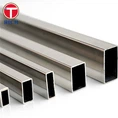


Polishing is a processing method that utilizes mechanical, chemical, or electrochemical actions to reduce the surface roughness of a workpiece, thereby achieving a bright and smooth surface finish. Polishing techniques are primarily employed in the precision machinery and optical industries. Polished workpieces feature smooth surfaces that exhibit excellent reflective properties. Electrolytic polishing and chemical polishing are widely utilized in the field of high-end stainless steel tubing; this article will elucidate the distinctions between these two polishing methods.
what is Electropolishing?
Electrolytic polishing-also known as electrochemical polishing-is a processing technique in which a workpiece is immersed in an electrically charged solution to enhance the surface smoothness of the metal and impart a lustrous finish. Almost all metals can undergo electrolytic polishing, including stainless steel, carbon steel, titanium, aluminum alloys, copper alloys, and nickel alloys; however, its application is most widespread with stainless steel. Through the combined action of the electric current flowing between the anode and cathode, along with the electrolytic polishing solution, the micro-geometry of the metal surface is refined, and its surface roughness is reduced, thereby achieving the objective of a bright, smooth workpiece surface.

Advantages and Disadvantages of Electropolishing
I. Advantages:
- Exceptional Surface Quality: The surface achieves a mirror-grade finish (Ra ≤ 0.25 μm), free from the scratches and residual stress layers typically left by mechanical polishing. It resists the adhesion of impurities, ensuring an exceptionally high level of cleanliness-making it ideal for applications with stringent hygiene requirements, such as in the pharmaceutical and food industries.
- Enhanced Corrosion Resistance: The electrolytic process removes surface impurities and generates a denser, chromium-rich passivation film. Compared to standard stainless steel tubing, this significantly enhances resistance to rust and oxidation, resulting in a substantially longer service life.
- Low Fluid Resistance: The smooth inner surface minimizes resistance during the conveyance of liquids or gases, thereby reducing energy consumption. Furthermore, it mitigates the risk of scaling and clogging, making it particularly well-suited for the transport of high-purity gases and precision fluids.
II. Diadvantages:
- High Production Costs: The electropolishing process is complex-requiring pre-treatment, temperature-controlled electrolysis, and post-treatment-and involves high costs for equipment and electrolytes. Consequently, the price of electropolished tubing is 30% to 50% higher than that of standard stainless steel tubing or mechanically polished tubing.
- Processing Limitations: The process imposes specific requirements on tubing specifications; tubes that are excessively thin, excessively long, or irregularly shaped are difficult to electropolish uniformly, which can result in inconsistent surface gloss. Furthermore, the process cannot rectify severe deformations or inherent defects within the tubing itself.
- Electrolyte Disposal Requirements: The acidic or alkaline electrolytes utilized during the electropolishing process are classified as hazardous waste. They require specialized treatment before discharge; improper disposal can lead to environmental pollution, thereby increasing a company's environmental compliance costs and regulatory pressures.
what is Chemical Polishing?

Chemical polishing is a process in which the microscopic protrusions on a material's surface dissolve preferentially over the recessed areas when immersed in a chemical medium, thereby yielding a smooth surface.
The primary advantages of this method are that it requires no complex equipment, can be applied to workpieces with intricate shapes, and allows for the simultaneous polishing of multiple workpieces, resulting in high efficiency.
The critical aspect of chemical polishing lies in the formulation of the polishing solution. The surface roughness typically achieved through chemical polishing is on the order of tens of micrometers.
Advantages and Disadvantages of Chemical Polishing
- The advantages lie in the simplicity of the chemical polishing equipment and its ability to process parts with relatively complex geometries.
- The disadvantages include a polishing quality inferior to that of electrolytic polishing; furthermore, the polishing solution used has a short service life, and its adjustment and regeneration are relatively difficult. Additionally, during the chemical polishing process, nitric acid emits large quantities of toxic yellow-brown fumes, resulting in severe environmental pollution.
What is the difference between electrolytic polishing and chemical polishing?
| Process Type | Advantages | Disadvantages | Typical Applications |
| Electropolishing | High Surface Finish, Deburring | Complex equipment, high energy consumption | Healthcare, Food, Aviation |
| Chemical Polishing | Suitable for complex shapes | Sensitive to parameters; consistency is difficult to control | Structural Components, Pre-treatment |
I. Electropolishing
Offers superior polishing results, capable of achieving a mirror-grade finish (surface roughness can reach Ra ≤ 0.1 μm). Furthermore, a passivation film forms on the metal surface after polishing, significantly enhancing corrosion resistance.
Electropolishing has a wide range of applications and can be applied to various metals and alloys-including stainless steel, copper, aluminum, and nickel-making it particularly suitable for parts with complex geometries and high precision requirements (such as medical devices and precision instrument components). However, the process does result in a slight dimensional loss of the part (though the amount of material removal is controllable).
II. Chemical Polishing
The polishing effect is slightly inferior to that of electropolishing; surface roughness typically falls within the range of Ra 0.2–0.8 μm. No distinct passivation film is formed, resulting in only limited improvement in corrosion resistance.
Chemical polishing is well-suited for the batch processing of metal parts with simple geometries (such as hardware fittings and aluminum profiles), offering lower costs and higher efficiency. However, it exhibits poor polishing uniformity on parts with complex shapes, making them susceptible to localized corrosion or uneven polishing.
conclusion
In summary, electropolishing is suitable for applications requiring high precision, superior surface finish, and robust corrosion resistance; while it entails higher costs, it applies to metallic materials such as stainless steel, aluminum, and copper. Chemical polishing, conversely, requires no complex equipment, is simple to execute, and offers high efficiency, making it suitable for parts with complex geometries and moderate requirements regarding surface roughness. In practical applications, the appropriate polishing method should be selected based on the part's material, precision requirements, and budgetary constraints.