

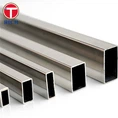


As two types of high-purity copper widely utilized in the industrial sector, OFHC and ETP copper differ primarily in terms of purity, oxygen content, electrical conductivity, and application scenarios: OFHC copper boasts higher purity, extremely low oxygen levels, and superior conductivity, making it ideally suited for high-end precision applications; conversely, ETP copper offers lower costs and better machinability, rendering it suitable for general industrial purposes. In fields such as high-end manufacturing, electrical engineering, semiconductors, new energy, and vacuum systems, the selection of copper materials is of critical importance, as it directly determines the performance ceiling and overall system reliability.
What is Oxygen-Free Copper (OFHC)?
I. OFHC Copper Overview
OFHC stands for Oxygen-Free High-Conductivity Copper. It is a high-purity copper material produced through vacuum melting or inert gas-shielded melting processes. Its defining characteristics are an extremely low oxygen content and exceptionally high purity, which allow it to maximally preserve the inherent superior properties of copper. Consequently, it is widely utilized in high-end industrial sectors with stringent requirements for material purity and stability, and also plays a significant role in precision connectors and high-performance transmission components used in conjunction with steel piping systems.
II. Purity and Composition
In accordance with standard specifications, its oxygen content does not exceed 0.003%, its total impurity content does not exceed 0.05%, and its copper purity exceeds 99.95%. Under these standards, residual deoxidizers or impurities are virtually non-existent. It is precisely this ultra-pure composition that endows it with a bulk electrical conductivity comparable to that of silver, while ensuring that no brittle oxides form at the grain boundaries during welding or high-temperature operations.
| Steel Grade | Copper | Oxygen | Silver | Iron | Nickel | Lead | Other Impurities |
|---|---|---|---|---|---|---|---|
| C10100 | ≥ 99.99% | ≤ 0.0005% (5 ppm max) | ≤ 0.0001% | ≤ 0.0001% | ≤ 0.0001% | ≤ 0.0001% | Ultra-trace |
| C10200 | ≥ 99.95% | ≤ 0.0010% (10 ppm max) | ≤ 0.0010% | ≤ 0.0010% | ≤ 0.0010% | ≤ 0.0010% | Very low levels |
III. Common OFHC Applications
OFHC copper is primarily tailored for high-end, high-performance applications. In the field of steel tubing, it is frequently utilized as precision conductive connectors for premium stainless steel pipes and as complementary heat-conducting components for steel pipes operating under high-temperature conditions.
Furthermore, it finds extensive application in aerospace components, semiconductor equipment, particle accelerators, MRI medical imaging systems, bipolar plates for high-purity hydrogen equipment, and filters for 5G base stations. It is particularly well-suited for scenarios demanding the utmost standards of purity, electrical conductivity, and stability, serving as an indispensable foundational material within the realm of high-end manufacturing.
What is ETP Copper?
I. ETP Copper Overview
ETP copper-fully known as Electrolytic Tough Pitch copper-is a standard high-purity copper material produced through an electrolytic refining process. It is the most widely produced and broadly applied high-conductivity copper material globally, designated by the grade C11000.
During its production, oxygen content is carefully controlled to eliminate impurities and optimize processing characteristics. It is widely utilized in scenarios such as standard fittings within the steel pipe industry and general electrical connections. Distinguished by its exceptional cost-effectiveness, it accounts for approximately 70% of global commercial copper applications.
II. Purity and Composition
ETP copper possesses a copper content of no less than 99.9%, with its oxygen content controlled within the range of 100–650 ppm (i.e., 0.01%–0.065%)-typically falling between 150 and 400 ppm. During the production process, a small amount of deoxidizer is added to react with the oxygen, forming trace inclusions of cuprous oxide; this process effectively eliminates harmful impurities such as phosphorus and sulfur, thereby safeguarding the fundamental electrical conductivity of the copper material.
The composition of ETP copper is designed to strike a balance between performance and cost, making it highly suitable for large-scale industrial production and application.
| Steel Grade | Copper (Cu) | Oxygen (O) | Phosphorus (P) | Iron (Fe) | Lead (Pb) | Sulfur (S) | Other Impurities | Purity Level |
|---|---|---|---|---|---|---|---|---|
| C11000 | ≥ 99.90% | 0.02%–0.04% | ≤ 0.005% | ≤ 0.005% | ≤ 0.005% | ≤ 0.005% | Trace amounts | High purity electrolytic copper |
III. Common ETP Applications
ETP copper is primarily geared toward standard industrial applications. Within the steel pipe industry, it is widely utilized for electrical connectors in ordinary steel pipes, standard heat-conducting components for piping systems, and auxiliary conductive parts during steel pipe processing.
Furthermore, it finds application in power cables, busbars, transformer windings, building plumbing systems, air conditioning heat exchangers, and general electronic components. Encompassing diverse sectors-including power generation, construction, home appliances, and general machinery-it stands as a highly cost-effective, general-purpose copper material.
Difference Between OFHC and ETP Copper
I. Core Differences
The fundamental difference between ETP copper (C11000) and oxygen-free copper (C10200/C10100) stems from their entirely distinct deoxidation processes. ETP copper employs a chemical deoxidation method, utilizing the addition of phosphorus to bond with oxygen and thereby achieve deoxidation; consequently, its oxygen content typically does not exceed 0.06%, though trace amounts of cuprous oxide (Cu₂O) inclusions may remain within the material.
In contrast, oxygen-free copper achieves deoxidation through rigorous control of the smelting process-a physical method that involves virtually no introduction of deoxidizing agents. As a result, its oxygen content is extremely low-not exceeding 0.001% for C10200 and 0.0005% for C10100-yielding a microstructure that is exceptionally pure and virtually free of oxides.
| Feature Dimension | ETP Copper (C11000) | OFHC Copper (C10200/C10100) |
| Deoxygenation Process | Chemical Deoxidation via Phosphorus (P) Addition | Physical Deoxygenation with Strict Oxygen Control |
| Oxygen Content | ≤ 0.06% | C10200:≤ 0.001% C10100:≤ 0.0005% |
| Microstructure | Contains Cu20 micro-inclusions. | The crystal lattice is pure, with virtually no oxides. |
| Hydrogen Embrittlement Risk | Cu20+H2→2Cu+H20↑ | Oxide-Free, Zero Risk |
| Purity Standards | Cu >99.90% | C10200:>99.95% C10100:>99.99% |
II. Conductivity and Performance
OFHC copper exhibits electrical and thermal conductivity that is slightly superior to that of ETP copper, featuring an electrical conductivity of 101–102% IACS and a thermal conductivity of 395–405 W/m·K. Furthermore, it demonstrates exceptional high-temperature stability, low-temperature toughness, resistance to hydrogen embrittlement, and vacuum outgassing performance, making it ideally suited for extreme operating conditions.
In contrast, ETP copper-with an electrical conductivity of approximately 100% IACS and a thermal conductivity of 390–400 W/m·K-is capable of meeting standard requirements for electrical and thermal conduction; however, it is susceptible to hydrogen embrittlement at high temperatures and exhibits a higher vacuum outgassing rate, rendering it less reliable than OFHC copper for long-term use in harsh environments. These performance distinctions between the two copper grades position OFHC copper as the preferred choice for high-end applications, while ETP copper remains suitable for general-purpose scenarios.
III. Comparison of Processing Properties
- Cold Workability: Both exhibit excellent cold workability; ETP copper is slightly superior in terms of work-hardening rate.
- Hot Workability: ETP Copper > Oxygen-Free Copper (ETP copper demonstrates greater resistance to high-temperature oxidation).
- Machinability: ETP Copper is superior (exhibits better chip-breaking characteristics).
- Surface Treatment: Oxygen-free copper offers superior adhesion for electroplating and surface coatings.
conclusion
In summary, the core differences between OFHC copper and ETP copper center on purity, oxygen content, performance, and cost. OFHC copper features high purity and low oxygen content, exhibits excellent electrical and thermal conductivity, and demonstrates strong resilience under extreme operating conditions; however, it carries a higher cost and faces relatively tight supply, making it ideally suited for high-performance applications-such as integration with steel tubing for high-end precision equipment and advanced manufacturing.
Conversely, ETP copper offers moderate purity, good machinability, lower costs, and abundant supply, rendering it suitable for routine applications within the steel tubing industry and for general industrial purposes.