

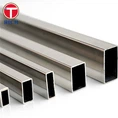


Welded stainless tube refers to tubular products manufactured using stainless steel strips or coils as raw materials, formed through continuous roll-forming, and joined by welding the seams. Based on the form of the weld seam, these tubes can be classified into straight-seam welded tubes and spiral-seam welded tubes. Welded stainless steel tubing is highly valued for its dimensional consistency, material efficiency, and the wide availability of various grades and sizes. Understanding the manufacturing process of welded stainless steel tubing helps customers select the appropriate product based on their specific requirements regarding pressure, corrosion resistance, aesthetics, and processing needs.
What Is a Welded Stainless Tube?
Definition
Welded stainless steel pipe is a type of tubing produced by progressively bending cold-rolled or hot-rolled stainless steel strip into a tubular shape using a forming unit, and then permanently joining the abutting edges through welding.
Key Features
- High Dimensional Accuracy and Uniform Wall Thickness: Welded pipes are formed by rolling and welding cold-rolled stainless steel strips; since the strips possess extremely high precision, the finished pipes exhibit highly uniform wall thickness and excellent concentricity. This is crucial for applications involving precision machinery and uniform heat transfer.
- Low Production Costs and High Efficiency: The continuous roll-forming and welding process results in production efficiency that is significantly higher than that of the piercing and extrusion process used for seamless pipes; consequently, the pricing is typically more competitive.
- Capability to Produce Large-Diameter, Thin-Walled Pipes: Welded pipes can be easily produced with very large diameters yet very thin walls-a feat that is difficult to achieve using the seamless pipe process-making them widely applicable in structural components and decorative fields.
- Superior Surface Quality: The base material (steel strip) possesses a very high surface finish; after undergoing in-line or off-line polishing, the finished welded pipes can achieve an exceptionally high degree of surface smoothness (such as a mirror-like finish).
How Is A Welded Stainless Tube Made?

Material Preparation and Coil Processing
Stainless steel coils of grades such as 304 and 316L are selected and subjected to slitting, uncoiling, and leveling. The edges of the steel strip are then milled or sheared to remove scale and defects, ensuring that the surfaces intended for welding are free of contamination.
Clean edges constitute the primary prerequisite for achieving high-quality welds.
Roll Forming and Tube Shaping
A series of horizontal and vertical rollers is arranged sequentially; as the steel strip undergoes progressive bending, it first assumes a U-shape before closing to form a circular tube blank.
For square or rectangular tubes, direct forming via specialized molds is employed. This fully continuous roll-forming process ensures precise tube dimensions, providing a stable butt-joint gap for the subsequent welding stage.


Welding & Weld Seam Grinding
The manufacturing of welded stainless steel tubes primarily relies on two major methods: Tungsten Inert Gas (TIG) welding and Electric Resistance Welding (ERW). TIG welding uses an inert gas shield to protect the tungsten electrode arc, producing welds that are pure and exhibit excellent toughness; this method is suitable for thick-walled tubes or applications under severe operating conditions.
ERW uses high-frequency currents to heat the edges, which are then forged together under pressure, offering extremely high production speeds and making it the preferred choice for the economical production of thin-walled tubes. Together, these two methods form the technological cornerstone for the efficient and high-quality output of welded stainless steel tubes.
Surface Finishing and Quality Control
Following welding, the tubes undergo a sequence of processes including the removal of internal and external weld beads, sizing, and straightening. They are then subjected to various inspections and tests, such as online eddy current testing, ultrasonic testing, and hydrostatic testing.
Finally, the tubes are cut to specific lengths and marked with product codes; only upon the completion of these steps are the high-quality welded stainless steel tubes cleared for shipment.

Manufacturing Process
What are the uses of welded stainless steel tubes?
I. Fluid Transport
- Petrochemical Industry: Conveying corrosive chemicals, oil and gas, process fluids, and similar media. This application demands high corrosion resistance, typically utilizing materials such as 316L and 2205.
- Pharmaceutical Industry: Transporting pharmaceutical raw materials and related substances. This sector requires extremely rigorous hygiene standards; consequently, sanitary-grade welded pipes-typically made of 304 or 316L stainless steel-are employed. These pipes feature polished inner surfaces that are smooth and free of dead zones, thereby preventing bacterial proliferation.
- Water Treatment Engineering: Used for piping systems within wastewater treatment plants, seawater desalination facilities, and municipal water supply networks.
II. Structural Support and Mechanical Manufacturing
- Automotive Industry: Utilized in vehicle exhaust systems (including mufflers and manifolds). Ferritic stainless steel welded pipes-such as Grade 409-are frequently specified for these applications.
- Mechanical Equipment: Serve as structural components-such as frames, brackets, guide rails, and conveyor rollers-for a wide variety of mechanical machinery. These applications require specific levels of structural strength and dimensional precision.
- Architecture and Decoration: Employed in the construction of stair handrails, guardrails, door and window frames, curtain wall support structures, and similar elements, offering a combination of aesthetic appeal and long-term durability.
Conclusion: How to Select the Appropriate Tubing?
Seamless stainless tubes are formed through a process of piercing and extrusion; consequently, they possess no longitudinal welds, offer a wider range of wall thicknesses-including the capability to produce extremely thick-walled tubes-and theoretically boast a higher maximum pressure resistance limit.
In contrast, welded stainless steel tubes, by virtue of being manufactured from precision cold-rolled strip steel, can achieve thinner wall thicknesses (down to 0.3 mm), exhibit superior dimensional consistency, and offer more pronounced cost advantages.
The decision of whether to select welded stainless steel tubes or seamless tubes ultimately hinges on aligning the choice with the specific application scenario and requirements. For applications involving the conveyance of high-pressure, high-temperature, highly corrosive, or flammable/explosive media-such as piping for chemical reactors, high-pressure boilers, or nuclear power transmission systems-seamless tubes should be prioritized to ensure operational safety.
Conversely, for low-pressure, ambient-temperature applications-such as building water supply and drainage systems, municipal water mains, or decorative tubing-where flexibility in specifications and cost-effectiveness are key considerations, welded stainless steel tubes constitute a perfectly suitable choice.