

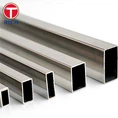


Finned tubes are heat exchange devices, typically consisting of one or more parallel tubes with fins fixed to them. Their design increases the tube's surface area, thereby improving heat exchange efficiency. They are commonly used in air conditioning, refrigeration equipment, boilers, steam turbines, and other systems.
Function of finned tubes
1. Increased Heat Transfer Area
The finned tube design effectively increases the heat transfer area, thereby improving heat exchange efficiency.
2. Improved Heat Transfer Efficiency
The finned tube structure increases the heat transfer coefficient, improving heat transfer efficiency and giving the heat exchanger better heat transfer performance.
3. Reduced Fluid Resistance
Finned tubes reduce fluid resistance in the pipes, lowering system energy consumption and improving system operating efficiency.
4. Reduced Equipment Size
The high heat transfer efficiency of finned tubes allows for a smaller equipment size while maintaining the same heat transfer effect, saving space.
Types of finned tubes

Embedded Finned Tubes
Finals are mechanically embedded into grooves in the tube wall and then fixed by rolling or welding. The connection is strong and offers excellent thermal contact performance, making it suitable for applications with extremely high heat transfer requirements.

Extruded Finned Tubes
Finals and tubes are integrally formed through a hot extrusion process. This method creates a seamless, high-strength fin-tube connection with excellent heat dissipation and corrosion resistance, making it ideal for harsh environments-but it is more expensive to manufacture.

Spiral Wound Finned Tubes
Continuous fins are spirally wound onto the tube wall surface and tightly bonded under controlled tension. This method provides a strong mechanical connection, a large heat transfer area, and excellent thermal performance, especially suitable for medium to large diameter tubes and industrial heat exchangers.

Serrated (Tandem) Finned Tubes
Finals are installed in series along the length of the tube, with segmented or serrated edges to increase turbulence and improve heat transfer efficiency. This design offers moderate to high thermal efficiency and is commonly used for small-diameter tubes in air-cooled heat exchangers.

U-shaped Finned Tubes
The fins have a U-shaped cross-section and are mounted on the tube to increase surface area and enhance heat dissipation. This structure performs excellently under high temperature and pressure, making it suitable for boilers, superheaters, and petrochemical applications.

Welded Finned Tubes
Finals are directly welded to the tube using high-frequency welding or TIG/MIG welding, forming a robust connection. This provides excellent heat dissipation and is ideal for high-temperature, high-pressure, or corrosive environments, although the process is more complex and costly.
Application of finned tubes
1. Energy Sector
Excellent high-temperature resistance, used in power plant boilers, industrial boilers, air preheaters, economizers, etc.
2. Heat Exchangers
Widely used in shell-and-tube, air-cooled, and gas-liquid heat exchangers. Helps improve heat transfer efficiency between hot and cold media.
3. HVAC & Refrigeration Systems
Helps improve thermal performance, reduce energy consumption, and maintain stable temperature control. Can be used in chillers and condensers, evaporators, heating coils, etc.
4. Petrochemical & Chemical Processing
Finned tubes can withstand the high temperatures and corrosive fluids common in refineries and petrochemical plants. Can be used in gas coolers and heaters, process heaters, crude oil preheating, etc.
5. Marine & Offshore Engineering
Finned tubes made of copper-nickel alloys or stainless steel resist corrosion in seawater environments. Used in seawater-cooled heat exchangers, offshore HVAC systems, etc.
6. Automotive & Transportation
Finned tubes help control the heat load of engine and transmission systems. Can be used in radiators, oil coolers, turbocharged air coolers, etc.