

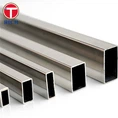


What is titanium tube?
Titanium tubes are cylindrical, hollow profiles made from titanium or titanium alloys, and can be produced using seamless (weldless) or welded methods. They are widely used in industries requiring lightweight, high-strength, and corrosion-resistant pipes and structural components. The main applications of titanium tubes include chemical processing, marine, aerospace, industrial, and power generation industries.
Advantages of titanium tubes
1. High Strength-to-Weight Ratio
The density of titanium alloy is approximately 4.5 g/cm³, which is only 60% that of steel. The strength of pure titanium is close to that of ordinary steel, and some high-strength titanium alloys exceed many alloy structural steels. Therefore, the specific strength (strength-to-density ratio) of titanium alloys is significantly higher than that of other metal structural materials, enabling the manufacture of parts with high unit strength, good rigidity, and light weight. Currently, titanium alloys are used in aircraft engine components, frames, skins, fasteners, landing gear, etc.
2. High Thermal Strength
Titanium tubes can withstand operating temperatures several hundred degrees higher than aluminum alloys and can maintain the required strength at moderately high temperatures. These types of titanium alloys can work for extended periods at temperatures of 450–500°C. Titanium alloys maintain a very high specific strength in the range of 150°C to 500°C, while the specific strength of aluminum alloys decreases significantly at 150°C. The operating temperature range of titanium alloys can reach 500°C, while aluminum alloys are limited to below 200°C.
3. Good Corrosion Resistance
Titanium alloys exhibit much better corrosion resistance than stainless steel when working in humid atmospheres and seawater, especially in terms of resistance to pitting corrosion, acid corrosion, and stress corrosion. They also have excellent corrosion resistance to alkali metals. However, titanium has poor corrosion resistance to media containing reducing oxygen and chromium salts.
4. Good Low-Temperature Performance
The mechanical properties of the alloy can be maintained at low and high temperatures. Titanium alloys have good low-temperature performance and extremely low interstitial elements, such as TA7, which can maintain a certain degree of plasticity at -253°C. Therefore, titanium alloys are also an important low-temperature structural material.
Uses of titanium tubes

chemical industry
Titanium possesses a naturally protective oxide layer and excellent corrosion resistance, exhibiting an extremely low corrosion rate in acid, alkali, and salt media-only 1/200th that of stainless steel. This makes it highly suitable for applications such as process piping, heat exchangers, and condensers.

marine industry
Titanium tubing is resistant to seawater and marine atmospheric corrosion, and its low density and high strength allow for lightweight designs, reducing the overall weight of ships or platforms. It is suitable for seawater piping, ship decks, and support tubes and brackets in offshore platforms.

aerospace industry
titanium tubing has a tensile strength of 600-900 MPa, higher than both 304 stainless steel and 6061 aluminum alloy tubing, yet its density is only 60% that of steel. It can operate stably in a temperature range of -253℃ to 500℃, making it suitable for hydraulic, fuel, and pneumatic lines, as well as brackets, frames, and support components requiring corrosion resistance.

industrial sector
commercially pure titanium (such as Gr2) exhibits excellent heat and corrosion resistance below 300℃, while titanium alloys (such as Ti-6Al-4V) maintain high strength in environments between 315-400℃. Therefore, it is ideal for manufacturing high-temperature industrial pipelines, heat exchange equipment, and petroleum refining equipment.
TORICH One-Stop Solution
TORICH supplies seamless titanium tubes, welded titanium tubes, titanium U-tubes, titanium capillary tubes, and titanium square tubes, using high-quality titanium and titanium alloy materials such as Grade 2, Grade 5, Grade 7, and Grade 9. We also offer customized sizes to meet various customer needs.
In addition to product supply, TORICH provides a true one-stop solution for global customers. From material selection and technical consultation to precision manufacturing, heat treatment, surface treatment, and rigorous quality inspection, every step is carefully controlled to ensure stable and reliable performance and full compliance with international standards. Comprehensive testing and complete certification further guarantee product reliability and traceability. By integrating manufacturing capabilities, engineering support, and flexible delivery methods, TORICH helps customers simplify procurement processes, reduce overall costs, and provide efficient, long-term solutions for demanding application environments.