

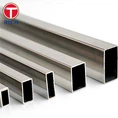


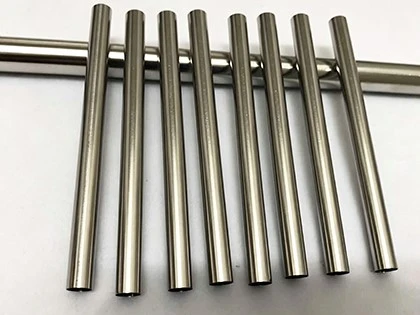
In the precision piping of instrumentation and control systems, material selection directly impacts signal transmission reliability and long-term durability. While 304 stainless steel capillary tube offers the best cost-performance ratio for standard operating conditions, 316 stainless steel capillary tubing holds a distinct advantage in terms of corrosion resistance and durability within harsh, corrosive environments.
Selecting the appropriate stainless steel capillary material directly affects system reliability, maintenance frequency, and overall operating costs. Choosing between 304 and 316 stainless steel requires consideration of factors such as corrosion resistance, mechanical properties, budget constraints, and the operating environment.
Chemical Composition & Properties
304 Stainless Steel Capillary Tube Overview
304 stainless steel capillary tube is a standard austenitic precision tube used in the instrumentation industry; its core composition consists of 18% chromium and 8% nickel, with no added molybdenum and a carbon content of ≤0.08%. It is suitable for gas and liquid transmission, as well as for pressure-sensing lines, in the vast majority of conventional instruments, serving as a fundamental material for both civil and general industrial instrumentation.
316 Stainless Steel Capillary Tube Overview
316 stainless steel capillary tubing builds upon the 304 grade by adding 2%–3% molybdenum and slightly increasing the nickel content. Consequently, it offers superior resistance to pitting and crevice corrosion, making it better suited for demanding applications involving exposure to chlorides, chemicals, and marine environments.
Alloy Differences & Performance Impact
| Property | 304 Stainless Steel | 316 Stainless Steel |
|---|---|---|
| Chromium | Approx. 18% | Approx. 16–18% |
| Nickel | Approx. 8% | Approx. 10–14% |
| Molybdenum | None | Approx. 2–3% |
| Corrosion Resistance | Good | Excellent |
| Chloride Resistance | Moderate | Superior |
Differences in alloy composition directly translate to differences in actual performance. Molybdenum-free 304 stainless steel capillaries offer balanced fundamental properties, exhibiting excellent rust resistance, toughness, and workability in standard environments-thereby meeting the requirements of general instrumentation applications. In contrast, 316 stainless steel capillaries, thanks to their molybdenum content, are resistant to corrosion and damage when exposed to chloride ions or acidic and alkaline media.
Corrosion Resistance
304 Stainless Steel Capillary Tube Corrosion
304 stainless steel offers good general-purpose corrosion resistance; it remains stable over the long term in dry air, ambient-temperature fresh water, and standard atmospheric environments, resisting rust and oxidation.However, it has relatively weak resistance to chloride-ion, acidic, and alkaline corrosion, making it unsuitable for environments containing salt, high humidity, or trace acidic/alkaline substances.
316 Stainless Steel Capillary Tube Corrosion
316 stainless steel offers superior corrosion resistance compared to 304 stainless steel. In addition to excellent resistance to atmospheric conditions and fresh water, it effectively withstands corrosion from chloride ions, salt spray, and weak acids or alkalis, preventing issues such as localized pitting and crevice corrosion.
It maintains its structural integrity even in harsh environments-such as seawater, bleach, and certain acidic chemical solutions-making it ideal for use in chemical instrumentation and offshore facilities.
Mechanical Strength & Durability
Tensile Strength Comparison
| Steel Grade | Typical Tensile Strength (MPa) | Tensile Strength (ksi) | Common Condition |
|---|---|---|---|
| 304 | 515–750 MPa | 75–109 ksi | Cold drawn / annealed |
| 316 | 515–800 MPa | 75–116 ksi | Cold drawn / annealed |
Both 304 and 316 stainless steel capillary tubes exhibit excellent mechanical strength and durability. While their tensile strength values are roughly comparable, specific performance characteristics vary depending on manufacturing methods, heat treatment, and cold-working processes.
The typical tensile strength of 304 stainless steel capillary tubes in the annealed state is approximately 515 MPa, meeting standard requirements for pressure containment in instrumentation and tensile strength in piping applications.
316 stainless steel capillary tubes offer a tensile strength of approximately 530 MPa; furthermore, they experience less strength degradation in high- and low-temperature environments and demonstrate superior stress stability, providing greater resistance to rupture and deformation in control systems subject to significant operational fluctuations.
Flexibility & Hardness
304 stainless steel capillary tubes offer superior flexibility; they are easy to bend, cut, and shape, and possess excellent formability. They are well-suited for instrumentation requiring complex routing or installation in confined spaces and are resistant to cracking and hardening.
316 stainless steel capillary tubes feature slightly higher hardness and greater rigidity, offering superior resistance to crushing and wear. However, they are somewhat less flexible and demand higher precision during bending, making them ideal for applications requiring strict dimensional stability and resistance to deformation.
Longevity in Instrumentation
In instrumentation and control systems, tubing failures can lead to measurement errors, leaks, and unexpected system downtime. Service life depends heavily on corrosion rates and fatigue conditions. While 304 stainless steel capillary tubing can remain in service for decades in dry, chloride-free environments, it may suffer from pitting and perforation within months when exposed to coastal saline moisture or trace acidic mists; in contrast, 316 stainless steel resists localized corrosion, thereby significantly extending the maintenance-free service life of instrumentation tubing systems.
Cost & Value
Due to the cost of alloying raw materials such as nickel and molybdenum, the market price of 316 stainless steel capillary tubing is typically 30% to 50% higher than that of the 304 grade.
304 stainless steel capillary tubing offers balanced performance, ease of processing, and excellent cost-effectiveness, making it suitable for general instrumentation and control systems operating under stable conditions and in non-corrosive environments.
Application Suitability
Typical Uses for 304 Stainless Steel Capillary Tube
304 stainless steel capillary tubes are widely used in standard civil and general industrial instrumentation applications, including temperature sensor lines, pressure gauge impulse lines, general automation control lines, ventilation and fluid transfer lines for precision instruments, and piping for routine laboratory testing equipment. They are suitable for indoor control system environments characterized by dry conditions, the absence of corrosive agents, and stable operating parameters.
Typical Uses for 316 Stainless Steel Capillary Tube
316 stainless steel capillary tubes are specifically designed for precision control systems operating in complex conditions involving corrosive media, where high equipment stability and long service life are critical. They are widely used in applications such as hydraulic control systems on offshore platforms, analyzer sampling lines in chemical plants, remote instrument impulse lines for desalination units, and measurement lines handling corrosive media in pharmaceutical reactors, as well as in any instrumentation system exposed to salt spray, acid mist, or wash-downs involving chlorine-based disinfectants.