

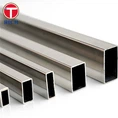


The difference between ASTM A312 and ASTM A358 stainless steel pipes mainly lies in their manufacturing methods, weld requirements, inspection levels, and intended service conditions.
ASTM A312 is suitable for general corrosive environments, high-temperature conditions, and high-pressure applications, including seamless pipes, straight-seam welded pipes, and highly processed austenitic stainless steel pipes.
ASTM A358, on the other hand, focuses on the electrofusion welding process for nickel-chromium stainless steel pipes, suitable for critical applications requiring weld integrity, large diameters, and stringent quality verification.
Understanding the differences between ASTM A312 and ASTM A358 helps engineers select the appropriate stainless steel piping standard for process piping, chemical plants, power generation systems, heat exchangers, and other demanding industrial applications.
Manufacturing Methods: ASTM A312 vs ASTM A358
ASTM A312 Seamless and Welded Production
The ASTM A312 standard covers three manufacturing forms: seamless pipe, straight-seam welded pipe, and heavily cold-worked welded pipe. Seamless pipe is produced via hot piercing or hot extrusion.
Straight-seam welded pipe is manufactured by forming steel plate or strip into a cylindrical shape and welding it longitudinally using processes such as Gas Tungsten Arc Welding (GTAW) or plasma arc welding. Heavily cold-worked welded pipe undergoes significant cold deformation after welding to enhance its strength and dimensional accuracy; it is frequently used in precision applications, such as instrumentation piping.
ASTM A358 Electric Fusion Welding Features
The ASTM A358 standard specifically covers the Electric Fusion Welded (EFW) process. In this process, thick steel plates are rolled into tubular shapes and then welded along the longitudinal seam using fusion welding methods such as Submerged Arc Welding (SAW) or gas-shielded welding; filler metal is typically employed to ensure weld penetration and mechanical integrity.
Compared to A312 welded pipe, the A358 EFW process is better suited for producing large-diameter, heavy-wall piping, offering higher production efficiency while maintaining weld quality. EFW welds typically undergo full post-weld heat treatment (PWHT) to relieve residual welding stresses and restore the material's corrosion resistance.
Size, Thickness, and Schedule Differences
The range of size specifications represents the most immediately apparent difference between ASTM A312 and ASTM A358. Significant disparities exist between the two standards regarding nominal pipe sizes, wall thickness classes, and pipe schedule ranges, directly influencing material selection for large-diameter piping systems.
Standard NPS Limits for ASTM A312
The nominal pipe sizes (NPS) covered by the ASTM A312 standard typically range from 1/8 inch (approx. DN6) to 30 inches (approx. DN750), with wall thicknesses spanning schedules from Sch 5S to Sch 80S. For seamless pipes, producing large-diameter, heavy-wall variants is challenging due to limitations in piercing processes and the capabilities of rolling equipment; consequently, costs rise significantly as pipe diameter and wall thickness increase.
Although welded pipes can be produced in larger diameters, practical specifications are generally limited to 30 inches or less due to constraints regarding steel plate width and the economic viability of welding processes.
Large Diameter and Heavy Plate EFW Capabilities
The ASTM A358 EFW process offers distinct advantages in the production of large-diameter, heavy-wall piping. As the pipes are manufactured by rolling and welding steel plates, the upper limit of the pipe diameter is primarily constrained by plate width and the capacity of the rolling equipment; diameters can typically reach 60 inches (approximately DN1500) or even larger. Regarding wall thickness, the EFW process accommodates thicker steel plates, thereby meeting strength requirements for high-pressure and high-temperature service conditions.
For large-diameter piping systems that exceed the dimensional scope of ASTM A312-such as main pipelines in large oil refineries, main steam piping in power plants, and large-scale inlet/outlet piping for reactors in chemical processing facilities-ASTM A358 EFW piping is often the only economically viable option.
NDT Standards for ASTM A312 and ASTM A358
Hydrostatic and Eddy Current Testing Requirements
For ASTM A312, every pipe must undergo a hydrostatic test; for seamless pipes, eddy current testing may be used as an alternative to detect through-wall defects and surface cracks. This method is suitable for mass production and small-to-medium diameter process piping, though it offers limited verification of weld integrity (internal soundness).
Radiographic Examination and Quality Assurance
Radiographic testing represents one of the key distinctions between ASTM A312 and ASTM A358. ASTM A358 mandates radiographic testing based on the specific class. For Class 1 and Class 2 pipes, all welds must undergo 100% radiographic testing (RT) against stringent acceptance criteria, enabling the direct detection and rejection of internal, subsurface defects such as porosity, slag inclusions, and lack of fusion.
This systematic quality assurance makes A358 EFW pipe a reliable safety barrier for demanding service conditions, such as high-temperature, high-pressure steam and flammable media applications.
Industrial Applications and Selection Criteria
Process Piping vs Critical High-Pressure Systems
ASTM A312 piping is widely used in general process piping systems, including standard transport lines in industries such as chemicals, oil, and natural gas. A312 seamless or welded pipes are suitable for transporting corrosive media under small-to-medium diameter and low-to-medium pressure conditions, offering short procurement lead times and manageable costs. Heavily cold-worked A312 welded pipes are better suited for precision applications, such as instrumentation and sampling lines.
In contrast, ASTM A358 piping is primarily used in critical high-pressure systems and heavy-duty applications-such as high-temperature, high-pressure main lines in oil refineries, superheater and reheater piping in power plant boilers, and inlet/outlet lines for large chemical reactors. The classification system and rigorous radiographic testing requirements associated with A358 ensure safe operation under extreme conditions, particularly for large-diameter, heavy-wall piping applications.
Cost Comparison and Final Engineering Decision Framework
In terms of cost, ASTM A312 seamless pipes are cost-effective in small-to-medium diameters, though their price rises rapidly with increases in diameter and wall thickness. While A312 welded pipes are relatively inexpensive, their pressure-bearing capacity is limited by joint efficiency.
Due to the use of the EFW process and stricter inspection requirements, ASTM A358 pipes typically have a higher cost per unit length than A312 welded pipes of the same specifications; however, for large-diameter, thick-walled applications, the economic advantages of the EFW process become apparent, resulting in manufacturing costs far lower than those of extra-large-diameter seamless pipes.
| Selection Factor | ASTM A312 | ASTM A358 |
|---|---|---|
| Manufacturing | Seamless, welded, cold-worked | Electric Fusion Welded |
| Weld Classification | General welded requirements | Five EFW classes |
| Diameter Range | Small to medium sizes, commonly up to 30" | Large diameter and heavy-wall capability |
| Inspection Focus | Standard NDT requirements | Advanced weld quality verification |
| Typical Service | Process piping and general corrosion service | Critical high-temperature and pressure systems |
conclusion
In summary, ASTM A312 is suitable for standard process piping-typically small-to-medium diameters (NPS ≤ 30) operating under low-to-moderate pressures or general corrosive conditions-emphasizing seamless or cost-effective welded solutions without a mandatory requirement for full-seam radiographic testing.
In contrast, ASTM A358 is applicable to large-diameter (potentially well exceeding 30 inches), heavy-wall piping in critical high-temperature, high-pressure circuits; it mandates certified Electric Fusion Welded (EFW) quality and links specific radiographic testing coverage and joint efficiency factors to defined "Class" designations.