

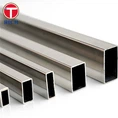


The oil and gas industry operates in some of the most demanding environments; the equipment used must withstand high pressures, extreme temperatures, and corrosive fluids while ensuring long-term, reliable performance. Capillary tubing oil and gas applications consists of precision stainless steel tubes that are indispensable to oil and gas extraction and production systems.
Under extreme operating conditions characterized by the simultaneous presence of high pressure, high temperature, and corrosive media, conventional piping often struggles to maintain long-term stability. In contrast, precision capillary tubing-distinguished by its small bore, high strength, and superior corrosion resistance-serves as a critical component in downhole monitoring, chemical injection, and control systems. This article analyzes the applications, selection criteria, materials, and manufacturing processes associated with this tubing.
What Is Capillary Tubing Used for in Oil and Gas Industry?
In oil and gas production systems, capillary tubing plays a critical role in delivering chemicals, transmitting hydraulic pressure, and supporting real-time monitoring functions. Compared with conventional tubing, precision capillary tubing provides smaller diameters, tighter tolerances, improved corrosion resistance, and better reliability in restricted installation spaces.
Downhole Monitoring Systems
Modern oil and gas wells require continuous monitoring to optimize production efficiency and ensure operational safety. Capillary tubing is widely used in downhole monitoring systems to connect pressure sensors, temperature monitoring devices, and other intelligent completion equipment.
These systems require tubing capable of withstanding high pressure, vibration, temperature fluctuations, and the corrosive effects of well fluids. Stainless steel capillary tubing offers stable performance and protects sensitive monitoring components throughout long-term service.
Chemical Injection Systems
Chemical injection is crucial for controlling corrosion, preventing scale formation, and enhancing oil and gas recovery.
In these systems, capillary tubing delivers precise dosages of corrosion inhibitors, demulsifiers, and other treatment chemicals directly to the production zone. The tubing must ensure precise flow control while resisting chemical attack from both the injected fluids and produced hydrocarbons.
Hydraulic Control Lines
Hydraulic control systems are widely used in subsea and offshore production equipment, including safety valves and intelligent completion systems.
Serving as reliable hydraulic transmission lines, capillary tubes enable operators to control critical downhole equipment remotely. High-pressure capability, dimensional precision, and long-term mechanical stability are key requirements for these applications.
Offshore Oil and Gas Umbilical Systems
Offshore platforms and subsea production facilities rely on umbilical systems to transmit hydraulic power, electrical signals, and chemicals between surface equipment and subsea components.
Precision capillary tubing is integrated into these complex systems due to its superior corrosion resistance, compact design flexibility, and reliable performance in marine environments.
Key Requirements for Capillary Tubing Oil and Gas Applications

Corrosion Resistance
Corrosion is one of the greatest challenges in oil and gas environments. Oil and gas wells commonly contain corrosive agents such as H₂S, CO₂, Cl⁻, and organic acids, which require pipeline materials to exhibit excellent corrosion resistance.
316/316L stainless steel is suitable for general marine engineering and chemical industry applications; duplex stainless steels (2205/2507) offer higher strength and corrosion resistance; and nickel alloys-such as 625, 825, and C276-are specifically designed for extremely corrosive environments.
High Precision and Tight Tolerance
Oil and gas monitoring, chemical injection, and hydraulic control systems impose extremely high precision requirements on pipeline diameters and wall thicknesses; excessive dimensional deviations can directly lead to data inaccuracy, flow imbalances, and insufficient hydraulic power.
The oil and gas industry typically requires outside diameter tolerances to be controlled within ±0.01 mm, with equally strict requirements for inside diameter tolerances, to ensure batch consistency and interchangeability.


High Pressure Performance
Oil and gas wells can reach depths of several thousand meters with operating pressures up to 100 MPa; pipelines must continuously withstand extreme pressure surges, and insufficient pressure resistance can lead to safety hazards such as pipe bursts, deformation, and leakage.
Capillary tubing oil and gas must be verified through hydrostatic, gas-tightness, or burst tests to ensure they exhibit no leakage or permanent deformation at rated pressure and possess an adequate safety margin.
Internal Cleanliness and Surface Quality
Residual impurities, oxide scale, and burrs on the inner walls of capillaries can lead to issues such as fluid blockages, contamination of chemical agents, and sensor malfunctions, directly affecting the operational stability of oil and gas equipment.
The inner wall roughness of capillaries should be controlled to Ra ≤ 0.8 μm (or lower) and subjected to degreasing, pickling, or passivation treatments to prevent blockages or contamination caused by oil, metal particles, and oxide scale.

Materials for Oil and Gas Capillary Tubing
Corrosion levels and pressure-temperature parameters vary significantly across different oil and gas operating conditions; therefore, capillary tubes made of appropriate materials must be selected to ensure compatibility and stability. The following table compares the mainstream capillary tube materials used in the oil and gas industry, along with their suitable applications and performance parameters:
| Material Grade | Main Alloy Characteristics | Suitable Service Conditions | Typical Applications |
|---|---|---|---|
| 316L | Low-carbon molybdenum-containing austenitic stainless steel with good resistance to general chloride corrosion | Moderate corrosive environments and general downhole conditions | Hydraulic control lines, monitoring lines |
| 904L | High-nickel and high-molybdenum austenitic stainless steel with excellent resistance to reducing acids | Highly acidic and high-chloride environments | Instrumentation tubing for offshore platforms |
| 2205 | Duplex stainless steel with high strength and excellent resistance to chloride stress corrosion cracking | Chloride-containing and CO₂-containing well conditions | Downhole hydraulic control lines |
| Inconel 625 | Nickel-based alloy with excellent resistance to high temperature and severe corrosion | Extremely harsh sour gas wells and high-temperature high-pressure (HTHP) wells | Downhole monitoring systems, chemical injection tubing |
| Incoloy 825 | Nickel-iron-chromium alloy with excellent resistance to sulfuric acid, phosphoric acid, and stress corrosion cracking | High-sulfur and high-CO₂ gas field environments | Hydraulic control systems, downhole instrumentation |
Why Choose TORICH for Capillary Tubing Oil and Gas Solutions?
TORICH specializes in the manufacture of precision steel tubes, possessing comprehensive capabilities that span the entire process-from raw material inspection, cold drawing, and heat treatment to final product testing.
For precision capillary tubes used in the oil and gas industry, TORICH offers customized specifications regarding outer diameter, wall thickness, length, and material composition. We also provide material certificates, dimensional reports, hydrostatic test reports, and surface cleanliness data in accordance with project requirements.
Our factory & quipment

Cold drawing equipment


Our
Testing Equipment

Eddy Current Flaw Detector


Capillary tubing oil and gas serves as critical components in downhole monitoring, chemical injection, hydraulic control, and umbilical systems within the oil and gas industry; their reliability is directly linked to the safety and operational efficiency of oil and gas fields.
By combining optimal material selection, rigorous dimensional control, reliable manufacturing processes, and superior surface cleanliness, TORICH is dedicated to providing global oil and gas clients with precision stainless steel capillary solutions designed for demanding environments.