

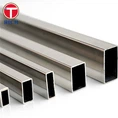


In industrial sectors such as chemical processing, power generation, and refrigeration, stainless heat exchanger tube is widely used as a core component for heat transfer systems; its performance directly determines the operational efficiency and service life of the entire system. Since different grades of stainless steel offer varying levels of corrosion resistance, mechanical strength, and temperature tolerance, material selection is critical for industrial applications.
Among the commonly used materials, grades such as 304, 316, 321, and duplex stainless steel are widely utilized in heat exchangers, boilers, condensers, power generation systems, chemical processing equipment, and industrial cooling systems. Understanding the distinctions between these stainless steel grades enables engineers and procurement professionals to select the solutions best suited to specific operating environments.
Why Stainless Steel Grades Matter for Heat Exchanger Tubes
Heat exchanger tubes are exposed to high temperatures, high pressures, and acidic or chloride-containing media over extended periods; any error in material selection can lead to pitting, intergranular corrosion, or even cracking and leakage. Operating under extreme conditions characterized by the combined effects of high temperatures, high pressures, and corrosive media, the quality of the tube material directly impacts the equipment's reliability and cost-effectiveness.
Therefore, material selection must take into account various factors, including corrosion resistance, high-temperature mechanical properties, formability, weldability, thermal conductivity, and lifecycle costs.
304 Stainless Steel Heat Exchanger Tube

304 stainless steel (ASTM 304 / S30400) is the most widely used grade of austenitic stainless steel and the most common standard choice for stainless steel heat exchanger tubing. Its standard chemical composition includes approximately 18% chromium and 8% nickel, which is why it is often referred to as "18-8 stainless steel." 304 stainless steel tubing offers excellent overall performance, excelling in moderately corrosive environments-such as those involving oxidizing acids, the atmosphere, or water-while also demonstrating outstanding cold-forming and welding characteristics.
Advantages of 304 Stainless Steel Tubes
- Stable in oxidizing acids and typical atmospheric environments
- Good ductility, toughness, and cold-working properties; easy to bend and expand
- Relatively low cost and mature market availability
Typical Applications
304 stainless steel pipes are widely used in various industrial settings characterized by mild corrosive environments.
In the chemical industry, these pipes are suitable for heat-exchange processes involving moderately corrosive media-such as organic acids and dilute nitric acid-as well as standard operations like water-to-water heat exchange and steam heating at ambient temperatures or low-to-moderate pressures.
Additionally, 304 stainless steel pipes are extensively utilized in building heating, solar water heating systems, and HVAC applications, owing to their cost-effectiveness and excellent resistance to atmospheric corrosion.
316 Stainless Steel Heat Exchanger Tube
316 stainless steel is an improved version of 304 stainless steel with added molybdenum (Mo); consequently, it offers superior resistance to pitting and crevice corrosion in chloride-containing environments and serves as a primary material choice for stainless heat exchanger tube operating under moderate to severe corrosive conditions.
Advantages of 316 Stainless Steel Tubes
- Excellent resistance to chloride pitting and crevice corrosion
- Extended service life in marine atmospheres, saline water, and dilute sulfuric acid media
- Superior high-temperature strength compared to 304, while maintaining good weldability
Typical Applications
In the fields of marine engineering and seawater desalination, 316 stainless steel pipes are widely used in equipment such as desalination units, condensers for coastal power plants, and marine heat exchangers.
In the petrochemical industry, 316 stainless steel pipes are widely used in heat-exchange equipment in production processes such as oil refining, chemical fiber manufacturing, and fertilizer production.
321 Stainless Steel Heat Exchanger Tube

Type 321 stainless steel (ASTM 321 / S32100) is an austenitic stainless steel stabilized with titanium and is a key choice for stainless steel heat exchanger tubing in high-temperature applications. Its chemical composition is based on Type 304 but includes the addition of titanium (Ti) at a content approximately five times that of the carbon.
Titanium has a much stronger affinity for carbon than chromium does; it preferentially bonds with carbon to form stable titanium carbide (TiC), thereby effectively preventing chromium depletion at grain boundaries and fundamentally resolving the issue of intergranular corrosion in austenitic stainless steel within the 450–850°C sensitization temperature range.
Advantages of 321 Stainless Steel Tubes
- Excellent resistance to intergranular corrosion, especially suitable for situations where solution treatment cannot be performed after welding
- Maintains high strength and structural stability in the high-temperature range of 426~815℃
- Resistant to sulfur-containing media and high-temperature oxidation, suitable for hydrogen environments
Typical Applications
321 stainless steel piping is primarily used in high-temperature applications and heat exchange equipment susceptible to intergranular corrosion.
In the power industry, it is widely utilized for superheater tubes, reheater tubes, and high-temperature heat exchanger sections in power plants, ensuring stable, long-term operation in high-temperature, high-pressure steam environments.
In the petroleum refining and petrochemical sectors, 321 stainless steel piping is commonly employed for critical components such as furnace tubes, heat exchangers in fluid catalytic cracking (FCC) units, and high-temperature oil and gas coolers.
In the chemical industry, 321 stainless steel piping is suitable for process heat exchange equipment that operates within the sensitization temperature range and faces a risk of intergranular corrosion-examples include heaters used in nitric acid production and high-temperature heat exchangers in synthetic fiber manufacturing.
Duplex Stainless Steel Heat Exchanger Tube

Duplex stainless steel (DSS) is a class of stainless steel characterized by a dual-phase microstructure consisting of both austenite and ferrite, typically in a ratio of approximately 50:50.
Duplex stainless steel heat exchanger tube combines the excellent toughness of austenitic stainless steel with the high strength and resistance to chloride stress corrosion cracking typical of ferritic stainless steel.
Common grades of duplex stainless steel include 2205 (S31803/S32205) and 2507 (S32750), with 2205 being the most widely used standard grade.
Advantages of Duplex Stainless Steel Tubes
- Yield strength is approximately twice that of 304/316, allowing for reduced wall thickness and lighter equipment weight.
- Exceptional resistance to chloride stress corrosion cracking and pitting; PRE values generally exceed 34.
- Good thermal conductivity and a low coefficient of thermal expansion, making it better suited for fluctuating temperatures.
Typical Applications
Duplex Stainless Steel Tubes are primarily used in extreme environments such as seawater desalination, flue-gas desulfurization, high-chloride organic acid processes in chemical plants, and deep-sea engineering; under identical corrosive conditions, it can replace 316L while allowing for a 30% to 50% reduction in wall thickness.
304 vs 316 vs 321 vs Duplex Stainless Steel: Comparison
| Grade | Main Advantage | Temperature Capability | Corrosion Resistance | Typical Applications |
|---|---|---|---|---|
| 304 | Cost-effective and versatile | Medium | Good | General heat exchangers, HVAC |
| 316 | Better corrosion resistance | Medium | Very Good | Chemical, marine, pharmaceutical |
| 321 | High-temperature stability | High | Good | Boilers, thermal systems |
| 2205/2507 | High strength and corrosion resistance | High | Excellent | Offshore, desalination, harsh environments |