

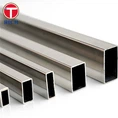


In industrial piping systems, the most widely utilized grades of duplex stainless steel tubing are undoubtedly the standard duplex 2205 (UNS S32205) and the super duplex 2507 (UNS S32750). Duplex stainless pipe combines high corrosion resistance with exceptional mechanical strength, making it suitable for applications in aggressive environments-such as chemical processing, offshore facilities, seawater desalination, and pulp manufacturing.
Currently, the industrial sector categorizes these materials into three main groups: standard duplex, lean duplex, and super duplex. These are typified by grades 2205, 2304/2101, and 2507, respectively; they differ in their alloy compositions and performance characteristics to meet a diverse range of industrial requirements-spanning from architectural cladding to deep-sea oil extraction.
Popular Duplex Stainless Pipe Grades

Standard Duplex (2205)
2205 (UNS S32205) is the most versatile standard duplex grade on the market and serves as the primary material for industrial piping systems. 2205 duplex stainless tubing demonstrates balanced performance across most corrosive environments and is relatively easy to process and fabricate.

Super Duplex (2507)
2507 is a highly alloyed "super duplex" stainless steel designed specifically for extreme environments. Compared to 2205, it offers superior pitting resistance and greater strength, making it ideally suited for applications in offshore oil and gas extraction, seawater processing, and highly corrosive chemical systems.

Lean Duplex Grades
Lean duplex stainless steels typically utilize grades such as 2304 (UNS S32304) and 2101 (UNS S32101)-an economical variant of duplex stainless steel tubing. Although their corrosion resistance is not on par with that of 2205, their strength remains significantly higher than that of austenitic stainless steels like 304L and 316L.
Duplex Stainless Tube Classification:Standard vs. Lean vs. Super Duplex
Key Differences in Performance
The fundamental distinction among these three categories of duplex stainless steel pipes lies in their alloy content, thereby establishing a hierarchical spectrum ranging from economical to high-performance grades: Super Duplex > Standard Duplex > Lean Duplex. The differences in performance are primarily manifested across two dimensions: resistance to chloride-induced pitting corrosion and mechanical strength.
In chloride-containing environments, the maximum service temperatures and applicable concentration limits for these three types of duplex stainless steel pipes increase sequentially. Lean Duplex is suitable for environments with low to moderate chloride concentrations; Grade 2205 can handle most seawater and chemical media applications, while Grade 2507 is capable of long-term service under high-temperature, high-chloride conditions.
In terms of mechanical properties, the yield strength of all three types falls within the 450–550 MPa range-significantly higher than that of conventional austenitic steels-yet Super Duplex exhibits superior tensile strength and typically possesses better low-temperature toughness.
Key Differences in Corrosion Resistance
In terms of corrosion resistance, the three categories of duplex stainless steel tubes exhibit a distinct performance gradient. Lean duplex grades (such as 2101 and 2304) feature lower nickel and molybdenum contents; their Pitting Resistance Equivalent Number (PREN) typically falls between 26 and 28. These grades are primarily suited for environments with low chloride ion concentrations, as well as mild atmospheric or freshwater conditions. While their resistance to pitting corrosion is comparable to-or slightly superior to-that of 316L, they are not suitable for use in highly corrosive media.
Standard duplex grade 2205-benefiting from the synergistic effects of approximately 22% chromium, 3% molybdenum, and nitrogen-achieves a PREN value ranging from 33 to 36. It effectively withstands exposure to standard seawater, most organic acids, and chloride-containing chemical media, and demonstrates stress corrosion cracking resistance far superior to that of traditional austenitic stainless steels.
Super duplex grade 2507, by elevating its chromium content to 25% and molybdenum to 4%, achieves a PREN value exceeding 40. It is specifically engineered for extremely demanding operating conditions-such as those involving high temperatures, high chloride concentrations, or the presence of hydrogen sulfide. Even under conditions where other grades would fail to endure, it is able to maintain a stable passive film over the long term, thereby effectively preventing the occurrence of both pitting and crevice corrosion.
Advantages and Disadvantages:Standard vs. Lean vs. Super Duplex
2205 Duplex Stainless Steel Pipe
2205 duplex stainless steel pipe offers an excellent balance of strength, corrosion resistance, and cost. Compared with 316L, it provides higher mechanical strength and better resistance to pitting and stress corrosion cracking, making it the most widely used duplex grade. However, it is not suitable for prolonged service above 300°C or in highly aggressive media such as concentrated hydrochloric or hydrofluoric acids. In extremely high-chloride environments, a super duplex grade may be required.
2507 Super Duplex Stainless Steel Pipe
2507 super duplex stainless steel pipe delivers outstanding resistance to chloride-induced pitting, crevice corrosion, and stress corrosion cracking, making it ideal for the most demanding offshore and chemical processing environments. Its main drawbacks are higher material costs and stricter fabrication requirements, as welding, forming, and heat treatment demand tighter process control.
Lean Duplex Stainless Steel Pipe
Lean duplex stainless steel pipe is valued for its cost-effectiveness and high strength. Grades such as 2101 use lower nickel content, reducing exposure to nickel price fluctuations while offering better strength than conventional austenitic stainless steels. However, their corrosion resistance is lower than that of 2205, limiting their use in highly corrosive or high-chloride environments.
Duplex Stainless Tube Selection Guide
| Grade |
 |
 |
 |
| Grade name | Lean Duplex | 2205 Duplex | 2507 Super Duplex |
| Main Strengths | Low cost, good strength, moderate corrosion resistance | Balanced cost and performance, broad industrial use | Highest corrosion resistance and strength |
| Typical Limitations | Limited use in severe chloride service | Not ideal for extreme corrosive environments | Higher cost, stricter fabrication control |
| Chloride Resistance | < 500 ppm | 500-2000 ppm | > 2000 ppm |
| Relative Cost | Lower (comparable to or lower than 316L) | Moderate | Higher (approximately 1.5 to 2 times that of 2205) |
| Weldability | Good | Good | Requires Strict Control |
| application areas | Water systems, light industrial, structural use | Chemical plants, process piping, general industrial service | Offshore, seawater, severe chemical service |