

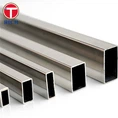


Tubular materials utilized in precision applications are subject to exceptionally stringent requirements regarding dimensional tolerance, surface finish, and structural stability. CDW Steel Tube-a cold-drawn electric resistance welded (ERW) precision steel tube-is manufactured using high-frequency ERW tubing as the base stock. Through a multi-pass cold-drawing process utilizing internal mandrels, the material undergoes precise diameter reduction, wall thinning, and inner bore finishing.
This process is further enhanced by bright annealing and precision straightening, ultimately achieving micron-level dimensional tolerances. Consequently, CDW Steel Tube is a critical component in fields where dimensional accuracy is paramount-such as hydraulic cylinders and automotive transmission shafts.
Raw Material Selection
Choosing ERW Tubes
The raw material consists of high-quality hot-rolled steel strips-either low-carbon steel or stainless steel-which, following longitudinal slitting, are fed into an ERW production line. The selected steel strips are subject to rigorous control regarding thickness deviation and strip profile; the resulting welded tube blanks must exhibit a uniform weld microstructure, as well as extremely low ovality and wall thickness eccentricity, thereby establishing the ideal geometric precision and weld integrity required for subsequent cold drawing processes.
Preparing Steel for Drawing
The welded tube billets undergo a sequential treatment process-comprising pickling, phosphating, and soaping-to remove surface scale and form a dense lubricating film, thereby reducing friction during the drawing process. Subsequently, the billets are cut to precise lengths, and their ends are swaged to ensure the smooth insertion of the mandrel, thereby establishing clean and dimensionally uniform starting conditions for precision cold drawing.
Tube Formation and Welding
Steel Strip Tube Forming Process
The ERW base material utilized in production undergoes initial tube formation via a continuous steel strip forming process. The steel strip is continuously cold-bent through a series of forming rollers, gradually coiling into a cylindrical tube while ensuring that the abutting edges align perfectly.
To meet the rigorous demands of precision tube manufacturing, closed-loop dimensional monitoring equipment is employed throughout the entire process to perform real-time corrections on the tube blank's roundness. This ensures that the concentricity of the formed tube blank meets the required standards, thereby establishing a uniform and stable tubular foundation for subsequent welding and cold-drawing operations.
Seam Welding Process
Utilizing high-frequency induction or contact welding, the edges of the tube blank are rapidly heated to welding temperature and subsequently consolidated by squeeze rollers to form a continuous weld seam. The weld zone immediately undergoes internal and external flash removal as well as in-line seam annealing; this process eliminates brittle and hard microstructures, ensuring that the strength and toughness of the weld seam match those of the base material, thereby meeting the requirements for severe deformation during cold drawing.
Cold Drawing Over Mandrel
Precision Drawing Process
Mandrel cold drawing is a core process for enhancing tube precision and eliminating weld seam traces; it also constitutes the key technology that distinguishes CDW (Cold Drawn Welded) steel tubes from conventional ERW (Electric Resistance Welded) tubes. A pre-treated tube blank is fitted over a long mandrel and drawn together through a carbide die.
Under the strong constraint of the die, the tube's outer diameter is reduced, while its inner bore is defined and polished by the mandrel, thereby simultaneously achieving diameter reduction, wall thickness reduction, and inner surface finishing in a single pass.
Achieving Dimensional Accuracy
Leveraging precision dies and a stable drawing speed, cold-drawn tubes can achieve an outer diameter tolerance of ±0.05 mm, a wall thickness tolerance of ±0.03 mm, and an inner surface roughness of Ra ≤ 0.8 μm. Multi-pass mandrel drawing effectively corrects minute irregularities in the tube billet while significantly enhancing straightness, thereby achieving controlled precision at the micron level.
Heat Treatment and Sizing
Annealing for Stress Relief
The work hardening induced by cold drawing must be eliminated through non-oxidizing bright annealing. In a continuous furnace utilizing a protective nitrogen-hydrogen atmosphere, the tubing undergoes recrystallization annealing to fully relieve residual stresses, restore ductility, and adjust its strength and hardness. Furthermore, the surface remains bright and clean-free from any decarburized layers-thereby providing a structurally uniform billet for the final sizing process.
Sizing and Straightening
Upon completion of the annealing process, the material proceeds to the sizing and straightening stages to further correct errors in straightness and roundness. Subsequently, it passes through a multi-roll straightening machine to refine its straightness to within 0.5 mm/m, thereby eliminating bending and torsional deformations and ensuring that the tubing meets the rigorous standards for dimensional consistency and straightness required for precision assembly.
Quality Control
Inspection and Testing
All finished tubes undergo automated eddy current or ultrasonic flaw detection, full dimensional inspection, and visual surface examination to eliminate defects such as cracks and folds. Concurrently, random sampling is conducted for tensile, hardness, flattening, and flaring tests to verify mechanical properties and process adaptability, thereby ensuring that every tube maintains a consistent standard of quality.
Customization for Precision Needs
Tailored to specific end-use operating conditions, a comprehensive suite of solutions is available-including customized steel grades, internal chrome plating, specialized end processing (such as swaging, flaring, and grooving), and strict cleanliness control. From raw material composition to final packaging, the manufacturer employs a flexible process chain to meet each client's unique specifications regarding tolerances, surface finish, and performance, thereby delivering truly integrated technical support.
Applications of CDW Steel Tube
CDW tubing is widely utilized in automotive systems, mechanical components, hydraulic lines, and various engineering applications.In the automotive sector, it is frequently employed in hydraulic brake lines, precision transmission oil lines, and shock absorber piston rod sleeves.
In the field of construction machinery, it is well-suited for use as hydraulic cylinder barrels and precision pneumatic components. Furthermore, it serves as a core component in precision machine tools, instrumentation, and automation equipment-applications where extremely high precision in tubing fit is required-effectively substituting for certain types of seamless precision steel tubes and enabling customers to effectively control procurement costs.
Conclusion
The precision manufacturing of CDW steel tube constitutes a comprehensive, interconnected system characterized by multi-layered quality control. The process begins with electric resistance welding, followed by tube forming and seam welding; the tubes then undergo mandrel cold drawing, succeeded by heat treatment, dimensional sizing, straightening, and rigorous inspection. Upon completion of these stages, the resulting tubing exhibits exceptional dimensional accuracy, surface quality, and mechanical properties.