

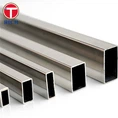


4130 Chromoly tubing is a medium-carbon, low-alloy steel characterized by chromium and molybdenum as its primary alloying elements.
This unique compositional blend endows 4130 steel with distinct advantages-including high strength, exceptional durability, and a superior strength-to-weight ratio-making it a core material in high-performance industries such as motorsports and aerospace.
In this article, we will provide a detailed overview of the unique characteristics of 4130 Chromoly tubing, its outstanding performance capabilities, and the key sectors where it is most frequently utilized.
What Is 4130 Chromoly Tubing?
4130 Chromoly tubing is a low-alloy steel tube composed primarily of iron, with the addition of chromium and molybdenum elements. Its "4130" designation is derived from the SAE/AISI steel classification system, wherein the numbers indicate the alloy type and compositional range of the steel. This material is widely recognized for its exceptional weldability, machinability, strength, and fatigue resistance.
4130 Steel Composition (ASTM A519)
| Element | Carbon (C) | Manganese (Mn) | Phosphorus (P) | Sulfur (S) | Silicon (Si) | Chromium (Cr) | Molybdenum (Mo) |
|---|---|---|---|---|---|---|---|
| Composition (%) | 0.28–0.33 | 0.40–0.60 | ≤0.035 | ≤0.040 | 0.15–0.35 | 0.80–1.10 | 0.15–0.25 |
Key Properties of Chromoly Tubing
4130 alloy steel is forged at temperatures ranging between 950°C and 1230°C. To enhance its properties, it may undergo annealing, normalizing, quenching, and tempering. Due to its low carbon content, 4130 alloy steel is readily weldable.
4130 chromium-molybdenum alloy steel boasts an excellent strength-to-weight ratio and superior corrosion resistance; compared to standard low-carbon steel, it enables a weight reduction of approximately 30%. Furthermore, a dense, protective oxide film can form on the surface of 4130 chromium-molybdenum steel tubing, effectively shielding it against corrosion from common media such as air and moisture-thereby demonstrating significantly enhanced corrosion resistance compared to standard low-carbon steel.
Taking ASTM A519 as an example, the typical mechanical properties are as follows:
| Property | Tensile Strength | Yield Strength | Elongation | Hardness |
|---|---|---|---|---|
| Typical Value | ~560 MPa (81 ksi) | ~460 MPa (67 ksi) | ~21% | ~197 HB |
Main Uses of 4130 Chromoly Tubing

Motorsports and Race Car Chassis
In the realm of motorsports, 4130 Chromoly Tubing is the material of choice for professional race car construction, particularly for critical structural components such as chassis, roll cages, and suspension linkages. During operation, race cars must withstand severe impacts and torsional loads, while simultaneously meeting extremely rigorous requirements for lightweight design.
4130 chromium-molybdenum steel tubing offers an exceptional strength-to-weight ratio and superior impact toughness; it not only ensures the structural stability and safety of the vehicle body but also effectively reduces overall weight, thereby enhancing the race car's acceleration performance and handling capabilities.
Aerospace
4130 chromium-molybdenum steel tubing features stable mechanical properties and excellent machinability, making it well-suited for applications in the aerospace sector. It is primarily utilized in critical components such as aircraft landing gear linkages, engine mounts, and airframe structures.
These components are required to withstand the immense loads generated during aircraft takeoff and landing, while simultaneously meeting strict requirements for lightweight construction and long service life-demands that 4130 chromium-molybdenum steel tubing precisely fulfills.


Industrial and High-Torque Machinery
In industrial manufacturing, 4130 chromium-molybdenum steel tubing is frequently used in mechanical equipment and high-pressure piping systems subjected to high torque and heavy loads; it is particularly well-suited for fabricating equipment operating under severe working conditions.
Examples include off-highway mining vehicles, heavy-duty drive shafts, drilling equipment, and hydraulic cylinder barrels-devices that require transmitting substantial torque while withstanding intense vibration and impact.
Bicycle Frames
In fields where riding quality and durability are subject to the most exacting standards-such as high-end bicycle and motorcycle frames, as well as firearm components-4130 chromium-molybdenum steel tubing stands as the ideal material.
Combining lightweight properties with exceptional toughness, it not only reduces frame weight while enhancing riding comfort and agility, but also effectively withstands the impacts and vibrations encountered during use, thereby minimizing the risk of issues such as frame deformation or fracture.

4130 Chromoly vs. Other Materials
4130 Chromoly vs. Mild Steel
Although standard low-carbon steel (such as 1020) is inexpensive and exceptionally easy to machine and weld, its strength is far inferior. To achieve equivalent structural strength, components fabricated from standard low-carbon steel would require significantly increased wall thickness and weight, rendering them incapable of meeting lightweighting requirements.
Conversely, at an equivalent weight, 4130 chromium-molybdenum alloy steel offers an overwhelming advantage in structural rigidity; consequently, in any application involving weight reduction or high-load conditions, low-carbon steel is essentially uncompetitive.
4130 Chromoly vs. Aluminum
Aluminum alloys (such as 6061-T6) possess a density approximately one-third that of steel, offering a distinct advantage in applications where weight sensitivity is the primary concern. However, their low elastic modulus implies that they undergo greater deformation under equivalent loads; furthermore, they exhibit a lower fatigue limit, and their strength drops significantly within the heat-affected zones of welds-a condition that typically necessitates complex heat treatments to restore.
In contrast, this type of chromium-molybdenum alloy tubing boasts superior absolute strength, extended fatigue life, and the capacity for easy localized repair following welding. Consequently, it is particularly well-suited for high-reliability structures subjected to impact loads and sustained vibration.
Conclusion
4130 Chromoly Tubing is a low-alloy seamless steel tube featuring chromium and molybdenum as its primary alloying elements. Thanks to its well-balanced chemical composition, it exhibits high strength, exceptional toughness, an outstanding strength-to-weight ratio, excellent weldability and machinability, as well as robust resistance to corrosion and high temperatures-qualities that secure its prominent position within the industry.
Its applications are extensive, spanning diverse sectors such as motorsports, aerospace, industrial equipment, and high-performance sporting goods. It serves as an indispensable core material-one for which there is no substitute-particularly in scenarios demanding high performance, uncompromising safety, and operation under rigorous working conditions.
FAQ for Welding 4130 Chromoly Steel Tube
Q: Can 4130 Chrome-Moly Material Be TIG Welded?
A: Yes. TIG welding is widely used for 4130 chrome-moly, including in aerospace applications. As with any process, correct procedures and welding parameters are essential.
Q: Is Preheating Necessary?
A: For thin-wall tubing (≤ 0.12" / 3 mm), preheating is generally not required. However, the base material should not be below room temperature (70°F / 21°C) before welding. Preheating at 300–400°F (149–204°C) may be used in specific cases for improved results.
Q: Which Filler Wire Should Be Used?
A: The preferred filler is ER80S-D2, as it closely matches the strength of 4130 steel. ER70S-2 can also be used, but it produces slightly lower weld strength.
Q: Does Using ER70S-2 Reduce Strength but Improve Ductility?
A: Yes. ER70S-2 typically results in lower weld strength compared to the base metal but offers better ductility. This can be offset through proper structural design, such as gussets, reinforcements, or longer weld seams.
Q: Is Post-Weld Stress Relief Required?
A: Thin-wall tubing usually does not require stress relief. For thicknesses above 0.12" (3 mm), stress relief at around 1100°F (593°C) is recommended.
Q: Can Welded Parts Be Quenched?
A: No. Rapid quenching should be avoided, as it may cause cracking or lamellar tearing. Welds should be allowed to cool naturally.