

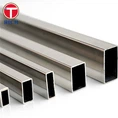


As a core component of exhaust systems in automobiles and industrial equipment, the exhaust pipe operates in harsh environments characterized by high temperatures, high corrosion, and strong vibrations. It must withstand the intense heat of engine exhaust gases (up to 900°C) and resist the corrosive effects of acids, alkalis, moisture, and road salt in the exhaust. Therefore, the choice of material is crucial. 304 and 409 stainless steel are currently the two most widely used materials in the exhaust pipe industry. But which one is more suitable?
Key differences between 304 and 409
the differences of Chemical Composition
304 stainless steel has a much higher nickel content than 409 stainless steel and is rich in chromium, so 304 has excellent corrosion resistance; 409 stainless steel has a lower nickel content and is not as corrosion resistant as 304, but its production cost is lower.
| Steel Grade | C (%) | Cr (%) | Ni (%) | Mn (%) | Si (%) | P (%) | S (%) | Ti (%) | Fe |
|---|---|---|---|---|---|---|---|---|---|
| 304 | ≤ 0.08 | 18.0 – 20.0 | 8.0 – 10.5 | ≤ 2.00 | ≤ 0.75 | ≤ 0.045 | ≤ 0.030 | - | Balance |
| 409 | ≤ 0.08 | 10.5 – 11.75 | ≤ 0.50 | ≤ 1.00 | ≤ 1.00 | ≤ 0.045 | ≤ 0.030 | Stabilized (≥ 6×C typical) | Balance |
the differences of Corrosion Resistance
304 stainless steel is resistant to humid air, rain, and corrosive media in urban environments. The tail section of exhaust pipes and muffler areas has low temperatures and is prone to condensation; however, 304 stainless steel maintains its metallic luster and will not rust.
409 stainless steel has a lower nickel content, so its surface passivation film may be damaged, especially in low-temperature, humid, and salty environments, making it more susceptible to corrosion and rust.
the differences of High temperature resistance
The automotive exhaust system is the longest component in a car. This system must withstand extreme temperature variations (-20 to 850℃) and high-frequency vibrations from high-temperature, high-speed exhaust gases. Therefore, the exhaust pipe must be made of high-temperature-resistant stainless steel.
304 stainless steel, with its continuous operating temperature of 650℃ and short-term tolerance to 800℃, is perfectly suited for the entire exhaust pipe section. Even under high engine speeds and heavy loads, it remains stable and is not prone to deformation or oxidation due to high temperatures.
409 stainless steel can directly contact exhaust gases at temperatures ranging from 300℃ to 800℃ and is suitable for the lower-temperature mid-section and tailpipes.
How to choose between 304 and 409
The choice between 304 and 409 stainless steel exhaust pipes should be based on cost budget and practical application considerations.
304 Stainless Steel Applications
- Vehicle Environment: Suitable for use in coastal areas, rainy regions, roads salted in winter, or industrial plants and boilers where exhaust fumes are highly corrosive.
- Performance Requirements: For performance modifications where extremely high requirements are placed on the exhaust pipe's high-temperature resistance, mechanical strength, and exhaust efficiency.
- Cost Considerations: 304 stainless steel contains a higher nickel content, resulting in higher raw material costs. Furthermore, its processing costs are higher due to the more demanding equipment and processes required for bending and cutting.
409 Stainless Steel Applications
- Vehicle Environment: Frequently used in dry inland areas with low humidity, no marine salt spray, no road salt exhaust corrosion, and very low levels of external environmental corrosion.
- Performance Requirements: Suitable for situations without modifications, high-performance requirements, and where there are no excessively high demands on the exhaust pipe's durability, exhaust efficiency, or appearance.
- Cost considerations: 409 has a very low nickel content, making it more economical; it is also easier to cold bend, flare, and weld, making it suitable for large-scale, high-speed, automated production in the automotive industry, and it is cheaper than 304.
conclusion
In summary, 304 and 409 stainless steels are widely used in exhaust systems due to their respective unique advantages. 409 stainless steel is a cost-effective solution that meets standard OEM requirements, making it suitable for dry environments and large-scale automotive production. 304 stainless steel, on the other hand, offers superior corrosion resistance, better long-term durability, and performs better in harsh conditions such as coastal climates, salty surfaces, or high-performance applications.
There is no absolute "best" choice-only the material best suited to your operating environment, performance expectations, and budget. For projects prioritizing durability, appearance, and resistance to harsh environments, 304 stainless steel is the preferred choice. For applications where cost-effectiveness and standard performance are primary considerations, 409 stainless steel remains a practical and reliable option.If you are choosing stainless steel for your exhaust system, please contact us immediately for expert technical advice and a stainless steel piping solution tailored to your application needs.