

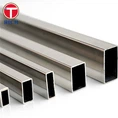


304, 304H, and 304L are all 304 stainless steel in terms of chromium and nickel content, all containing 18% chromium (Cr) and 8% nickel (Ni). However, the main difference lies in their carbon content. 304H has the highest carbon content, while 304L has the lowest, with the carbon content of 304 stainless steel falling in between. Higher carbon content generally results in poorer corrosion resistance and increased susceptibility to corrosion. This article will analyze the differences between 304, 304H, and 304L in terms of chemical composition, corrosion resistance, heat resistance, and application areas.
Differences in 304, 304L, 304H
| Steel Grade | 304L | 304 | 304H |
| Key Features | Ultra-low carbon content, strong resistance to intergranular corrosion | Balanced performance, highly versatile | High carbon content, high high-temperature strength |
| Advantages | No heat treatment required after welding; resistant to intergranular corrosion. | Cost-effective; wide range of applications. | Excellent high-temperature creep strength and resistance to creep. |
| Disadvantages | Low room temperature and high temperature strength. | May face intergranular corrosion risk after welding. | Poor resistance to intergranular corrosion, unsuitable for welding corrosive environments. |
| Typical applications | Chemical equipment, petrochemical equipment, fertilizer industry equipment, welded components, equipment that cannot undergo post-weld heat treatment | Household goods, building decoration equipment, food and medical equipment, general industrial containers and pipelines | Power plant boilers, superheaters, high-temperature heat exchangers, steam pipelines (>525°C) |
Differences in Chemical Composition
304L is an ultra-low carbon stainless steel, while the "H" in 304H refers to high temperature. The main difference between the three stainless steels lies in their carbon content. 304H has a higher carbon content than 304, and 304 has a higher carbon content than 304L. Specifically, 304 has a carbon content below 0.08%; 304H has a carbon content between 0.04% and 0.1%; and 304L has a carbon content below 0.030%. Among other elements, the content of sulfur (S) and phosphorus (P) is slightly lower in 304L, but the difference is minimal.
| Elements | C (%) | Si (%) | Mn (%) | P (%) | S (%) | Cr (%) | Ni (%) | N (%) |
|---|---|---|---|---|---|---|---|---|
| 304 | ≤0.08 | ≤0.75 | ≤2.0 | ≤0.045 | ≤0.03 | 18–20 | 8–10.5 | ≤0.10 |
| 304L | ≤0.03 | ≤0.75 | ≤2.0 | ≤0.045 | ≤0.03 | 18–20 | 8–12 | ≤0.10 |
| 304H | 0.04–0.10 | ≤0.75 | ≤2.0 | ≤0.045 | ≤0.03 | 18–20 | 8–10.5 | ≤0.10 |
Difference in corrosion resistance and heat resistance
1. Corrosion Resistance
- 304 Stainless Steel: In the solution-treated state (i.e., factory-annealed state), its corrosion resistance is comparable to 304L. However, if no solution treatment is performed after welding or heat treatment, intergranular corrosion is prone to occur in the weld bead and heat-affected zone. Therefore, for thick cross-sections or components that do not require post-weld heat treatment, 304L is a safer choice.
- 304L Stainless Steel: Due to its ultra-low carbon content, it effectively prevents sensitization (intergranular corrosion) and is suitable for corrosive environments after welding. Its resistance to uniform corrosion is comparable to 304, but its resistance to intergranular corrosion is superior to ordinary 304.
- 304H Stainless Steel: Its corrosion resistance is slightly lower than 304L. Due to its higher carbon content, attention must be paid to intergranular corrosion after welding, and it is generally not recommended for use in highly corrosive environments.
2. Heat Resistance
- 304H Stainless Steel: 304H has the best high-temperature resistance among the three materials. Due to its high carbon content (0.04-0.10%), 304H exhibits high creep strength and endurance strength at high temperatures, making it suitable for environments above 500°C. ASTM standards have specific requirements for the high-temperature performance (such as creep strength) of 304H. Therefore, it is specifically designed for high-temperature applications, such as boilers, superheaters, heat exchangers, and turbine components.
- 304 Stainless Steel: Can be used in certain medium and low-temperature environments, but its high-temperature strength is lower than that of 304H. Its operating temperature is generally limited to below 425°C to ensure sufficient strength and safety margin.
- 304L Stainless Steel: Due to its lowest strength, its allowable high-temperature stress is the worst of the three. It is generally not used in high-temperature, high-pressure environments.
Differences in application areas

304
The most economical and versatile basic grade, widely used in building decoration, food processing equipment, general chemical equipment, household appliances, and other fields.

304L
Commonly used in welded components, containers, heat exchangers, chemical process equipment, and food processing equipment where resistance to intergranular corrosion is required. Using 304L stainless steel during welding can effectively reduce weld corrosion.

304H
Suitable for high-temperature environments, such as high-temperature furnace tubes and heat exchangers, and other components that need to maintain stable performance at high temperatures.
how to choose
The choice between 304, 304L, and 304H depends primarily on your operating environment and processing technology. You can determine this by following these three steps:
Step 1: Consider whether welding is required
Welding is the key difference between 304 and 304L. If your equipment requires welding, choose 304L. Because 304L has a low carbon content, it can be used directly after welding without additional heat treatment.
Step 2: Consider whether it operates in a high-temperature environment
If your equipment operates in environments above 500°C for extended periods, such as boilers or heating furnace pipes, choose 304H. Its high carbon content helps it resist deformation at high temperatures.
Step 3: Consider whether it operates in a normal room-temperature environment.
If welding is not required and it is not in a high-temperature environment, choose 304. Because 304 has a moderate carbon content, its room-temperature mechanical properties and general corrosion resistance meet your needs, and it offers the best cost-performance ratio.
TORICH provides 304, 304L, and 304H stainless steel pipes, offering one-stop services including size, shape, surface quality, and processing. We have a dedicated engineering team that can provide professional technical support.