

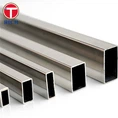


In process industries, instrumentation lines connect pressure gauges, valves, analyzers, transmitters, control panels and other critical equipment. These lines may carry gases, hydraulic fluids, chemicals or process media under pressure, which means dimensional consistency, corrosion resistance and connection reliability are important.
Stainless steel instrumentation tubing is specifically designed for these applications. Compared with general-purpose tubing, it normally requires tighter dimensional control, consistent outside diameter and suitable surface quality to ensure reliable fitting connections and long-term service.
This article explains what instrumentation tubing is, common sizes and standards, typical stainless steel grades, applications and the main factors buyers should consider when specifying tubing.
Why Is Instrumentation Tubing Different from Ordinary Stainless Steel Tubing?
Stainless steel instrumentation tubing is a type of small-diameter precision tubing used to convey liquids or gases between instruments, valves, control equipment, and process systems.
Such tubing is typically connected using compression fittings rather than traditional welded fittings. Since the seal is achieved by sealing against the outer surface of the tube, the tube's outside diameter, roundness, and surface condition directly affect connection performance.
Compared to standard stainless steel piping, instrumentation tubing generally requires tighter tolerances, superior cleanliness, and more consistent mechanical properties.
| Requirement | Instrumentation Tubing | General Stainless Steel Tubing |
|---|---|---|
| Outside diameter | Usually small OD, commonly 1/8"–1" or 3–25 mm, with tighter control for fitting compatibility | Available in a much wider OD range; tolerance depends on the product standard and application |
| Wall thickness | Selected according to working pressure, tube OD and fitting requirements; common walls include 0.028", 0.035", 0.049" and 0.065" | Wall thickness varies widely depending on structural, heat-transfer or fluid-service requirements |
| Surface condition | Smooth, clean surface is important because compression fittings seal on the tube OD; deep scratches should be avoided | Surface may be mill finish, pickled, bright annealed or polished depending on end use |
| Connection method | Mainly used with compression fittings, double-ferrule fittings or instrument fittings | Commonly welded, threaded, flared, fabricated or connected with general-purpose fittings |
| Typical application | Instrument lines, analyzer systems, pressure gauges, chemical injection, hydraulic/pneumatic control | Heat exchangers, process piping, structural fabrication, automotive, machinery and general fluid transfer |
Common Instrumentation Tubing Sizes
I. outside diameters
Common imperial outside diameters include 1/8", 1/4", 3/8", 1/2", 5/8", 3/4", and 1". In the metric system, common sizes are 3 mm, 6 mm, 8 mm, 10 mm, 12 mm, 16 mm, 20 mm, and 25 mm. Sizes of 1/4" and 3/8" are the most widely used specifications for pneumatic and hydraulic instrumentation lines.
II. wall thicknesses
Commonly ordered wall thicknesses include 0.028", 0.035", 0.049", 0.065", and 0.083" (approximately 0.71, 0.89, 1.24, 1.65, and 2.11 mm). However, buyers should not select tubing based only on OD and wall thickness. They should also consider working pressure, temperature, material strength, corrosion conditions, and applicable design requirements.
A thicker wall may increase pressure capability, but it can also affect bending, internal flow area, and installation. TORICH offers specifications covering an outer diameter range of 3–50.8 mm; please refer to the document below for detailed dimensions.
Standards for Stainless Steel Instrumentation Tubing
Purchasing personnel often ask which standards apply to stainless steel instrument tubing. In practice, project specifications usually determine this; the following two ASTM standards are most common.
I. ASTM A269
ASTM A269 is one of the standards frequently specified for austenitic stainless steel tubing used in general service.
It covers seamless and welded austenitic stainless steel tubing and defines requirements related to areas such as: Chemical composition, Mechanical properties, Heat treatment, Dimensions, and hydrostatic/non-destructive testing.
For many industrial instrumentation applications, ASTM A269 tubing is commonly specified together with additional project requirements concerning dimensions, surface condition, or inspection.
II. ASTM A213 / ASME SA213
ASTM A213 and ASME SA213 may also appear in project specifications, particularly where tubing is associated with pressure or heat-transfer equipment.
The correct standard should always be determined by the engineering specification rather than simply selecting whichever standard is available.
Depending on the project, additional requirements may include PMI, hydrostatic testing, nondestructive testing, surface roughness requirements and EN 10204 3.1 material certification.
Common Stainless Steel Grades
I. 304 / 304L
Grades 304 and 304L are used in general industrial environments, utility applications, and moderately corrosive conditions. While generally less expensive than 316L, they offer lower resistance to chloride ions and are therefore not recommended for coastal or offshore environments, or for applications involving exposure to de-icing salts.
II. 316 / 316L
Grade 316L instrumentation tubing is the workhorse grade for chemical processing, offshore, oil and gas, and marine applications. Molybdenum alloying enhances resistance to chloride-induced pitting and crevice corrosion, while the low-carbon "L" variant minimizes carbide precipitation during welding and bending.
III. Duplex Steels and Specialty Alloys
When 316L cannot meet the requirements regarding chloride concentration, temperature, pressure, or sulfur-bearing conditions, procurement professionals turn to Duplex 2205, Super Duplex 2507, or nickel-based alloys-such as Inconel 600/625 and Alloy 825-for corrosive impulse and sampling lines.
Seamless vs Welded Instrumentation Tubing
Both seamless and welded tubing can be used for instrumentation systems, but their manufacturing methods and typical selection considerations are different.
| Factor | Seamless Instrumentation Tubing | Welded Instrumentation Tubing |
|---|---|---|
| Pressure service | Often preferred for higher-pressure or more demanding service | Suitable for many standard-pressure applications when permitted by the specification |
| Wall consistency | No weld zone, providing uniform structure around the circumference | Modern welded tubing can achieve stable dimensions, but the weld area remains a key inspection point |
| Corrosion consideration | No weld seam, reducing concern about weld-related corrosion zones | Weld quality and post-weld treatment are important, especially in corrosive service |
| Cost | Usually higher due to the manufacturing process | Generally more cost-effective for suitable applications |
| Typical use | High-pressure instrumentation, oil & gas, chemical processing, critical control lines | General instrumentation, utility systems, process control and lower-to-moderate pressure service |
Applications of Stainless Steel Instrumentation Tubing
I. Oil and Gas
Instrumentation tubing is widely used in refineries, pipelines, offshore platforms, and processing facilities for pressure measurement, sampling, control systems, and chemical injection lines.
II. Chemical and Petrochemical Processing
Stainless steel instrumentation tubing is used to connect analyzers, instruments, control valves, and monitoring equipment in applications requiring high corrosion resistance and leak-tight integrity.
III. Power Generation
Typical applications include instrument connections, sampling systems, control lines, and pressure monitoring equipment.
IV. Industrial Process Control
Instrumentation tubing is also used in pneumatic, hydraulic, and automated process systems to connect control components with measurement devices.
How to Select the Right Instrumentation Tubing
I. Tube Size
The outside diameter and wall thickness should be selected according to the required flow, working pressure, and fitting size. Common instrumentation tubing sizes include 1/4", 3/8", 1/2", and 3/4".
II. Material Grade
304/304L is suitable for many general industrial environments, while 316/316L is more commonly selected where higher corrosion resistance is required. More aggressive environments may require duplex or nickel alloys.
III. Pressure and Temperature
The tube size and wall thickness must match the actual working pressure and operating temperature. Higher temperatures can reduce the allowable pressure of the tubing.
IV. Process Medium
The material should be compatible with the gas, chemical, hydraulic fluid, or other medium carried by the system to reduce corrosion and leakage risk.
V. Fitting Compatibility
Instrumentation tubing is usually connected with compression or double-ferrule fittings, so outside diameter, roundness, surface condition, and hardness should meet the fitting requirements.
VI. Standard and Testing
Buyers should confirm the required standard, such as ASTM A269, together with any additional requirements for PMI, pressure testing, surface finish, or EN 10204 3.1 certification.
Stainless Steel Instrumentation Tubing Manufacturer
As a manufacturer of stainless steel tubing, TORICH produces instrumentation tubing according to customer-specified dimensions, material grades, standards, and inspection requirements.
We manufacture tubing in grades such as 304L, 316L, 321, Duplex 2205, Super Duplex 2507, and select nickel-based alloys, with customizable outer diameters and wall thicknesses. We provide in-house dimensional inspection, PMI, mechanical testing, and EN 10204 3.1 certification, as well as options for custom cut lengths, end finishing, and traceability documentation.
For an accurate quotation, please provide the outer diameter × wall thickness, material grade, standard, quantity, and testing requirements.