

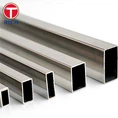


Products Description
Product Specifications
| Standards | ASTM A269/A269M |
| Steel Grades | TP201 TP201LN TP304 TP304L TP304LN TP316 TP316L TP316LN TP317 TP321 TP347 TP348 TPXM10 TPXM11 TPXM15 TPXM19 TPXM29, etc. |
| Equivalent Standards | EN 10216-5 / JIS G3463 / GB/T 14976 |
| Outer Diameter (OD) | 1/2 in. / 12.7 mm, customizable |
| Wall Thickness (WT) | 0.5–5.0 mm, customizable |
| Length | 50–500 m, up to 1000m |
| Surface Treatment | Bright Annealed (BA) |
| Production Process | Cold-drawn or welded and drawn |
| Condition | Solution Annealed |
The 1 2 stainless steel tubing coil is manufactured from austenitic stainless steel grades such as 304, 316, and 321. The chromium (Cr) content enables the formation of a dense, self-healing Cr₂O₃ passive film on the tube surface, ensuring the material remains in a passive state when exposed to HVAC hot and chilled water, condensate, atmospheric conditions, and most mildly corrosive media.
The tubing is supplied in a bright-annealed (BA) condition, free of oxide layers on both the inner and outer surfaces. The internal surface roughness can be controlled to Ra ≤ 0.8 μm upon request, which effectively reduces fluid flow resistance and the tendency for scale formation.
Customized Services
- Custom Sizing: In addition to a 1/2″ outer diameter, we offer customization for outer diameters ranging from 3 mm to 50 mm, as well as specified wall thicknesses.
- U-Bend / Serpentine Bending: CNC tube bending performed according to customer-provided drawings, with bend radius, leg length, and circuit spacing controlled to exact specifications. For coiled tubes, the uniformity of curvature is maintained with a spacing tolerance of ≤ ±0.5 mm.
- Surface Treatment: Options include bright annealing, pickling, and mirror-finish polishing (internal/external).
- End Processing: Includes plain ends, chamfering, flaring, swaging (necking), and the addition of connections via laser or argon arc welding.
Chemical Composition
| Steel Grade | C | Mn | Si | P | S | Cr | Ni | Mo | Ti |
|---|---|---|---|---|---|---|---|---|---|
| TP304 | ≤0.08 | ≤2.00 | ≤0.75 | ≤0.045 | ≤0.030 | 18.0–20.0 | 8.0–11.0 | - | - |
| TP304L | ≤0.030 | ≤2.00 | ≤0.75 | ≤0.045 | ≤0.030 | 18.0–20.0 | 8.0–13.0 | - | - |
| TP316 | ≤0.08 | ≤2.00 | ≤0.75 | ≤0.045 | ≤0.030 | 16.0–18.0 | 10.0–14.0 | 2.0–3.0 | - |
| TP316L | ≤0.030 | ≤2.00 | ≤0.75 | ≤0.045 | ≤0.030 | 16.0–18.0 | 10.0–15.0 | 2.0–3.0 | - |
| TP321 | ≤0.08 | ≤2.00 | ≤0.75 | ≤0.045 | ≤0.030 | 17.0–20.0 | 9.0–13.0 | - | 5×(C+N) min.; 0.70 max. |
Mechanical Properties
| Steel Grade | Tensile Strength, min. (MPa) | Yield Strength, min. (MPa) | Elongation, min. (%) | Hardness, max. |
|---|---|---|---|---|
| TP304 | 515 | 205 | 35 | 201 HB / 92 HRB |
| TP304L | 485 | 170 | 35 | 201 HB / 92 HRB |
| TP316 | 515 | 205 | 35 | 217 HB / 95 HRB |
| TP316L | 485 | 170 | 35 | 217 HB / 95 HRB |
| TP321 | 515 | 205 | 35 | 217 HB / 95 HRB |
Possible Alternative Grades
- When the heat-exchange medium may come into contact with cooling water, chloride-containing coastal air, or high-humidity environments, upgrading to TP316 is recommended. Although it carries a higher cost than 304, it helps avoid future maintenance and downtime expenses resulting from localized corrosion.
- For applications involving medium-to-high temperature ranges (approximately 430–900°C) or frequent temperature fluctuations-where stabilization against sensitization is required-grade 321 is a suitable choice; it is better suited for high-temperature service than 316L while offering comparable corrosion resistance.
- In environments characterized by extreme chloride ion concentrations, acidic media, or high levels of contamination, higher-grade materials such as 904L or super duplex stainless steel may be considered. However, as these come at a significantly higher cost, they should be reserved for high-risk operating conditions.
application areas
- HVAC condenser coils and evaporator coils
- Heat exchanger tubes for central air conditioning and refrigeration systems
- Heat exchanger coils for ground-source/water-source heat pumps
- Heat exchange cores for energy recovery ventilation (ERV/HRV) systems
- Immersion heating/cooling coils
- Heat exchanger tubes for shell-and-tube heat exchangers
- Piping for the transport of clean gases and fluids
Products Show


Testing Equipment


Factory Equipment

Pickling equipment

Polishing equipment

Cold drawing equipment
Products Package


FAQ
Q: How should you choose between 304 and 316L?
A: For dry, clean environments, 304/304L is sufficient. For applications involving contact with cooling water, chloride-containing media, or high-humidity coastal environments, 316/316L is recommended due to its superior resistance to pitting corrosion.
Q: What surface treatments are available?
A: Options include Bright Annealed (BA), pickled, 2B, and mirror-polished (internal/external) finishes. Additionally, internal surface roughness can be controlled to meet specific cleanliness requirements for the process medium.
Q: What are the advantages of coiled tubing over straight tubing?
A: Coiled tubing significantly reduces the number of welded joints, thereby lowering the risk of leaks. It also simplifies installation and transport, while providing a continuous, smooth internal surface that helps minimize scaling and pressure loss.
Hot Tags: 1 2 stainless steel tubing coil, China, suppliers, manufacturers, factory, customized, wholesale, price, OEM, mill, producer, for sale


