

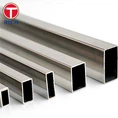


Products Description
Product Specifications
| Standards | ASTM A269/A269M |
| Steel Grades |
TP304 (UNS S30408), TP304L (UNS S30403), TP316 (UNS S31600), TP316L (UNS S31603), etc. |
| Equivalent Standards | EN 10216-5;JIS G3463;GB/T 14976 |
| Outer Diameter (OD) | 6 mm - 630 mm |
| Wall Thickness (WT) | 0.5 mm - 55 mm |
| Length | 6 / 12 m |
| Surface Treatment | Annealed & pickled, bright annealed, mechanically polished; ID/OD polishing available |
| Production Process | Cold drawing / Cold rolling |
| Condition | Annealed, solution treated, pickled/passivated or bright annealed |
TP304 exhibits stable passivity in environments such as fresh water, steam, dilute organic acids, alkaline solutions, and the atmosphere. It offers good pressure-bearing capacity and is suitable for cold-bending and flaring operations. It is well-suited for applications-such as chemical process water or instrument air-where chloride ion concentrations are low, and no strongly reducing media are present.
Compared to TP304, TP316 offers significantly enhanced resistance to pitting and crevice corrosion in chloride-containing environments. It also demonstrates good resistance to sulfuric acid, phosphoric acid, and acetic acid at low to moderate concentrations and temperatures.
Customized Services
- Cutting to Length & End Preparation: Tubes can be cut to specified lengths according to drawings, with plain, chamfered or beveled ends available for subsequent welding and assembly.
- Surface Finishing: Pickling, passivation, mechanical polishing (MP) and electropolishing (EP) are available, with surface roughness options such as Ra ≤ 0.8 μm, Ra ≤ 0.4 μm or Ra ≤ 0.25 μm depending on application requirements.
- Tube End Forming: Custom processes include flaring, expanding, reducing, swaging, flanging, grooving, chamfering and deburring to match fittings, manifolds and equipment connections.
- Tube Bending: Custom bending is available according to customer drawings, with bend radius, ovality and wall-thickness thinning controlled to meet dimensional and assembly requirements.
Chemical Composition
| Element |
C |
Mn |
Si |
P |
S |
Cr |
Ni |
Mo |
|---|---|---|---|---|---|---|---|---|
|
TP304 |
≤0.07 |
≤2.00 |
≤0.75 |
≤0.045 |
≤0.030 |
18.0–20.0 |
8.0–10.5 |
- |
|
TP316 |
≤0.08 |
≤2.00 |
≤0.75 |
≤0.045 |
≤0.030 |
16.0–18.0 |
10.0–14.0 |
2.0–3.0 |
Mechanical Properties
| Property |
Tensile Strength (MPa), min. |
Yield Strength (MPa), min. |
Elongation (%), min. |
Hardness (HRB), max. |
|---|---|---|---|---|
|
TP304 |
515 |
205 |
35 |
90 |
|
TP316 |
515 |
205 |
35 |
90 |
Possible Alternative Grades
- For process piping requiring a significant amount of field welding, TP304L or TP316L may be selected, as they maintain resistance to intergranular corrosion within the weld heat-affected zone.
- For process piping subject to continuous service temperatures exceeding 500–600 °C, TP321 is a suitable choice; it is commonly used in high-temperature process piping, exhaust systems, and heat exchanger tubes.
- In operating environments with high chloride content and a risk of stress corrosion cracking-typically within a temperature range of approximately -50 °C to 300 °C-2205 duplex stainless steel (UNS S31803/S32205) may be selected.
application areas
ASTM A269 Tp304 Tp316 Seamless Ss Tubing can be supplied for the following chemical processing applications:
- Chemical Processing: Reactor feed/discharge lines, transport of acidic or alkaline liquids, solvent recovery, and heat exchanger tube bundles and casings.
- Process Piping and Instrumentation Systems: Instrumentation lines, sampling lines, analytical gas lines, and steam-tracing lines for chemical, petrochemical, oil and gas, and power generation facilities.
- Heat Exchange and Heat Transfer: Auxiliary heat exchangers (low-to-medium pressure), condensers, and heating coils.
- Oil & Gas and Offshore Engineering: Instrumentation lines for offshore platforms and water/brine injection lines for oilfield operations.
Products Show


Testing Equipment


Factory Equipment

Pickling equipment

Polishing equipment

Cold drawing equipment
Products Package


FAQ
Q: What is the difference between ASTM A269 seamless tubing and ASTM A213 tubing?
A: ASTM A269 is intended for general-service stainless steel tubing used in instrumentation, process lines, and fluid transfer. ASTM A213 is specifically designed for boiler, superheater, and heat exchanger tubing, subject to more stringent requirements for high-temperature and high-pressure service. ASTM A269 should not be used as a substitute for ASTM A213 in critical high-temperature, high-pressure applications.
Q: How should one quickly choose between TP304 and TP316 for chemical process piping?
A: TP304 is generally sufficient if the chloride ion concentration in the medium remains below the safety threshold (at temperatures up to approximately 50–60°C) and there is no significant risk of pitting corrosion. TP316 is the preferred choice if chlorides are present (especially at concentrations exceeding ~200 ppm), if the system involves cooling with seawater or brackish water, or if it is exposed to reducing acids or offshore environments.
Q: Can TP304/TP316 be used for cryogenic or low-temperature applications?
A: Yes. Due to their austenitic microstructure, these materials retain good toughness and ductility at cryogenic temperatures. Consequently, TP304 and TP316 are widely used in piping systems for LNG, liquid nitrogen, and other low-temperature fluids. However, the lower design temperature limit must be verified in accordance with relevant standards and impact testing requirements.
Hot Tags: astm a269 tp304 tp316 seamless ss tubing, China, suppliers, manufacturers, factory, customized, wholesale, price, OEM, mill, producer, for sale, tp304l stainless steel pipe, sa 249 tp316l, 316 stainless steel tubing polished


