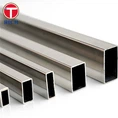
Stainless Welded Steel Tube

Stainless Welded Steel Tube

Stainless welded steel tube is a type of metal piping made from sections of stainless steel that are join together through welding. The pipes can be use for transporting liquids and gases in industrial settings and carrying hot or cold water on plumbing projects. These pipes provide effective heat and corrosion resistance, making them an ideal option for various applications. And offer durability and sturdiness for their strong joints and seamless construction.

Product Introduction
Your Professional Stainless Welded Steel Tube Supplier

Torich International Limited is a professional manufacturer and exporter of steel pipes materials.


It is an international marketing and sales company specialized in steel tubes, which holds the factories of Seamless Steel Tubes with Carbon and Alloy Steel Grade, Welded Precision Steel Tubes,DOM Steel Tubes, Seamless & Welded Stainless Steel Tubes with Nickel and Alloy Steel Grade.

Why Choose Us?

One-stop Solution

A professional steel pipes manufacturer and solution provider. Our aim is to provide ONE-STOP supply service for our customers with demand of: Steel Tubes/Pipes and Steel Tube/Pipe related products.


Complete Range Of Products

Torich International Limited is an international marketing and sales company specialized in steel tubes, which holds the factories of Seamless Steel Tubes with Carbon and Alloy Steel Grade, Welded Precision Steel Tubes,DOM Steel Tubes, Seamless & Welded Stainless Steel Tubes with Nickel and Alloy Steel Grade.

Quality Contoral

100% prompt delivery in the past 3 years. 100% dimensional check and 100% visual inspection on tube surfaces. 100% eddy current test and ultrasonic test for detecting longitudinal and transversal defects.

Corporate Culture

We focus on Quality First, Quality Traceability, and Quality Stability! We focus on Customer First, People First, and Quality-Oriented!


ASTM A312 Tp304 316厚壁无缝不锈钢管

ASTM A312 TP304 316 Heavy Wall Seamless Stainless Steel Tube

Oil & Gas : Platform accomodation, cable trys, subsea pipelines etc
Water : Water and sewage treatment, water tubing, hot water tankers etc
Medical : Surgical instruments, surgical implanets, MRI scanners etc

Sa 312 316l厚壁无缝不锈钢管

Sa 312 316l Thick Wall Seamless Stainless Steel Tube


Widely used in petroleum,foodstuff,chemical industry,construction, electric power,nuclear,energy,machinery,biotechnology,paper making, shipbuilding,boiler fields.

不锈钢卫生管 ASTM A270 Tp304 TP316L

Stainless Steel Sanitary Tubing ASTM A270 Tp304 TP316L

Thickness Tolerance:+/-10%
Length:5.8meter or 6meter or customized
Length Tolerance:+/-8mm

Sa 213 Tp321 316l 不锈钢 U 型管

Sa 213 Tp321 316l Stainless Steel U Tube

Steel:Grade200 series,300 series
Surface:Polishing,annealing,pickling,bright
Package:Standard export seaworthy package,or as required.

ASTM A269 Tp304 Tp316 无缝不锈钢管

ASTM A269 Tp304 Tp316 Seamless Ss Tubing

The ASTM A269 Tp304 Tp316 seamless stainless steel (SS) tubing is made from high-quality raw materials, ensuring durability and excellent performance in various applications. This tubing is commonly used in industries such as chemical, petrochemical, oil and gas, food processing, and many others.

Sa312 Tp321 321h不锈钢管

SA312 TP321 321H Stainless Steel Pipe

Stainless steel is a versatile and widely used material in various industries. It is renowned for its excellent corrosion resistance, high strength, and durability. SA312 TP321 and 321H stainless steel pipes are specifically designed for applications that require resistance to high temperatures and corrosive environments.

ASTM A312 Tp316 316l 316ti 无缝不锈钢管

Astm A312 Tp316 316l 316ti Seamless Stainless Steel Pipe

The ASTM A312 TP316, TP316L, and TP316Ti are seamless stainless steel pipes. These pipes are commonly used in various industries due to their excellent corrosion resistance and high strength.

Sa 249 Tp304 Tp316l 无缝不锈钢管

SA 249 TP304 TP316L Seamless Stainless Steel Pipe


Outer Diameter: 12-76.2mm
Wall Thickness: 0.5mm-3.0mm
Length: As request

精密无缝不锈钢管

Precision Seamless Stainless Steel Tube


Material, Specification, Key Features
Material: Stainless Steel (Grade 310S)
Specification: Seamless Tube

What Is Stainless Welded Steel Tube


Stainless welded steel tube is a type of metal piping made from sections of stainless steel that are join together through welding. The pipes can be use for transporting liquids and gases in industrial settings and carrying hot or cold water on plumbing projects. These pipes provide effective heat and corrosion resistance, making them an ideal option for various applications. And offer durability and sturdiness for their strong joints and seamless construction.

Stainless Welded Steel Tube Manufacturing

The method of manufacturing welded and stainless welded steel tube is evident in their names alone. Seamless tubes are as defined – they do not have a welded seam. The tubing is manufactured through an extrusion process where the tube is drawn from a solid stainless steel billet and extruded into a hollow form. The billets are first heated and then formed into oblong circular molds that are hollowed in a piercing mill. While hot, the molds are drawn through a mandrel rod and elongated. The mandrel milling process increases the mold's length by twenty times to form a seamless tube shape. Tubing is further shaped through pilfering, a cold rolling process, or cold drawing.


Welder welded stainless steel tube is produced through roll-forming strips or sheets of stainless steel into a tube shape and then welding the seam longitudinally. Welded tubing can be accomplished either by hot-forming and cold-forming processes. Of the two, cold forming results in smoother finishes and tighter tolerances. However, each method creates a durable, strong, steel tube that resists corrosion. The seam can be left beaded or it can be further worked by cold rolling and forging methods. The welded tube can also be drawn similarly to stainless welded steel tube to produce a finer weld seam with better surface finishes and tighter tolerances.


Seamless tubes are completely homogenous tubes, the properties of which give stainless welded steel tube more strength, superior corrosion resistance, and the ability to withstand higher pressure than welded tubes. This makes them more suitable in critical applications in harsh environments, but it comes with a price.

5 Benefits of Using Stainless Welded Steel Tube

Stainless steel is a metal alloy made up of iron, chromium, nickel, and other elements. This metal has excellent properties that make it ideal for many applications. Type 304 is the most widely used of these stainless steel alloys in the construction industry due to its excellent corrosion resistance and weldability.

Stainless Welded Steel Tube1
Stainless Welded Steel Tube2
Stainless Welded Steel Tube3
Stainless Welded Steel Tube4

Corrosion Resistance
One of the primary benefits of using stainless welded steel tube is their excellent corrosion resistance. They can withstand high temperatures, harsh chemicals, and exposure to moisture without rusting or corroding. This makes them an ideal choice for applications where the pipes come in contact with corrosive liquids or gases.


Durability
Stainless welded steel tube are known for their durability and strength. They can withstand heavy loads, high pressures, and extreme temperatures without cracking or breaking. This makes them an ideal choice for applications that require high strength and durability, such as oil and gas pipelines, heat exchangers, and boilers.


Easy Maintenance
Stainless welded steel tube require minimal maintenance compared to other types of pipes. They are easy to clean and maintain and do not require any special cleaning agents or procedures. This makes them ideal for applications where hygiene and cleanliness are critical, such as food processing and pharmaceuticals.


Versatility
Stainless welded steel tube are versatile and can be used in various applications. They are suitable for transporting various liquids and gases, including water, oil, gas, and chemicals. They can also be used for structural purposes, such as building supports and handrails.


Cost-effective
While stainless welded steel tube may be more expensive than other pipes, they offer a long-term, cost-effective solution. They require minimal maintenance, have a longer lifespan, and not need to be replaced frequently. This makes them a cost-effective option for applications where long-term durability and reliability are crucial.

Industrial Applications of Stainless Welded Steel Tube
 

Oil and gas industry

● Transporting oil, gas, and petrochemicals: Stainless welded steel tube play a crucial role in the transportation of oil, gas, and petrochemical goods. The inherent ability of these compounds to resist corrosion plays a crucial role in safeguarding their safety and maintaining their structural integrity throughout transportation.
● Offshore drilling platforms: Offshore drilling platforms necessitate the utilisation of stainless welded steel tube due to their unparalleled resistance to corrosion and exceptional structural integrity, which are important in withstanding the challenging marine environment.

Construction and architecture

● Structural support: Stainless welded steel tube play a vital role in providing essential structural support, hence maintaining the stability and safety of various architectural and engineering structures buildings, bridges, and other similar constructions.
● Plumbing and water distribution systems: Stainless steel is often regarded as an optimal material for plumbing and water distribution systems in residential and commercial structures due to its exceptional corrosion resistance and durability.

Chemical and petrochemical industry

● Transporting corrosive chemicals: Stainless welded steel tube play a vital role in providing essential structural support, hence maintaining the stability and safety of various architectural and engineering structures buildings, bridges, and other similar constructions.
● Chemical processing equipment: Stainless steel is often regarded as an optimal material for plumbing and water distribution systems in residential and commercial structures due to its exceptional corrosion resistance and durability.

Food and beverage industry

● Hygienic processing and transportation: Stainless welded steel tube play a crucial role in upholding sanitary conditions throughout the handling and conveyance of food items. These objects possess a high level of cleanliness and exhibit a strong resistance to contamination.
● Brewing and dairy applications: Stainless welded steel tube are very suitable for brewing and dairy applications due to their corrosion resistance and ease of maintenance, which contribute to the preservation of product quality and safety.

Pharmaceutical industry

● Hygienic and sterile processing: The maintenance of a sterile environment is of utmost importance in the field of pharmaceutical manufacture, particularly in relation to hygienic and sterile processing. stainless welded steel tube are widely employed in the transportation and processing of pharmaceutical items, mostly due to their sanitary characteristics.
● Drug manufacturing and distribution: The reliability and resistance to contamination of stainless welded steel tube play a crucial role in drug manufacturing and distribution processes.

Automotive industry

● Exhaust systems: Stainless welded steel tube are commonly employed in exhaust systems owing to their exceptional resistance to high temperatures and corrosion. This utilisation serves to augment the overall longevity and functionality of the system.
● Fuel and hydraulic lines: Stainless welded steel tube are well-suited for utilisation in cars' fuel and hydraulic lines due to their commendable endurance and notable resistance to corrosion.

Water treatment and desalination

● Water transportation and distribution: The utilisation of stainless welded steel tube is crucial in the realm o● Exhaust systems: Stainless welded steel tube are commonly employed in exhaust systems owing to their exceptional resistance to high temperatures and corrosion. This utilisation serves to augment the overall longevity and functionality of the system.
● Fuel and hydraulic lines: Stainless welded steel tube are well-suited for utilisation in cars' fuel and hydraulic lines due to their commendable endurance and notable resistance to corrosion.
ransportation and distribution, primarily owing to their exceptional resistance to corrosion and contaminants. This attribute plays a pivotal role in safeguarding the provision of a secure and uncontaminated water supply.
● Desalination plant piping: Stainless welded steel tube are considered highly suitable for desalination plant piping due to their exceptional resistance to corrosion, which is particularly advantageous in environments characterised by frequent exposure to saltwater.

Power generation

● Steam and gas distribution in power plants: Stainless welded steel tube are commonly employed in power plants for the distribution of steam and gas, owing to their exceptional capacity to endure elevated temperatures and pressures.
● Nuclear power applications: Stainless welded steel tube find utility in nuclear power applications owing to their exceptional resistance against corrosion and radiation.

 
Stainless Welded Steel Tube Grades
300 Series Austenitic – Typical grades are T304 and T316

Chromium (17-25%), Nickel (8-25%); non-magnetic, not heat treatable. It can develop high strength by cold working. Additions of molybdenum (up to 7%) can increase the corrosion resistance. 300 series resist corrosion and uphold their strength at high temperatures and are easy to maintain. Type 316 contains slightly more nickel than Type 304, and 2-3% molybdenum giving it better corrosion resistance.
Typical uses: Surgical applications, food, and beverage equipment, wastewater equipment, chemical equipment, architectural applications.

400 Series Martensitic – Typical Grade: 410

Straight chromium (12-18%); magnetic and can be hardened by heat treatment. Type 410 resists corrosion in mild atmospheres, steam, and mild chemical environments.
Typical uses: Fasteners, machinery parts, pump shafts.

400 Series Ferritic – Typical grade 430

Straight Chromium (12-18%); low carbon, magnetic, but not heat treatable.
Typical uses: Highly polished trim applications, food processing.

Precipitation Hardening – Typical grade: 17-4

Chromium (12-28%), Nickel (4-7%); martensitic or austenitic. The typical grade 17-4 name comes from the additions 17% Chromium and 4% Nickel, it is also known as grade 630. They have high strength, relatively good ductility, and good corrosion resistance at moderate temperatures.
Typical uses: Valves, gears, pump parts, bolts, saws, shafting.

Mechanical Characteristics of Stainless Welded Steel Tube
 

Grade

Density

Melting Point

Tensile Strength

Yield Strength (0.2%Offset)

Elongation

304/ 304L

8.0 g/cm3

1400 °C (2550 °F)

Psi 75000 , MPa 515

Psi 30000 , MPa 205

35 %

304H

8.0 g/cm3

1400 °C (2550 °F)

Psi 75000 , MPa 515

Psi 30000 , MPa 205

40 %

310 / 310S / 310H

7.9 g/cm3

1402 °C (2555 °F)

Psi 75000 , MPa 515

Psi 30000 , MPa 205

40 %

306/ 316H

8.0 g/cm3

1400 °C (2550 °F)

Psi 75000 , MPa 515

Psi 30000 , MPa 205

35 %

316L

8.0 g/cm3

1399 °C (2550 °F)

Psi 75000 , MPa 515

Psi 30000 , MPa 205

35 %

317

7.9 g/cm3

1400 °C (2550 °F)

Psi 75000 , MPa 515

Psi 30000 , MPa 205

35 %

321

8.0 g/cm3

1457 °C (2650 °F)

Psi 75000 , MPa 515

Psi 30000 , MPa 205

35 %

347

8.0 g/cm3

1454 °C (2650 °F)

Psi 75000 , MPa 515

Psi 30000 , MPa 205

35 %

904L

7.95 g/cm3

1350 °C (2460 °F)

Psi 71000 , MPa 490

Psi 32000 , MPa 220

35 %

 
Installation of Stainless Welded Steel Tube
 

When installing stainless steel welded pipe, it is important to follow proper installation practices to ensure that the pipe will function properly and last for its intended life. Here are some key things to keep in mind:

01/

Proper Alignment: The pipe should be properly aligned during installation to ensure it does not become damaged or deformed over time.

02/

Tolerances: Stainless steel tubes have specific tolerances for ovality, straightness and wall thickness etc. It is important to ensure that the installed pipe meets these tolerances to ensure proper installation.

03/

Support: Proper support is essential to ensure that the pipe can withstand the loads it will experience during its service life. This includes support for the weight of the pipe and any additional loads the pipe will experience, such as thermal expansion.

04/

Flexibility: Stainless steel welded pipe is not as flexible as seamless pipe, so it is important to keep in mind that they may require more supports and anchors.

05/

Welding: If welding is required, it is important to ensure that the welder is qualified and that the welds meet industry standards.

06/

Cleaning: Prior to installation, it is important to properly clean the pipes to remove any debris or contamination that may affect the performance of the pipes.

Mechanical Testing of Stainless Welded Steel Tube


The following tests are commonly performed on tubes to evaluate their mechanical properties:


Flaring Test (For Seamless Tube): Assesses the ductility and resistance to deformation of a seamless tube by expanding one end of the tube to a specified diameter.


Flange Test (For Welded Tube): Evaluates the strength and resistance to deformation of the welded joint of a tube by applying pressure to the flange of the tube until it fails.


Hardness Test: Measures the material's resistance to indentation and assesses its mechanical properties, such as strength and durability.


Reverse Flattening Test (For Welded Tubes): Evaluates the ductility and resistance to deformation of a welded joint by flattening the tube from both sides until the opposite walls meet.


Reverse Bend Test: Evaluates the ductility and resistance to fatigue of a tube by bending a sample of the tube back and forth until it breaks.


Hydrostatic Or Non-destructive Electric Test: Detects defects or discontinuities that may affect the tube's performance by subjecting it to pressure or electrical current.


Tensile Properties: Evaluates the strength and elasticity of the tube by measuring the maximum load the material can withstand before it breaks.

 
Our Factory


Stainless factory1


Our Certificate


product-1-1
product-1-1
product-1-1
product-1-1
product-1-1
product-1-1
 
 
Customer cooperation
product-1-1
product-1-1
product-1-1
 
FAQ
 

Q: How is stainless welded steel tube made?

A: Stainless welded steel tube is made from a flat steel strip, usually slit from a coil. This strip is pushed through a series of rollers, bending the strip into a round tube shape. Finally the ends of the strip are welded together, often by ERW technology (Electric Resistance Welding). This is a form of pressure welding which utilizes heat generated by electrical resistance of the material. No extra welding material is added. Welded pipes are cut to fix lengths, usually 6 or 12 m.

Q: What process is commonly used for stainless welded steel tube?

A: Offering high quality, versatility and longevity, TIG is the most commonly used stainless steel welding process. This welding process creates a low heat input, which makes it perfect for thin material.

Q: Can stainless welded steel tube be welded?

A: Welded tubing is produced by rolling strips of stainless steel into a tube and then welding along its full length. After welding, the weld seam, or bead, can be refined by cold rolling and forging methods or left as is.

Q: What is the best way to stainless welded steel tube?

A: Although there are many ways to weld stainless steel, only three are the most commonly used. These stainless steel welding methods are TIG welding, resistance welding, and MIG welding. TIG is the most commonly used stainless steel welding process, featuring high quality, versatility, and long service life.

Q: What happens when you stainless welded steel tube too hot?

A: This makes it resistant to rust when it's welded properly. Stainless steel is also more sensitive to heat input than mild steel is. Too much heat for too long can result in carbide precipitation - which causes the material to lose its corrosion resistance.

Q: How do you stop distortion when stainless welded steel tube?

A: Use as few weld passes as possible – Filling the same volume with fewer weld passes reduces shrinkage stresses and angular distortion, as the shrinkage effect of each pass is cumulative. So, by using larger electrodes – instead of many passes with thinner electrodes –is possible to reduce total distortion.

Q: What is the most commonly welded type of stainless welded steel tube?

A: Austenitic stainless steels typically have a composition within the range 16-26% chromium (Cr) and 8-22% nickel (Ni). A commonly used alloy for welded fabrications is Type 304 which contains approximately 18%Cr and 10%Ni. These alloys can be readily welded using any of the arc welding processes (TIG, MIG, MMA and SA).

Q: Can you bend stainless welded steel tube?

A: 304 Stainless can be very difficult to bend or form, especially larger diameters, because it is harder, less malleable, and tends to have thinner walls in relation to tubing diameter than other tubing materials.

Q: How do you join stainless welded steel tube without welding?

A: A cold weld compound, or metal epoxy putty, can be used to repair pipes, radiators and car parts such as exhaust pipes or crankcases. This type of metal adhesive is heat-resistant and can be used to bond stainless steel, aluminium, cast iron, PVC and zinc.

Q: How do you join stainless welded steel tubes?

A: Use a torch to heat up the joint until it's hot enough to melt the solder. Apply solder to the joint, then immediately use a wet rag to cool down the area around your pipe so you don't burn yourself with molten metal or warp its shape by applying too much heat too quickly!

Q: Can stainless welded steel tubes be used for 50 years?

A: The strength of stainless welded steel tubes is 3 times that of copper pipes and 8-10 times that of PPR pipes. It can withstand the impact of high-speed water flow of 30 meters per second. You no longer have to worry about being broken by nails, electric drills, etc. Not afraid of heavy objects, wear-resistant, vibration-resistant, impact-resistant, non-explosion, fire-proof, earthquake-resistant, and good sealing performance. Therefore, 50 years is only a conservative estimate, and the building can be maintained and updated during its life cycle.

Q: What is stainless welded steel tube used for?

A: Stainless welded steel tube resists oxidation, making it a low-maintenance solution that is suitable for high temperature and chemical applications. Because it is easily cleaned and sanitized, stainless steel pipe is also desired for applications involving food, beverages, and pharmaceutical applications.

Q: What is the most common stainless steel for pipes?

A: For tubing and piping applications, type 304 stainless steel is a common selection because it is highly chemical- and corrosion-resistant.

Q: What stainless welded steel tube is best for welding?

A: Austenitic. This class of stainless steel is highly corrosion-resistant, strong, and highly formable. But it is also prone to stress cracking. These are considered the most easily weldable stainless steel.

Q: What is the difference between 304 and 316 SS stainless welded steel tube?

A: The key difference between 304 and 316 stainless steel that makes them different is the addition of molybdenum, an alloy that drastically enhances corrosion resistance, especially for more saline or chloride-exposed environments. 316 stainless steel contains molybdenum, but 304 does not.

Q: Is 316L stainless welded steel tube weldable?

A: 316L stainless steel is weld friendly. You can weld it to other steels or metals without issue, and form what shapes you need for your project. On the other hand, 316 stainless steel is susceptible to weld decay. This means the welded area can be more vulnerable to corrosion, weakening the bond of the weld.

Q: How can you tell if its 316 or 304 stainless welded steel tube?

A: 316 contains many similar chemical and mechanical properties as 304 stainless steel. To the naked eye, the two metals look the same. However, the chemical composition of 316, which is made up of 16% chromium, 10% nickel, and 2% molybdenum, is the main difference between 304 and 316 stainless steel.

Q: What is the best way to weld stainless steel pipe?

A: TIG welding or gas tungsten arc welding. Offering high quality, versatility and longevity, TIG is the most commonly used stainless steel welding process. This welding process creates a low heat input, which makes it perfect for thin material.

Q: What polarity do you weld stainless steel?

A: Polarity refers to the direction of current flow when welding. All DC TIG welding (steel, stainless, etc) is done on DC- polarity where the TIG torch is connected to the negative (-) terminal and the earth lead to the positive (+) terminal.

Q: What are the benefits of stainless steel tubing?

A: Thanks to its corrosion resistance, fire and heat resistance, hygiene, aesthetic appeal, strength-to-weight advantage, ease of fabrication, and impact resistance, stainless steel tubing has been widely used across industries for decades.

Hot Tags: stainless welded steel tube, China, suppliers, manufacturers, factory, customized, wholesale, price, OEM, mill, producer, for sale, cold rolled steel pipe, , ,

Send Inquiry

whatsapp

teams

E-mail

Inquiry

Bag