

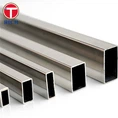


Choosing the right tube material is one of the most important decisions in heat exchanger design. Tubes may be continuously exposed to hot water, steam, chemicals, chlorides, pressure, and repeated temperature changes. A material that performs well in one system may corrode quickly in another.
For this reason, selecting a Heat Exchanger Stainless Steel Tube should not simply mean choosing the highest-grade or most expensive stainless steel. The correct choice depends on the operating medium, chloride concentration, temperature, pressure, fabrication requirements, and expected service life.
This guide compares several commonly used stainless steel grades and explains where each material is most suitable.
Why Stainless Steel Grade Matters in Heat Exchanger Tubes
Heat exchanger tubes form the barrier between two different fluids. Their condition directly affects heat transfer efficiency, equipment reliability, and maintenance requirements.
Four factors are especially important when selecting stainless steel.
I. Corrosion Resistance
Water chemistry, chlorides, acids, and process chemicals can cause pitting, crevice corrosion, or general corrosion. The stainless steel grade should therefore be matched to the actual medium rather than selected by price alone.
II. Operating Temperature
Temperature can change both mechanical properties and corrosion behavior. High-temperature applications may also require resistance to oxidation, sensitization, and repeated thermal cycling.
III.Pressure and Strength
Tube outside diameter, wall thickness, working pressure, and material strength must be considered together. A higher-strength material may allow different design options, but it still needs to meet the specified dimensional and mechanical requirements.
IV. Service Life
A lower-cost material may reduce initial purchasing cost but increase maintenance or replacement costs if the operating environment is too aggressive.
Common Stainless Steel Grades for Heat Exchangers

I. 304 and 304L Stainless Steel
304 and 304L are the most widely used general-purpose stainless steel pipes; they offer basic corrosion resistance, excellent formability, and weldability, making them easy to process and highly cost-effective. For general-purpose applications, 304L stainless heat exchanger tube offers a practical balance between corrosion resistance and cost, making it suitable for most standard industrial heat exchange scenarios.
This material is primarily suitable for clean water media, low-chloride environments, standard industrial heat exchangers, and moderate temperature and pressure conditions. Its main limitation is poor resistance to chloride-induced corrosion; it is highly susceptible to pitting in high-chloride water or corrosive chemical environments and is unsuitable for use under severe operating conditions.
II. 316 and 316L Stainless Steel
316/316L is a mainstream choice for industrial heat exchangers. Compared with 304L, its molybdenum content provides better resistance to pitting and chloride-ion corrosion, while its low-carbon composition reduces the risk of sensitization and intergranular corrosion after welding.
316L is widely used in chemical processing, circulating cooling water, condensers, moderate-chloride environments, and controlled marine applications. While 316L offers superior corrosion resistance, 304L can be more cost-effective in low-corrosion environments such as fresh water. The choice depends on the specific operating conditions.


III. 321 Stainless Steel
The primary advantage of 321 stainless steel is not corrosion resistance, but rather exceptional high-temperature stability. Stabilized with titanium, the material effectively inhibits carbide precipitation at elevated temperatures, withstands thermal cycling stress, and demonstrates outstanding resistance to high-temperature aging.
It is specifically suited for applications such as high-temperature heat exchangers, environments involving frequent thermal cycling, waste heat recovery systems, and heat exchange systems in power generation equipment. If the primary operational risks are high temperatures and thermal fatigue-rather than chloride-induced corrosion-selecting 321 stainless steel is more appropriate and cost-effective than indiscriminately upgrading to 316L.
IV. 347 Stainless Steel
347 stainless steel is another stabilized austenitic grade. It uses niobium stabilization and offers good performance in elevated-temperature environments.
It is commonly considered for applications involving prolonged high-temperature exposure, including certain power-generation and chemical-processing heat exchangers.
Both 321 and 347 can provide advantages where resistance to intergranular corrosion after high-temperature exposure is important.


V. Duplex Stainless Steel 2205
Duplex 2205 combines austenitic and ferritic stainless steel structures. Compared with conventional 300-series grades, it offers higher mechanical strength and improved resistance to pitting and chloride stress corrosion cracking.
It is mainly used in Chloride-containing cooling water, Chemical processing, Aggressive industrial water, Seawater-related systems, and applications requiring higher mechanical strength.
Duplex stainless steel, however, requires more careful control during welding and fabrication. Using it where the operating environment does not require its additional performance may unnecessarily increase project cost.
VI. Super Duplex 2507
Super Duplex 2507 is generally used for more severe corrosive environments.Its high resistance to chloride-induced corrosion makes it suitable for demanding applications such as seawater systems, high-chloride environments, and aggressive chemical processes.
It is not normally the default material for standard heat exchangers. Instead, it is selected when corrosion conditions justify the additional material and fabrication cost.

How to Choose the Right Heat Exchanger Stainless Steel Tube
Material selection should start with the actual operating conditions.
First, identify the fluids flowing inside and outside the tube. Water, steam, chlorides, acids, and other chemicals create very different corrosion risks.
Next, check chloride concentration and temperature together. A stainless steel that performs well at room temperature may behave differently at elevated temperatures.
Pressure must also be considered together with tube OD, wall thickness, mechanical properties, and applicable design requirements.
Finally, compare initial material cost with expected service life. Choosing 304L solely because it costs less may create higher lifetime costs if the environment requires 316L or Duplex.
| Application | Common Material Options |
|---|---|
| General industrial water | 304L / 316L |
| Industrial cooling water | 316L |
| Chemical processing | 316L / Duplex |
| High-temperature heat recovery | 321 / 347 |
| Chloride-rich environments | Duplex 2205 |
| Severe seawater service | Duplex / Super Duplex |
Conclusion
There is no single stainless steel grade that is best for every heat exchanger.
304L offers a cost-effective solution for mild environments, 316L provides better corrosion resistance, 321 and 347 are useful for elevated-temperature service, while Duplex and Super Duplex grades are better suited to more severe chloride environments.
TORICH supplies Heat Exchanger Stainless Steel Tube in different stainless steel grades, dimensions, and international standards. Tubes can be manufactured according to project-specific requirements for material, size, testing, and surface condition.
If you are selecting tubes for a heat exchanger project, providing the grade, OD, wall thickness, operating medium, temperature, pressure, and quantity will help us recommend a more suitable tube specification and prepare a quotation.