

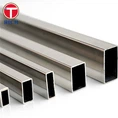


Hydraulic cylinder bars are the core components of hydraulic cylinders. As a key structure that bears hydraulic pressure and guides piston movement, their machining quality directly affects the lifespan and reliability of the entire hydraulic system. The cylinder barrel is the main body of the cylinder, enabling the piston, its seals, and supports to slide smoothly. Its inner bore surface roughness requirement is relatively high, needing to reach grade 9 (Ra 0.4 μm). Roller burnishing or honing is a common processing technique for the inner surface treatment of tubing. The choice between honed and roller burnished tubing mainly depends on the specific operating conditions of the cylinder, cost budget, and performance requirements.
what is Honed Tube?
Honed tubes are seamless steel pipes that have undergone a finishing process using an oilstone (also called a honing stone) embedded in a honing head. Honing is primarily used for machining various cylindrical holes with diameters of 5–500 mm or larger, such as cylinder barrels, valve holes, connecting rod holes, and housing holes. The depth-to-diameter ratio can reach 10 or even greater. Under certain conditions, honing can also machine outer diameters, planes, spherical surfaces, and toothed surfaces. The surface roughness of cylindrical honing can generally reach Ra 0.32–0.08 micrometers, and with fine honing, it can reach below Ra 0.04 micrometers, while slightly improving geometric accuracy. The machining accuracy can reach IT7–4.
Advantages of honed tube
- High machining accuracy: Especially for small and medium-sized through holes, the cylindricity can reach within 0.001mm. For parts with uneven wall thickness, such as connecting rods, the roundness can reach 0.002mm. For large holes (diameter within 200mm), the roundness can also reach 0.005mm.
- Good surface quality: The honed inner hole surface has a cross-hatched pattern, which is beneficial for the storage of lubricating oil and the maintenance of the oil film. It has a high surface support ratio (the ratio of the actual contact area between the hole and the shaft to the mating area between them), thus it can withstand larger loads, is wear-resistant, and improves the service life of the product.
- Wide machining range: Regardless of the material hardness, through holes, blind holes, and holes with keyways can be honed. In addition, with a special honing head, conical holes and elliptical holes can also be machined, but due to the complex structure of the honing head, it is generally not used. External honing tools can be used to hone cylinders, but the amount of material removed is much smaller than that of internal honing. It can process almost any material, especially for applications involving diamond and cubic boron nitride abrasives.
application areas of honed tube
- Precision Hydraulics and Servo Systems: Aerospace equipment, high-end machine tools, precision injection cylinders for injection molding machines, mold clamping cylinders for die casting machines, etc.
- Medical: Lifting platform cylinders for CT/MRI equipment, hydraulic joints for surgical robots, infusion pumps, precision hydraulic components, and other medical equipment.
- Semiconductors and Precision Instruments: Semiconductor manufacturing equipment, precision measuring instruments.
- Special Conditions and High-End Equipment: ROV hydraulic robotic arms for deep-sea exploration equipment, pitch control hydraulic systems for wind power equipment, precision cylinders for photovoltaic tracking brackets, and other new energy equipment.
what is Roller Burnished Tube?

Trundle processing is a pressure finishing process that utilizes the cold plasticity of metals at room temperature. A rolling tool applies pressure to the workpiece surface, causing the surface metal to plastically flow and fill the original residual troughs, thus reducing the surface roughness. Due to the plastic deformation of the rolled surface metal, the surface structure undergoes cold hardening and grain refinement, forming a dense fibrous structure and a residual stress layer. This increases hardness and strength, thereby improving the workpiece's wear resistance, corrosion resistance, and fit. Rolling is a non-cutting plastic finishing method.
Advantages of Roller Burnished Tube
Roller burnishing, by leaving residual compressive stress on the surface layer, helps to close micro-cracks and hinders the propagation of corrosion. This improves surface corrosion resistance and delays the initiation or propagation of fatigue cracks, thus increasing the cylinder fatigue strength. Through roller burnishing, a work-hardened layer is formed on the surface, reducing elastic and plastic deformation of the contact surfaces of the grinding pairs, thereby improving the wear resistance of the cylinder inner wall and preventing burns caused by grinding. The reduced surface roughness after roller burnishing improves the fit properties.
application areas of Roller Burnished Tube
- Construction machinery and heavy machinery: such as hydraulic cylinders for excavators and loaders, and outrigger cylinders for cranes.
- Automotive and general machinery: such as dump truck lifting cylinders for commercial vehicles, hydraulic suspension systems for agricultural machinery such as tractors, and hydraulic cylinders for material handling equipment in factories and workshops.
- Metallurgy and mining: such as hydraulic systems for rolling mills, and equipment for mine hoists.
conclusion
Ultimately, the choice between honed and rolled tubes depends on the operating requirements of the hydraulic cylinder and cost considerations. Honing, as a cutting process, offers advantages in achieving extremely high dimensional accuracy (IT7 grade or higher) and excellent surface quality, making it widely used in aerospace, medical devices, semiconductor equipment, and other fields with stringent precision and reliability requirements. Rolled tubes, on the other hand, are a non-cutting plastic forming process with high processing efficiency and low cost, making them more suitable for engineering machinery, automotive, and mining equipment applications that prioritize cost-effectiveness and mass production.
TORICH provides high-precision honed tubes with customization capabilities, offering flexible and reliable solutions in terms of precision, materials, and processing methods to meet the stringent standards of high-end equipment manufacturing.