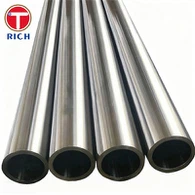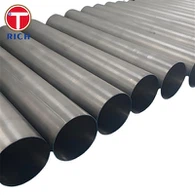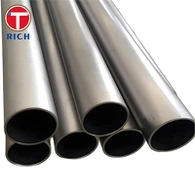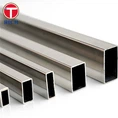



Products Description
Product Specifications
| Standards | ASTM B337 / ASME SB337 |
| Steel Grades | Grade 2, or Grade 1 Grade 3 Grade 7 Grade 9 Grade 10 Grade 11 Grade 12, etc. |
| Equivalent Standards |
JIS H4631, EN ISO 5832-2, ISO 6361, ASTM B338,etc. |
| Outer Diameter (OD) |
6mm - 219mm, cutomized |
| Wall Thickness (WT) |
0.5mm - 20mm, cutomized |
| Length | 6 / 12m, cutomized |
| Surface Treatment | Pickled, annealed, bright annealed, polished or customized |
| Production Process | Cold drawn / Cold rolled; TIG welding |
| Condition | Annealed |
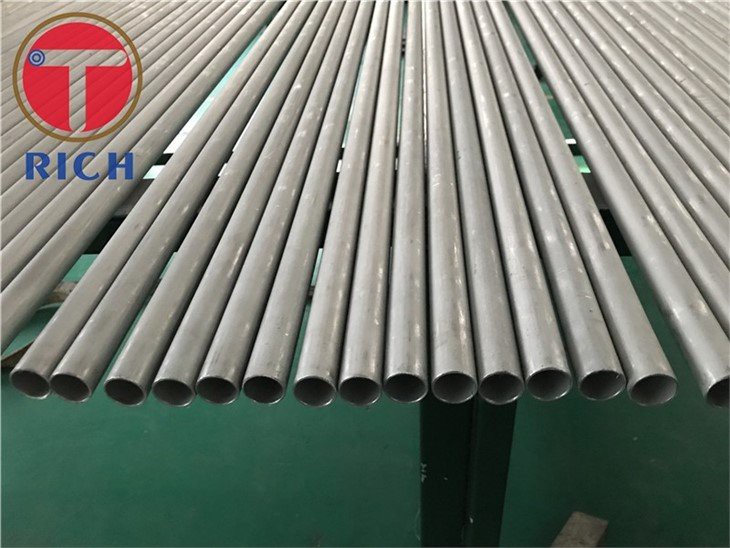
TORICH ASTM B337 Grade 2 titanium tubing undergoes rigorous chemical composition testing; the Grade 2 commercially pure titanium boasts a purity of ≥99.2%. It offers excellent resistance to corrosion from substances such as seawater, chloride ions, weak acids and alkalis, and industrial circulating water. Furthermore, the surface passivation layer is capable of immediate self-repair following mechanical damage.
Grade 2 titanium has a thermal conductivity of approximately 21.8 W/m·K (at room temperature). Although this is lower than that of copper alloys, its superior corrosion resistance allows for thinner wall designs. Additionally, the surface is resistant to the formation of heat-transfer-impeding corrosion products or biofouling layers, ensuring stable actual heat transfer efficiency during long-term operation.
Customized Services
- TORICH offers end-finishing options-such as plain, beveled (30°/37.5°), threaded, or flared ends-tailored to specific tube-to-tubesheet connection requirements.
- We support customization for non-standard outer diameters, ultra-thin or extra-thick walls, and specific lengths (ranging from extra-long fixed lengths to short-cut pieces), as well as the production of specially shaped tubing designed for heat exchanger coil, tube-bundle, or shell-and-tube configurations.
- Tubes can be cold- or hot-bent to meet flow-path layout requirements; minimum bending radii of 1.5D are achievable, with ovality in the bent sections controlled to within 8%.
- We provide surface treatment solutions-including pickling, bright annealing, and sandblasting-to suit various water quality and operating conditions.
Chemical Composition
| Element | Titanium | Iron | Oxygen | Carbon | Nitrogen | Hydrogen |
| Composition (%) | ≥ 99.2 | ≤ 0.30 | ≤ 0.25 | ≤ 0.08 | ≤ 0.03 | ≤ 0.015 |
Mechanical Properties
| Property | Tensile Strength | Yield Strength | Elongation | Reduction of Area | Hardness | Density |
| Value | 345 MPa (50 ksi) | 275 MPa (40 ksi) | 20% | 30% | ~160 HV | 4.51 g/cm³ |
Possible Alternative Grades
- For heat exchanger process streams involving reducing acids-such as hydrochloric, sulfuric, or formic acid-or environments with high-temperature, high-concentration chlorides, Grade 7 is a suitable choice, as it offers superior corrosion resistance compared to Grade 2.
- Grade 1 may be selected for low- or cryogenic-temperature applications; characterized by lower oxygen content and enhanced ductility and toughness, it is typically reserved for low-pressure cooling water piping with ample wall thickness allowance.
- Grade 5 is an option for industrial heat exchange systems operating under extreme conditions-such as high temperatures and pressures, highly corrosive environments, or frequent start-stop cycles-as it offers mechanical strength far exceeding that of Grade 2, albeit at a higher cost.
application areas
- Power Industry: Surface condenser tube bundles, auxiliary cooling water heat exchangers, and condenser tubes for coastal power plants and nuclear power stations.
- Desalination: Heat exchanger tube bundles for Multi-Stage Flash (MSF) and Multi-Effect Distillation (MED) units; pressure piping and heat exchange tubes for Reverse Osmosis (RO) units.
- Petrochemicals and Refining: Heat exchangers and condensers in refineries and petrochemical plants utilizing seawater or chlorinated seawater as the cooling medium.
- Marine Engineering: Heat exchangers and coolers within seawater cooling systems, fire-fighting water lines, ballast water system piping, and seawater injection lines for offshore platforms and vessels.
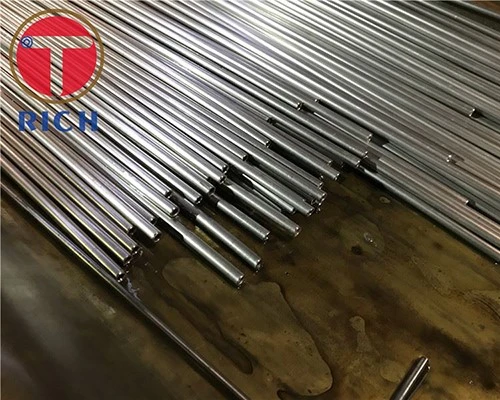
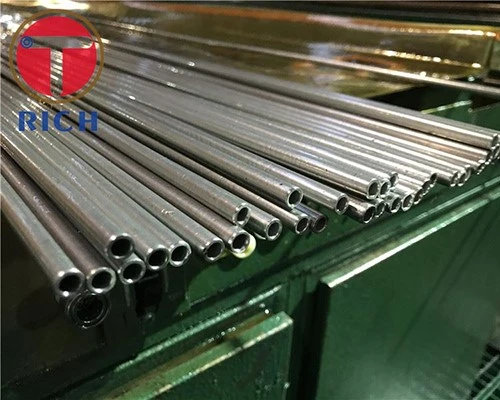
Products Show
Testing Equipment


Factory Equipment

Pickling equipment

Polishing equipment

Cold drawing equipment
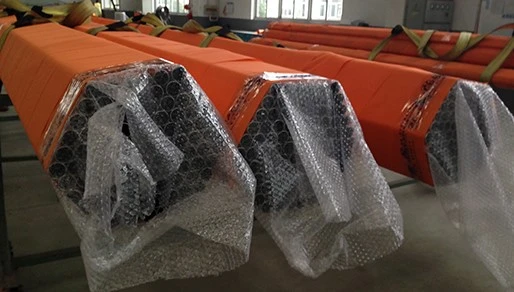
Products Package


FAQ
Q: What is the maximum safe operating temperature for Grade 2 titanium tubing in seawater?
A: The critical pitting temperature for Grade 2 titanium tubing in seawater is approximately 82°C. Below this temperature, Grade 2 titanium exhibits virtually no pitting or crevice corrosion in oxygenated seawater. If temperatures exceed 82°C, upgrading to Grade 7 or Grade 12 is recommended.
Q: Is welding or tube expansion recommended for joining Grade 2 titanium tubes to the tubesheet?
A: Welding is the preferred method for Grade 2 titanium tubing. Titanium has excellent weldability; properly welded joints possess strength equal to or greater than the base metal, and the corrosion resistance of the weld zone in seawater is comparable to that of the base metal.
Q: Is ASTM B337 Grade 2 titanium tubing suitable for bending and welding?
A: Yes. The product is supplied in an annealed condition with an elongation of ≥20% and excellent toughness, allowing for easy bending, flaring, and welding without cracking or deformation. It is well-suited for the fabrication of various heat exchanger coils and complex piping configurations.
Hot Tags: astm b337 grade 2 titanium tubing, China, suppliers, manufacturers, factory, customized, wholesale, price, OEM, mill, producer, for sale