

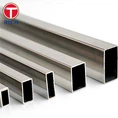


Products Description
Product Specifications
| Standards | ASTM A312/A312M |
| Steel Grades | TP310 / TP310S / TP310H(UNS S31000 / S31008 / S31009) |
| Equivalent Standards | EN 1.4845(X8CrNi25-21);JIS SUS310S;GB 0Cr25Ni20;AFNOR Z8CN25-20 |
| Outer Diameter (OD) |
6.0 mm – 630 mm |
| Wall Thickness (WT) |
0.5 mm – 55 mm |
| Length | 6 / 12 m, or customized |
| Surface Treatment | Pickling and passivation (AP), bright annealing (BA), and polishing of both inner and outer surfaces (inner surface Ra ≤ 0.2–0.4 μm, outer surface Ra ≤ 0.4 μm) |
| Production Process | Hot-rolled / Cold-rolled / Cold-drawn |
| Condition |
Solution annealed |
ASTM A312 310 stainless steel pipe exhibits excellent high-temperature oxidation resistance. Its 25% Cr–20% Ni matrix allows for the formation of a continuous, dense, and well-adhered Cr₂O₃ oxide film when exposed to an oxidizing atmosphere. The material can withstand temperatures up to 1150°C in continuous service and up to 1040°C in intermittent service.
In the carburizing atmospheres commonly found in industrial furnaces, the high nickel content (19–22%) of TP310 helps inhibit the ingress of carbon into the matrix. This provides effective resistance to carburization below 1035°C-outperforming the 304 and 309 series under similar conditions.
Customized Services
- Internal/External Surface Polishing: The internal surface can achieve a roughness of Ra ≤ 0.2–0.4 μm, and the external surface Ra ≤ 0.4 μm-suitable for applications requiring high cleanliness inside radiant tubes or where carbon deposition must be minimized.
- Dimensional Tolerances: For cold-rolled/cold-drawn precision tubing, tolerances for outer diameter and wall thickness can be controlled within ±0.05 mm, with a minimum tolerance of 0.02 mm.
- End Preparation: 37.5° welding bevels, NPT/BSPP threading, grooving, and the attachment of weld-neck or lap-joint flanges.
Chemical Composition
| Element | C | Mn | Si | P | S | Cr | Ni | Fe |
|---|---|---|---|---|---|---|---|---|
| 310 (%) | ≤0.25 | ≤2.00 | ≤1.50 | ≤0.045 | ≤0.030 | 24.0–26.0 | 19.0–22.0 | Balance |
Mechanical Properties
| Property | Tensile Strength | Yield Strength (0.2%) | Elongation | Hardness |
|---|---|---|---|---|
| 310 | ≥515 MPa | ≥205 MPa | ≥35% | ≤95 HRB / ≤217 HBW* |
Possible Alternative Grades
- For furnace applications operating mainly below about 950–1000°C, 309S (UNS S30908) may be considered when oxidation conditions and mechanical loads are moderate. Its lower nickel and chromium content generally makes it a more economical alternative to 310S.
- For furnace piping or components requiring extensive welding and fabrication, TP310S is commonly preferred. Its lower carbon content reduces carbide precipitation in the heat-affected zone and lowers the risk of sensitization after welding.
- For more demanding high-temperature service, especially where creep strength or cyclic oxidation resistance is critical, 253 MA (UNS S30815) can be considered for temperatures up to approximately 1100°C. For severe oxidation environments at still higher temperatures, nickel alloys such as Inconel 601 may be selected, although their material cost is significantly higher than that of 310S.
application areas
- Furnace burner piping – carrying fuel gas or combustion air near high-temperature zones.
- Hot gas transfer lines – transporting heated gases between furnace sections, recuperators, or exhaust systems.
- Annealing furnace piping – used around continuous or batch annealing equipment.
- Heat-treatment furnace manifolds – distributing combustion gas or process gas in high-temperature systems.
- Radiant-zone auxiliary piping – for piping exposed to strong radiant heat near furnace chambers.
- Carburizing and atmosphere furnace lines – for controlled-atmosphere gas supply and circulation systems.
- Reheating furnace systems – used in steel mills and forging lines where piping is exposed to repeated thermal cycling.
- Furnace exhaust and flue-gas piping – for high-temperature exhaust sections where oxidation resistance is important.
Products Show


Testing Equipment


Factory Equipment

Pickling equipment

Polishing equipment

Cold drawing equipment
Products Package


FAQ
Q: What is the maximum service temperature of ASTM A312 TP310 pipe?
A: In air, TP310 is generally used up to about 1,035°C (1,900°F) continuously. For more severe high-temperature service, 253 MA or nickel alloys such as Inconel 600/601 may be considered.
Q: What is the difference between TP310, TP310S, and TP310H?
A: TP310S has lower carbon for better weldability and lower sensitization risk. TP310H has controlled higher carbon for improved creep strength at elevated temperatures. TP310 is suitable for general high-temperature oxidation service.
Q: Can TP310 pipe be welded?
A: Yes. TIG, MIG, and SMAW are commonly used with matching fillers such as E310/E310-16. TP310S normally does not require post-weld heat treatment; solution annealing may be considered for TP310/310H when corrosion performance after welding is critical.
Hot Tags: astm a312 310 stainless steel pipe, China, suppliers, manufacturers, factory, customized, wholesale, price, OEM, mill, producer, for sale, 316 stainless steel tubing polished, sa 249 tp316l, tp304l stainless steel pipe


